
Renato Guttuso and the School of Scilla
Two memorable artistic seasons, with the Sicilian master at the centre of an informal artists’ circle that helped reveal Scilla’s beauty to a wider public.

Where

1947, Guttuso arrives in Scylla
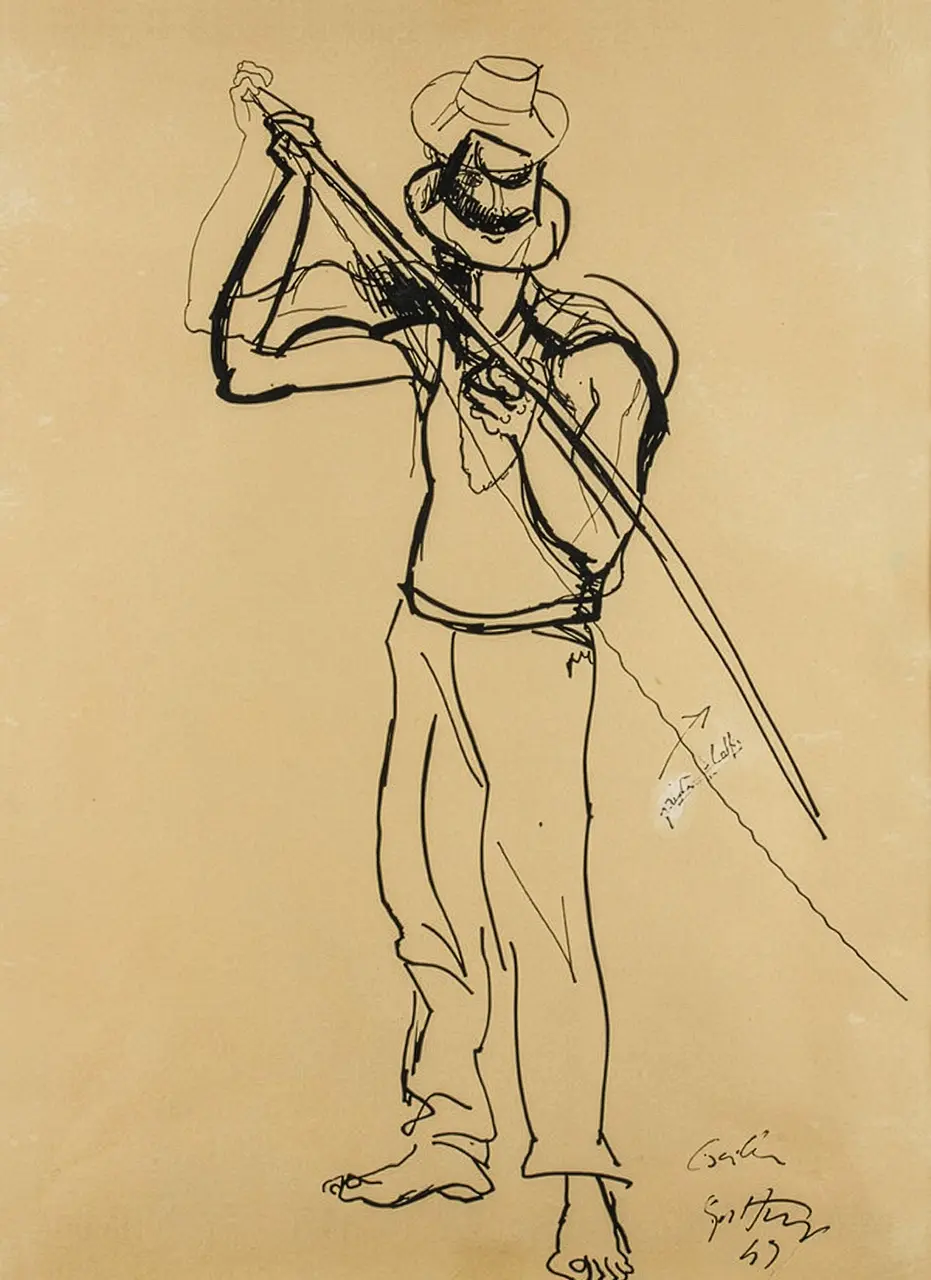
It was the year 1947 when Sicilian painter Renato Guttuso, already a well-known representative of the Socialist Realism movement , landed in Scylla at the invitation of some intellectuals who were already frequenting it. Won over by the atmosphere of the place, he returned there in the following years, settling with other artists of his circle in the so-called Casa Rossa (Red House), still easy to spot in the lower part of Marina Grande, Vico Spirito Santo, with the promontory's cliff beyond the road that bypasses it toward the port.
The Scylla School
So it was that in the summer of 1949 the idea of animpromptu Scylla School took shape. In addition to the Messina painter Saro Mirabella, who was particularly close to Guttuso, various artists who in one way or another shared the artistic and political vicissitudes of those years played a role: Vincenzo Ciardo, Giuseppe Marino, Giuseppe Mazzullo, Giovanni Omiccioli, Antonio Scordìa, Tono Zancanaro. .. and one can well imagine the climate of such a summer academy against the backdrop of Scilla and its sea.
The works of the first phase
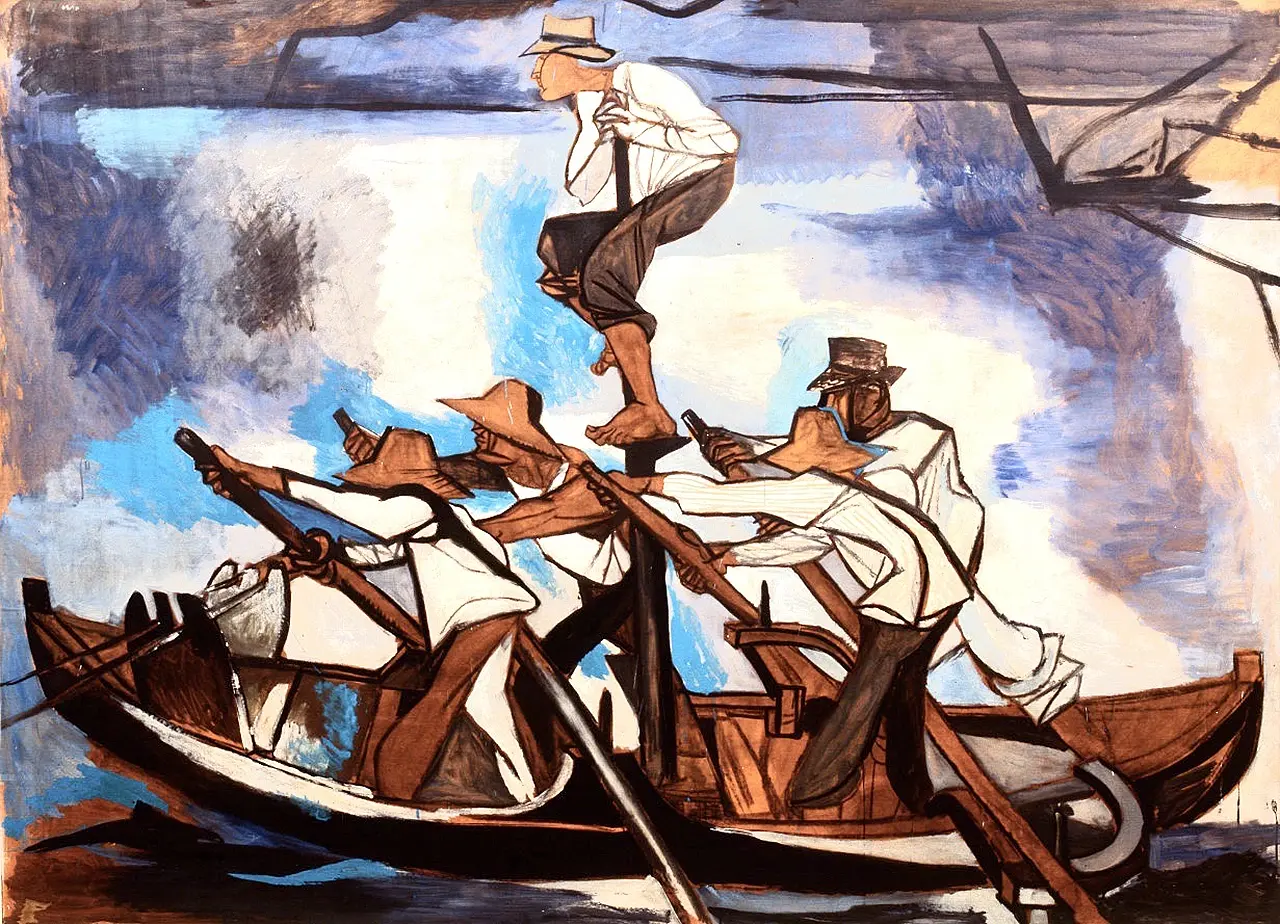
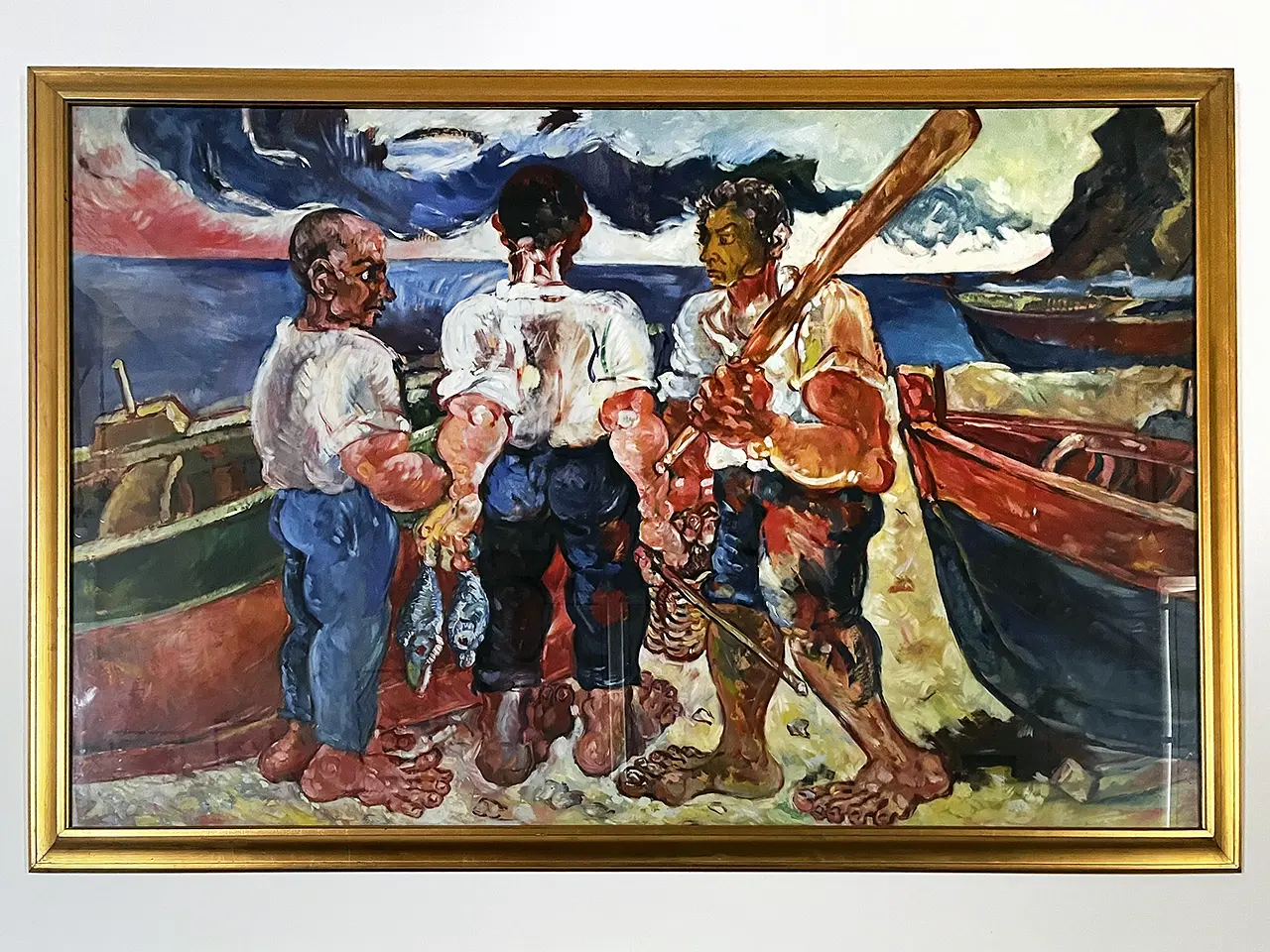
Returning to Guttuso, the inspiration of that first year can be seen in the title of some of his works: for example, Mareggiata sullo Stretto, as he will likely have observed it from the window of the house he occupied with his beloved Mimise, or Bambini di Scilla, having observed some of them picking crabs among the rocks. But above all , The Swordfish Fishery, which not only didactically documents the action, but also manages to evoke the spasmodic tension of those who awaited the outcome.
Scylla School moves to Chianalea.
In the summer of 1950, the School moved to Chianalea, to a seventeenth-century palazzetto overlooking the sea (Via Annunziata 95), where Guttuso outfitted a room as a studio to take advantage of the light of dawn and shape the inspiration he said had matured in the night. Just recounting it, one seems to see him intent on the canvas. Balcony at Scylla is perhaps the most evocative title of this second cycle of works by the master, surrounded by the regard of the Scillesi, who by now considered him an honorary fellow citizen.
Love for Scylla after the School experience
The artists of the School continued to frequent Scylla for a long time but in no particular order, like Guttuso who often returned there with Marta Marzotto, the muse who inspired him in his maturity. A significant circumstance that goes far beyond coincidence, Scilla 1974, the last work the master dedicated to this place of his heart, was completed in the same year as Vucciria, the great Palermo market scene that is his most recognized masterpiece.
Enter the Map of Italy's Hidden Wonders and find treasures where you least expect it... Inspire, Recommend, Share...
Collections
The Map thanks:
Scilla, dove peschiamo sorrisi – Comune di Scilla – PNRR Ministero della Cultura M1C3, Mis. 2, Inv. 2.1 “Attrattività dei borghi storici” – Finanziato dall’Unione europea, NextGenerationEU – CUP: F79I22000150006 – CIG B8DCA761AB

Enter the Map of Italy's Hidden Wonders and find treasures where you least expect it... Inspire, Recommend, Share...
Where
Collections