
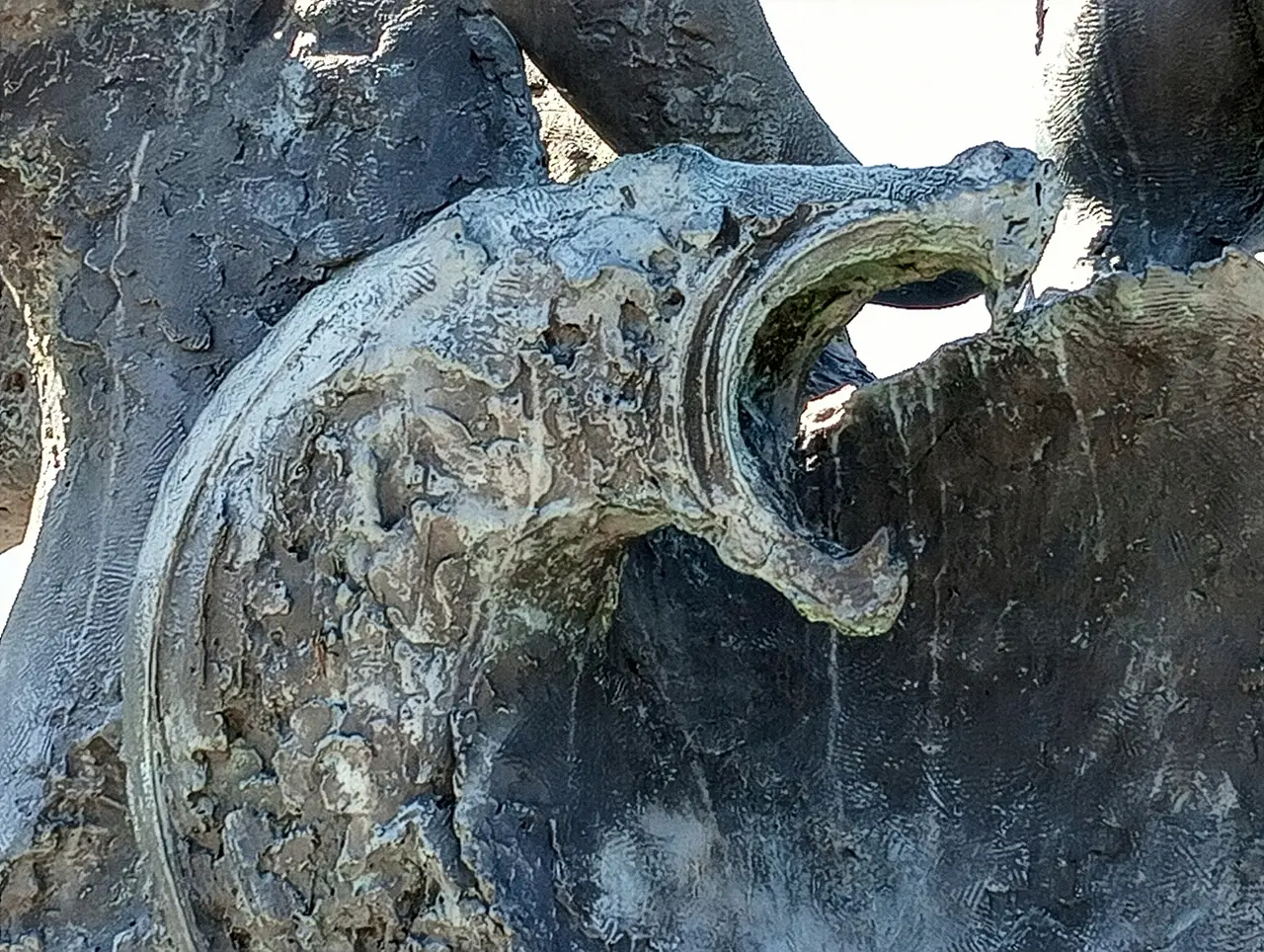
The myth of Scilla, in the bronze of a contemporary master
From beautiful nymph to sea monster, the terror of sailors crossing the Strait: Scilla’s metamorphosis lives on in this much-photographed sculpture.


Where

The frightening Strait of Messina
"To find oneself between Scilla and Charybdis!" is a polished saying to describe the situation in which one finds oneself going "from the frying pan into the fire," that is, from an escaped danger to an even greater one. In crossing the Strait of Messina , ancient navigators knew they had to contend with two pitfalls: the tremendous whirlpool generated by the currents near the Sicilian coast or the baleful promontory that jutted out from the Calabrian coast opposite.
Scilla and Charybdis, the monsters of the strait.
Hence the mythological transposition with Charybdis, described as a monster that swallowed the unfortunates on one route and Scilla that with its ravenous tentacles gherminated sailors on the opposite one. Indeed, we read in Ovid's Metamorphoses : "The right bank is haunted by Scilla, the left by the restless Charybdis: this one swallows and revomits the overwhelmed ships, the other has a black belly surrounded by fierce dogs, but a virgin's face, and, if the things the poets hand down to us are not all inventions, she was really a maiden one day." The myth of Scilla has been put into words by three classical authors - Homer, Virgil and Ovid, to be exact - from the sum of which results the most complete description of her features.
The monstrous metamorphosis of Scilla
From beautiful nymph to monstrous sea creature with a comely female torso, but with appendages with canine heads and dolphin-like tails. "From the middle upward the face, the neck and the breast / has of woman and virgin; the rest / of a huge pistrice, which resembles / to the dolphins has the tail, to the wolves the belly." we read in the Aeneid. All this, as a consequence of the love denied to the disquieting Glaucus, a deity with a dual nature, human and marine, of greenish complexion wants the name, through the ruthless sorceress Circe, who was jealous of him.
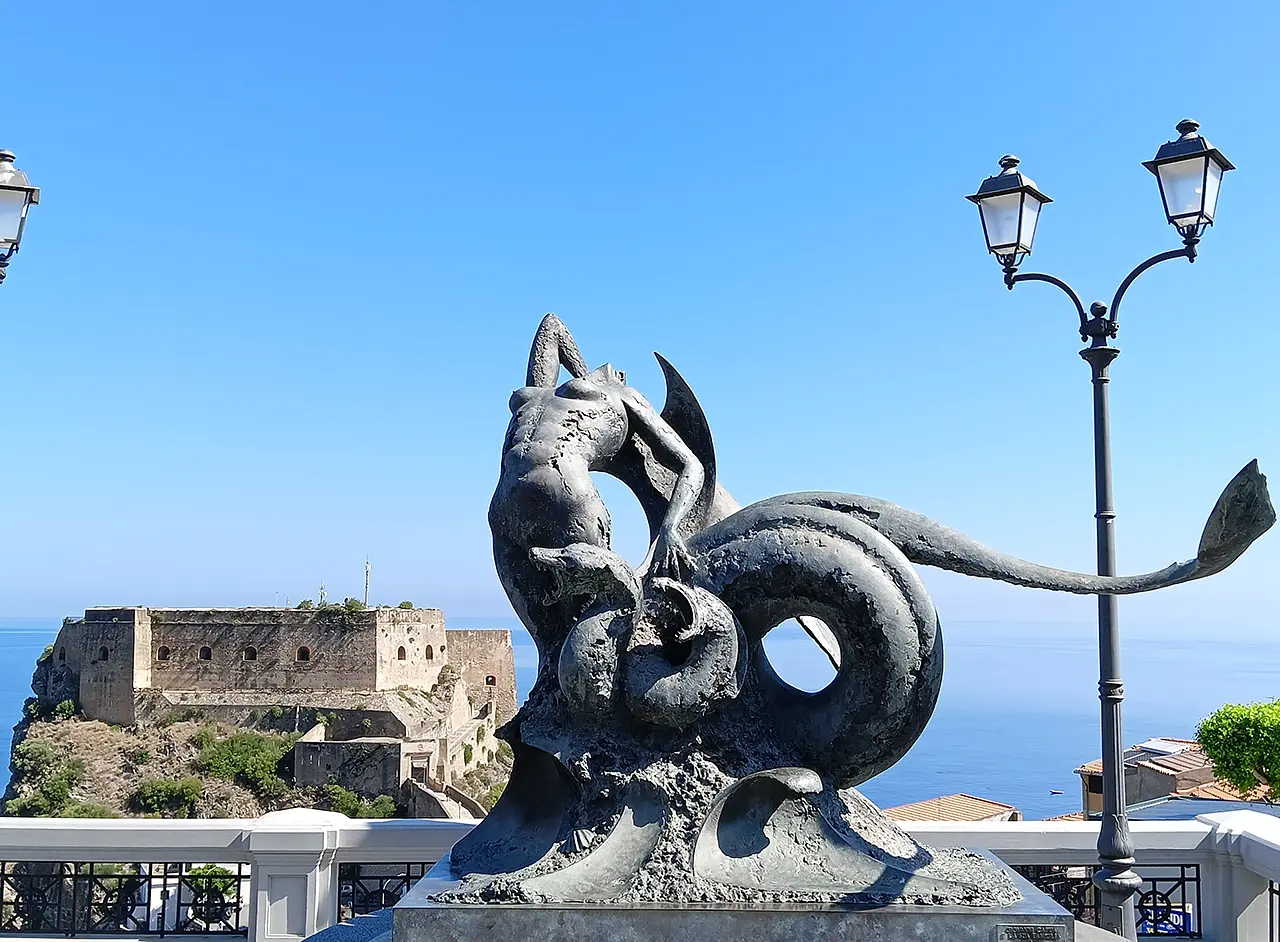
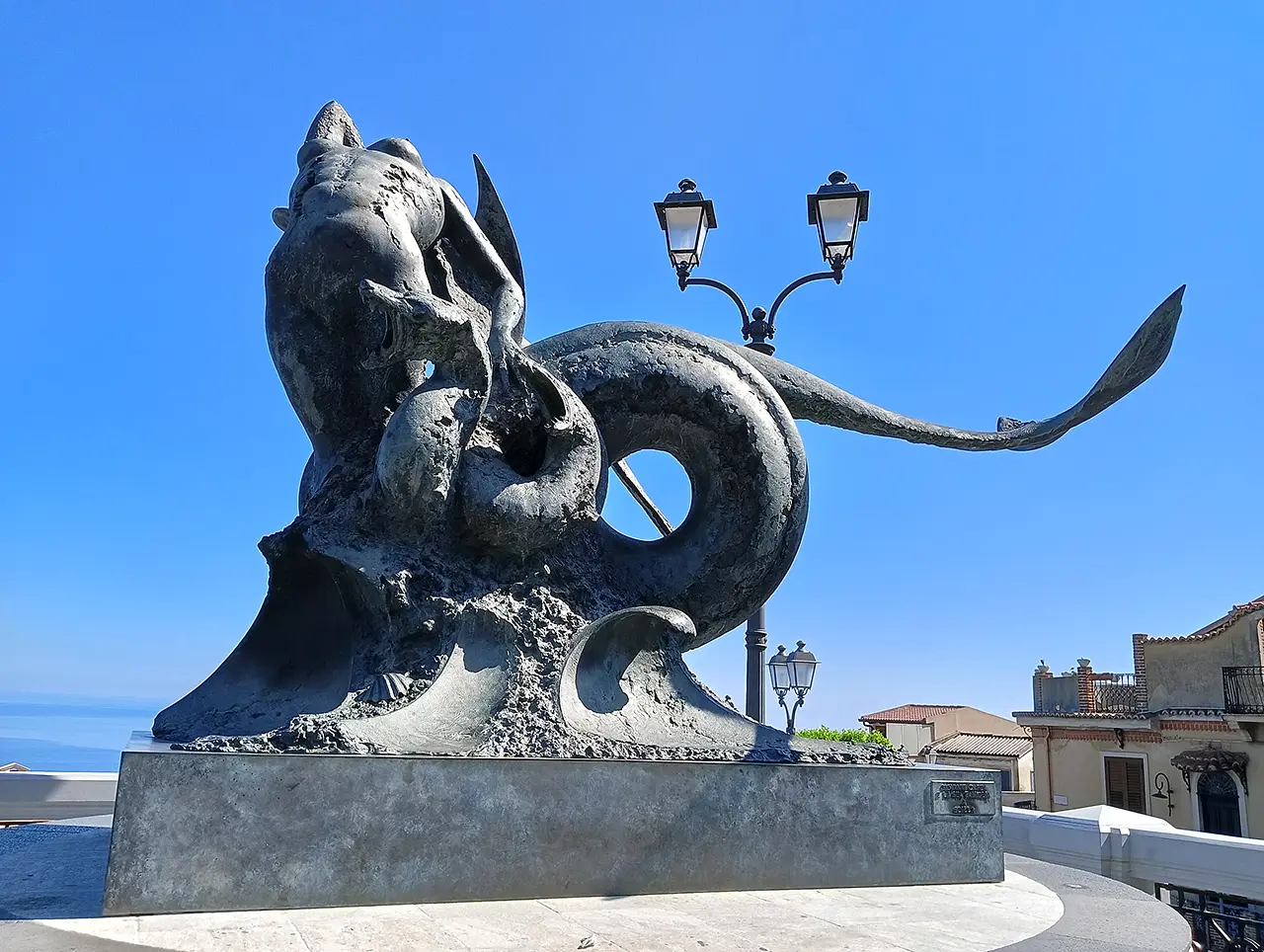
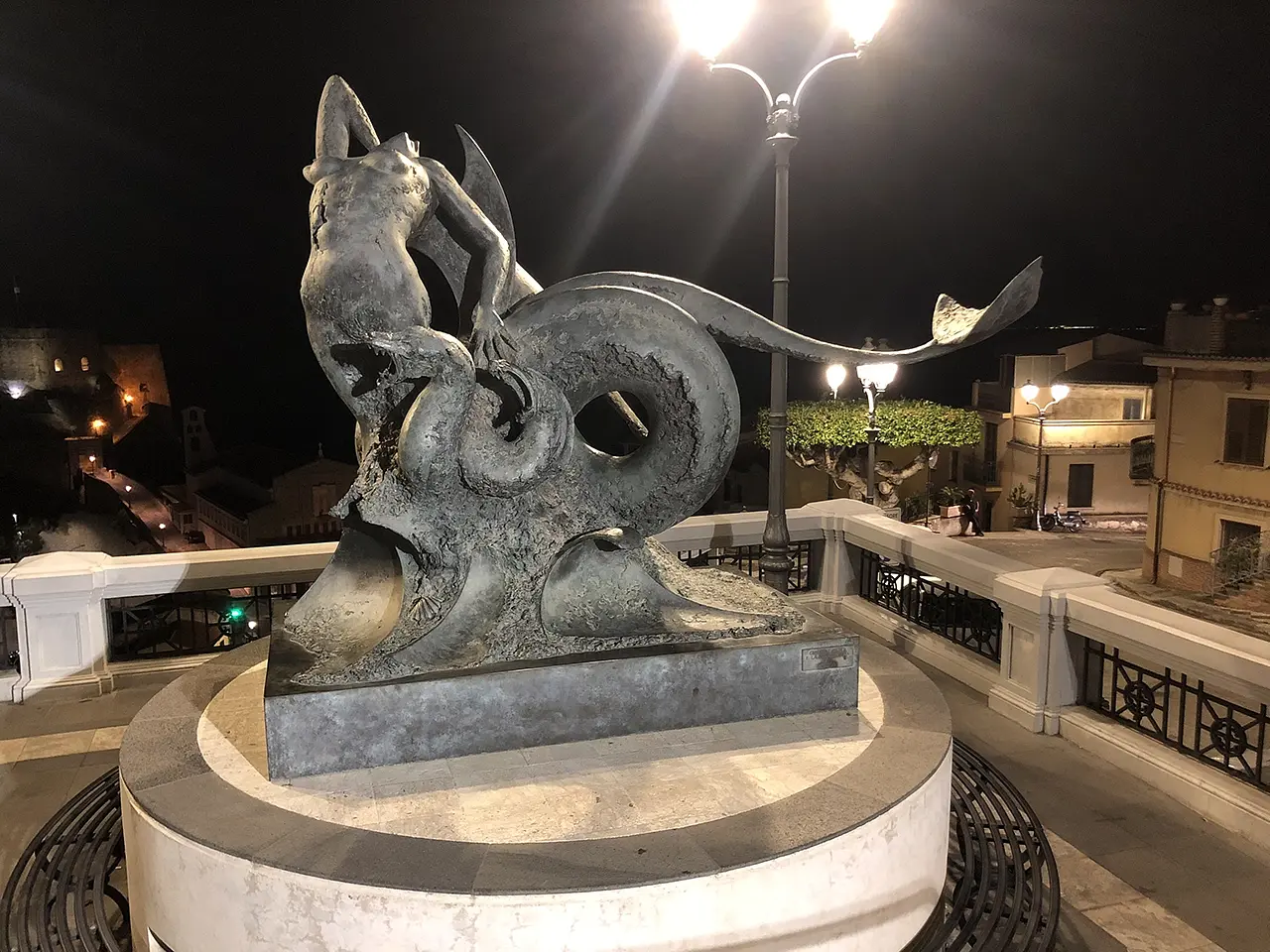
The statue of Scilla on the belvedere of San Rocco.
Proud of its symbol, in 2013 the city of Scilla called to represent it in bronze Francesco Triglia, an artist of international caliber, but faithful to his Reggio origins in his choice of subjects that hark back to Magna Graecia. The sculptor seems to interpret Ovid to the letter: a body in lacerating metamorphosis, an arched female torso, one arm bent over in despair, the other abandoned, the metal cracking from the tension of the monstrous appendages, one of which is twisted into a cetacean tail. Placed appropriately on a pedestal, the sculpture stands out beyond the San Rocco lookout against the backdrop of the promontory that would be the lair of such a legendary creature.
Enter the Map of Italy's Hidden Wonders and find treasures where you least expect it... Inspire, Recommend, Share...
Collections
The Map thanks:
Scilla, dove peschiamo sorrisi – Comune di Scilla – PNRR Ministero della Cultura M1C3, Mis. 2, Inv. 2.1 “Attrattività dei borghi storici” – Finanziato dall’Unione europea, NextGenerationEU – CUP: F79I22000150006 – CIG B8DCA761AB

Enter the Map of Italy's Hidden Wonders and find treasures where you least expect it... Inspire, Recommend, Share...
Where
Collections