
An extraordinary series of frescoes in Bastia Mondovì
Amid the vineyards and hazelnut groves of the Cuneo area lies a treasure that is still relatively unknown: a magnificent cycle of frescoes dating from 1470


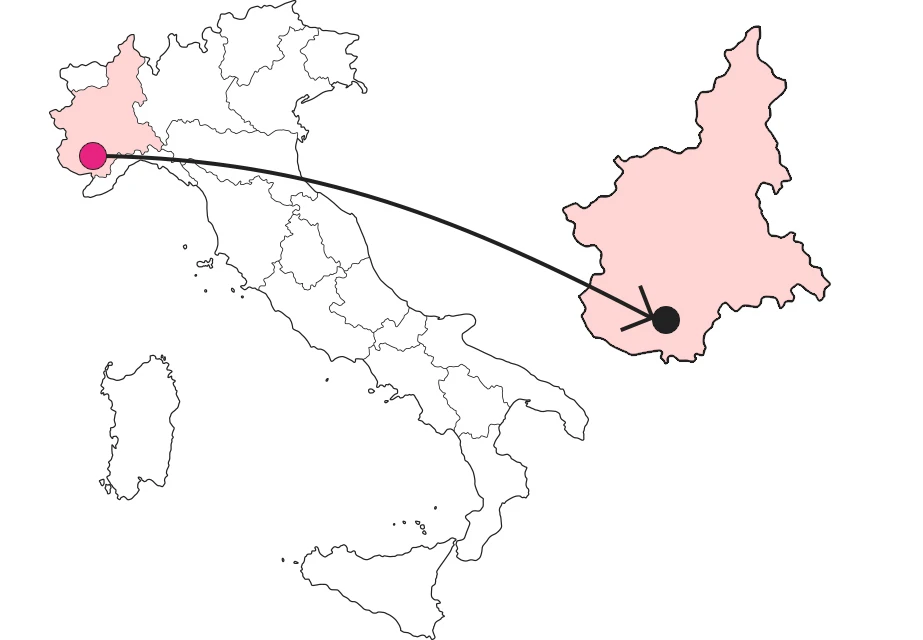
Where
What Is the Mondovì Fresco Cycle and Where Is It?
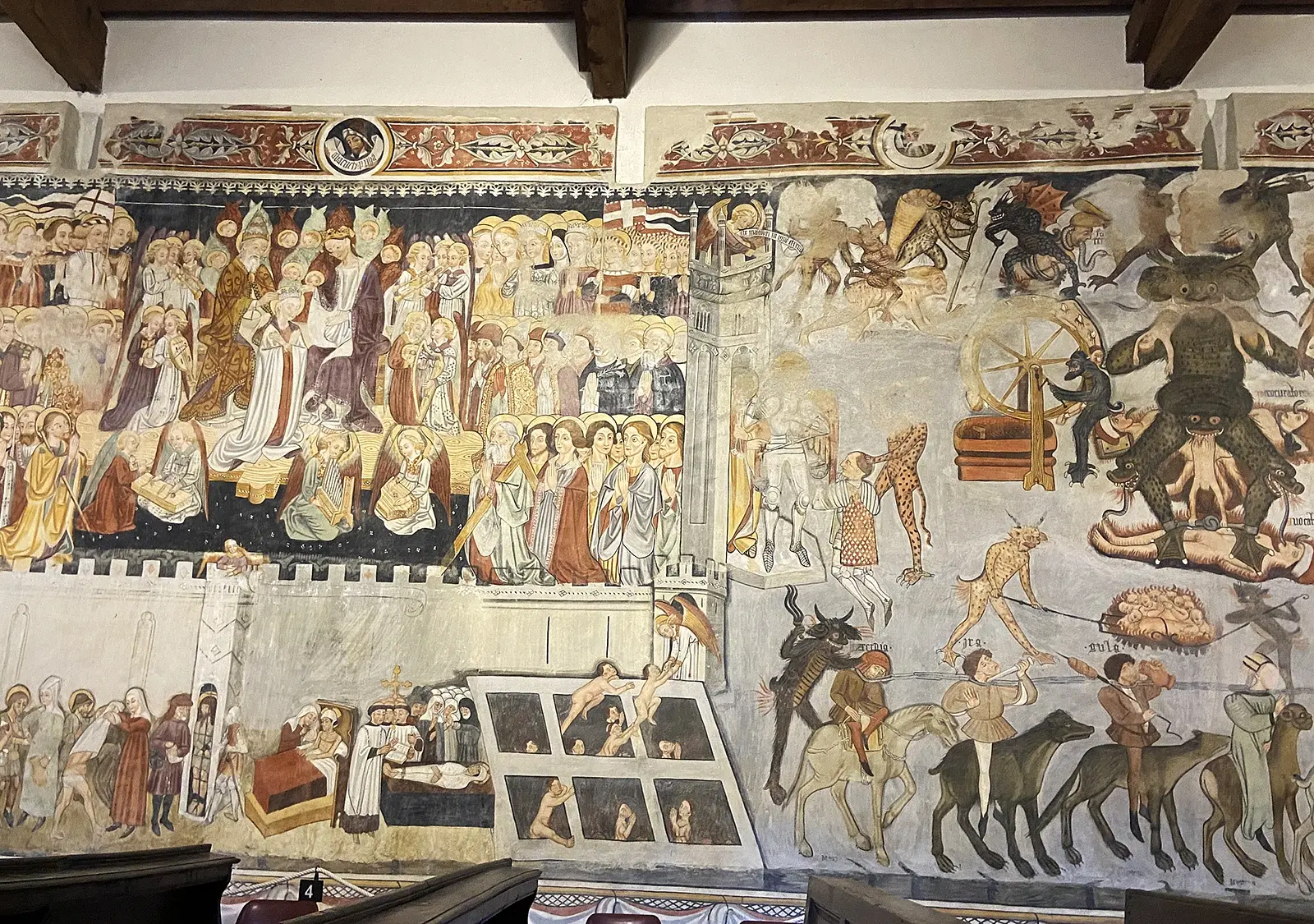
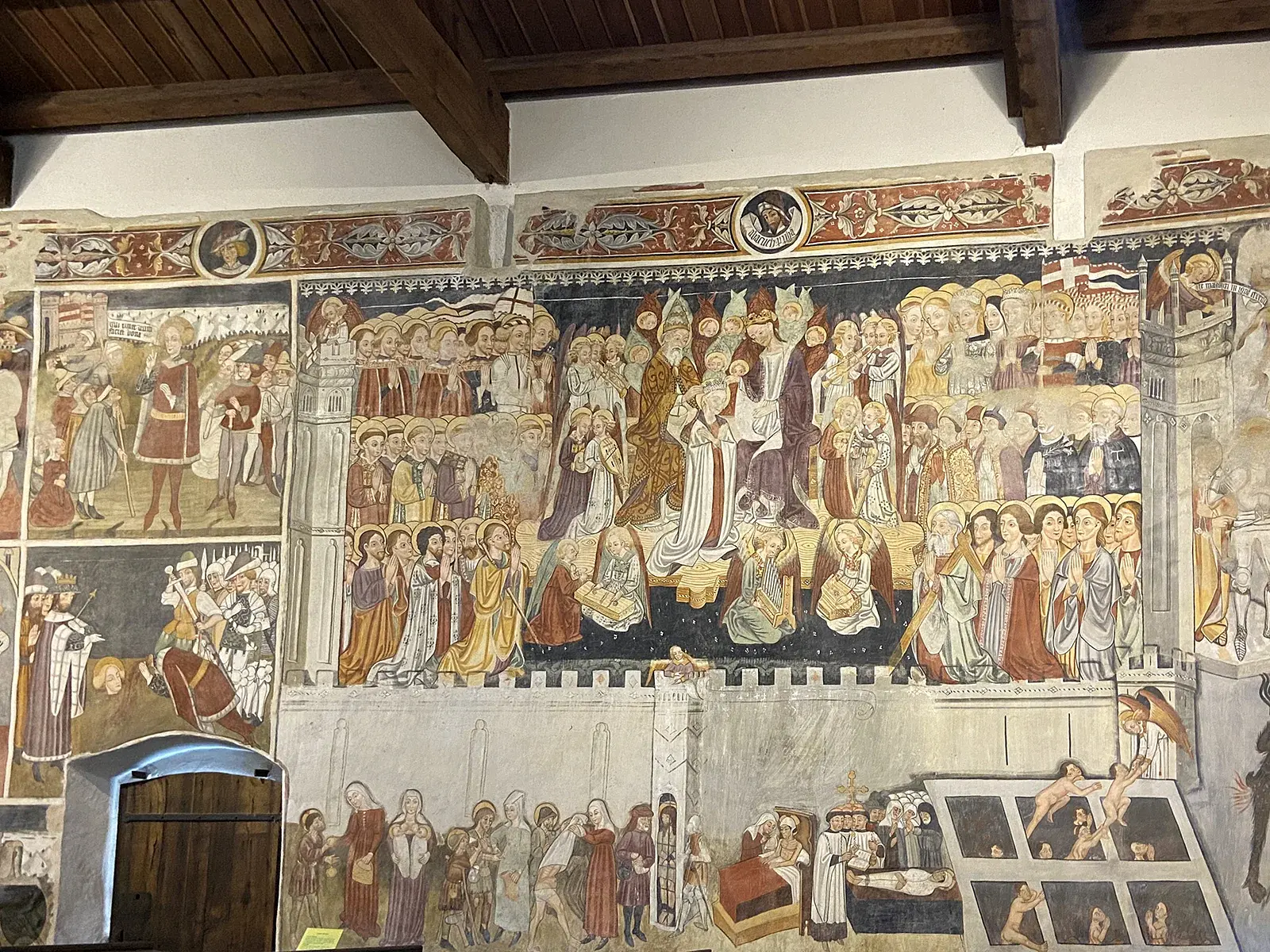
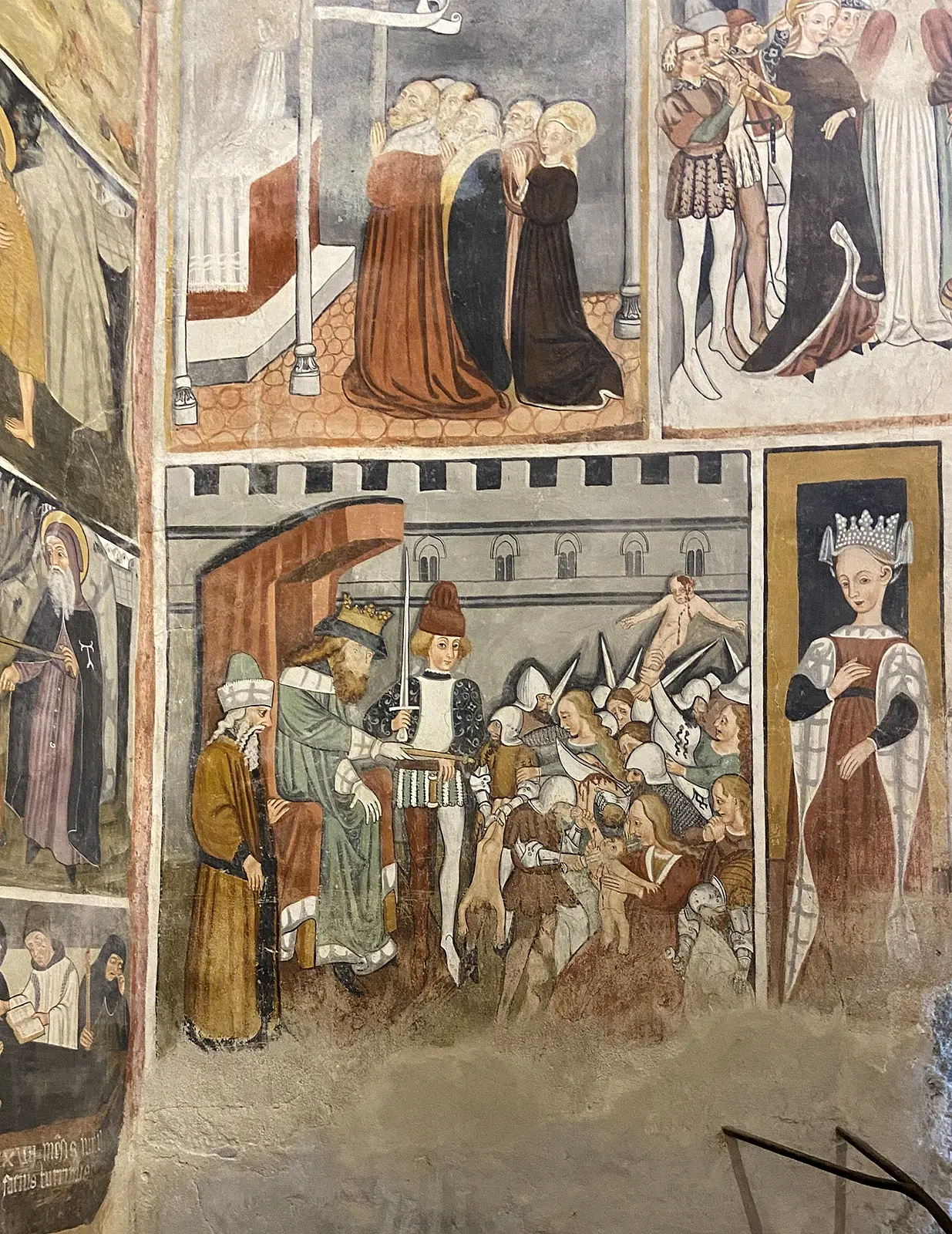
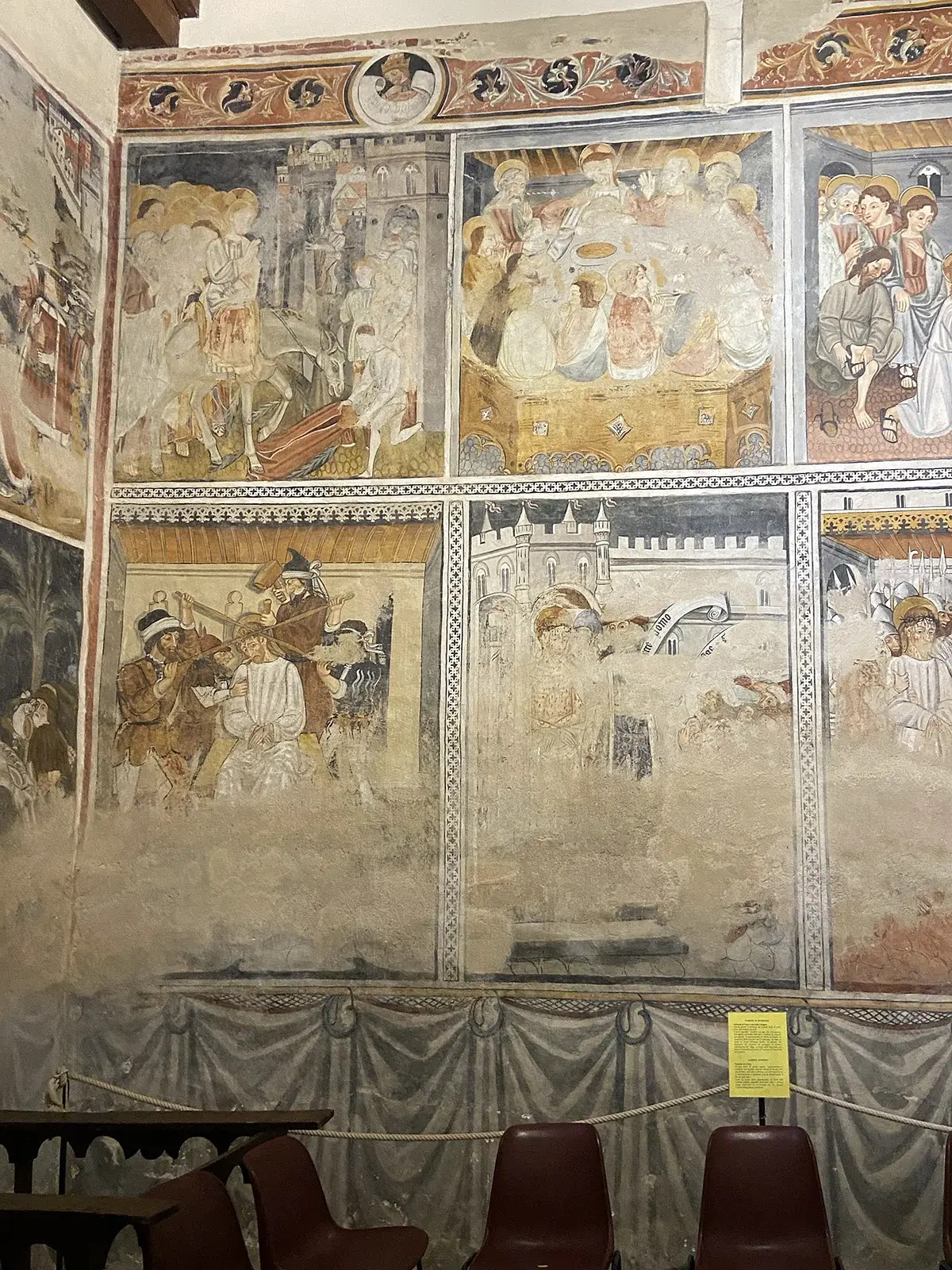
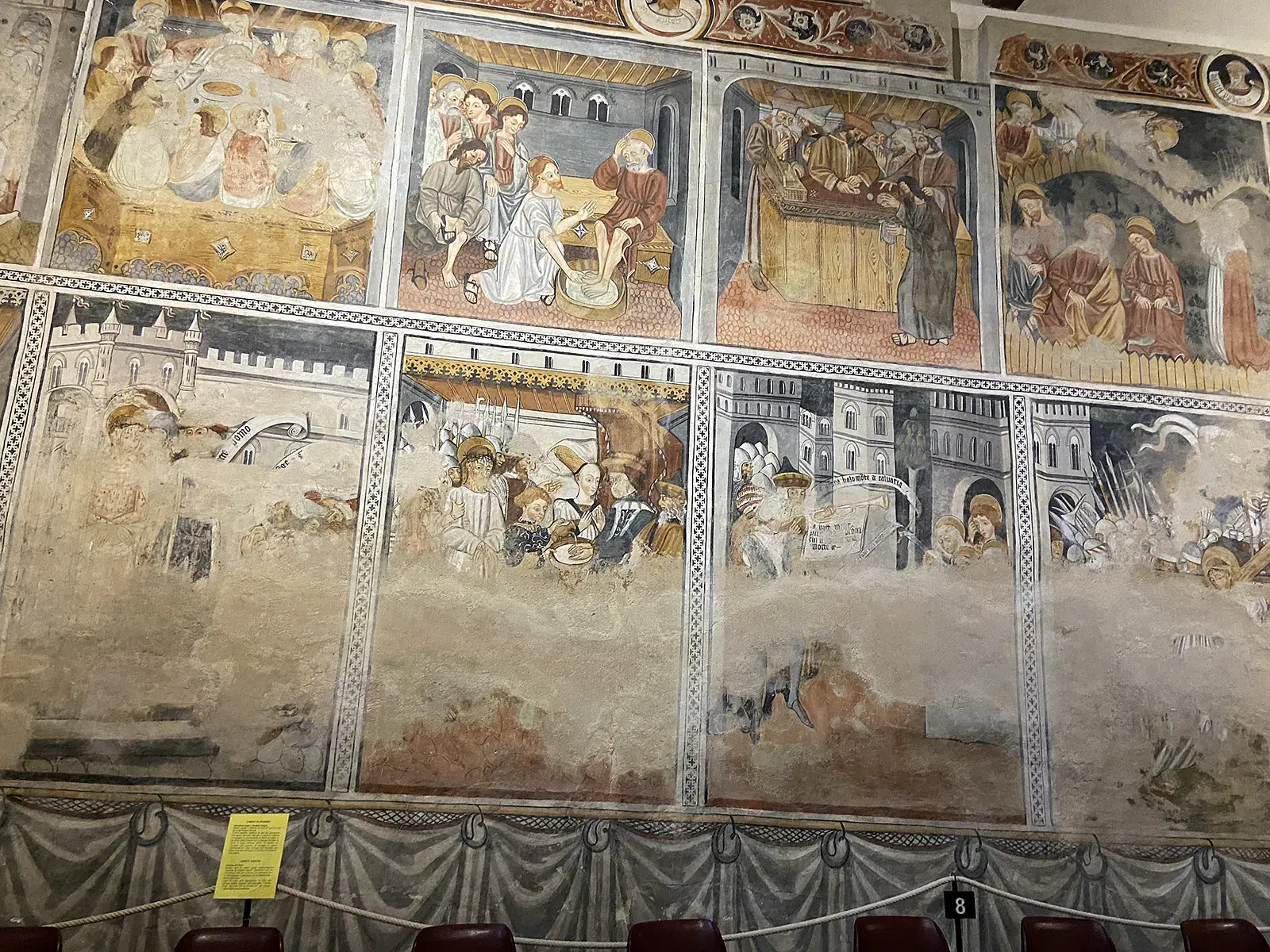
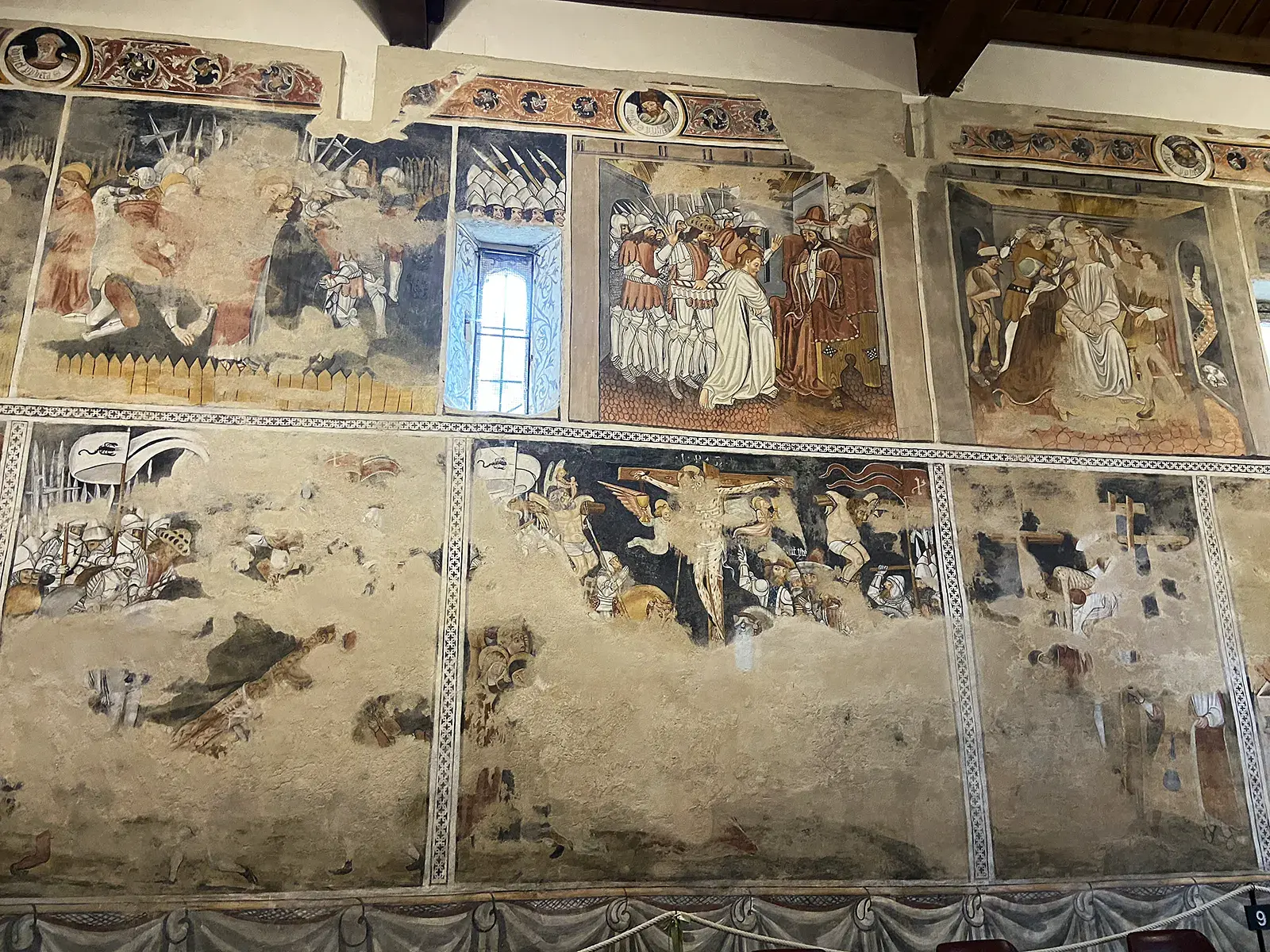
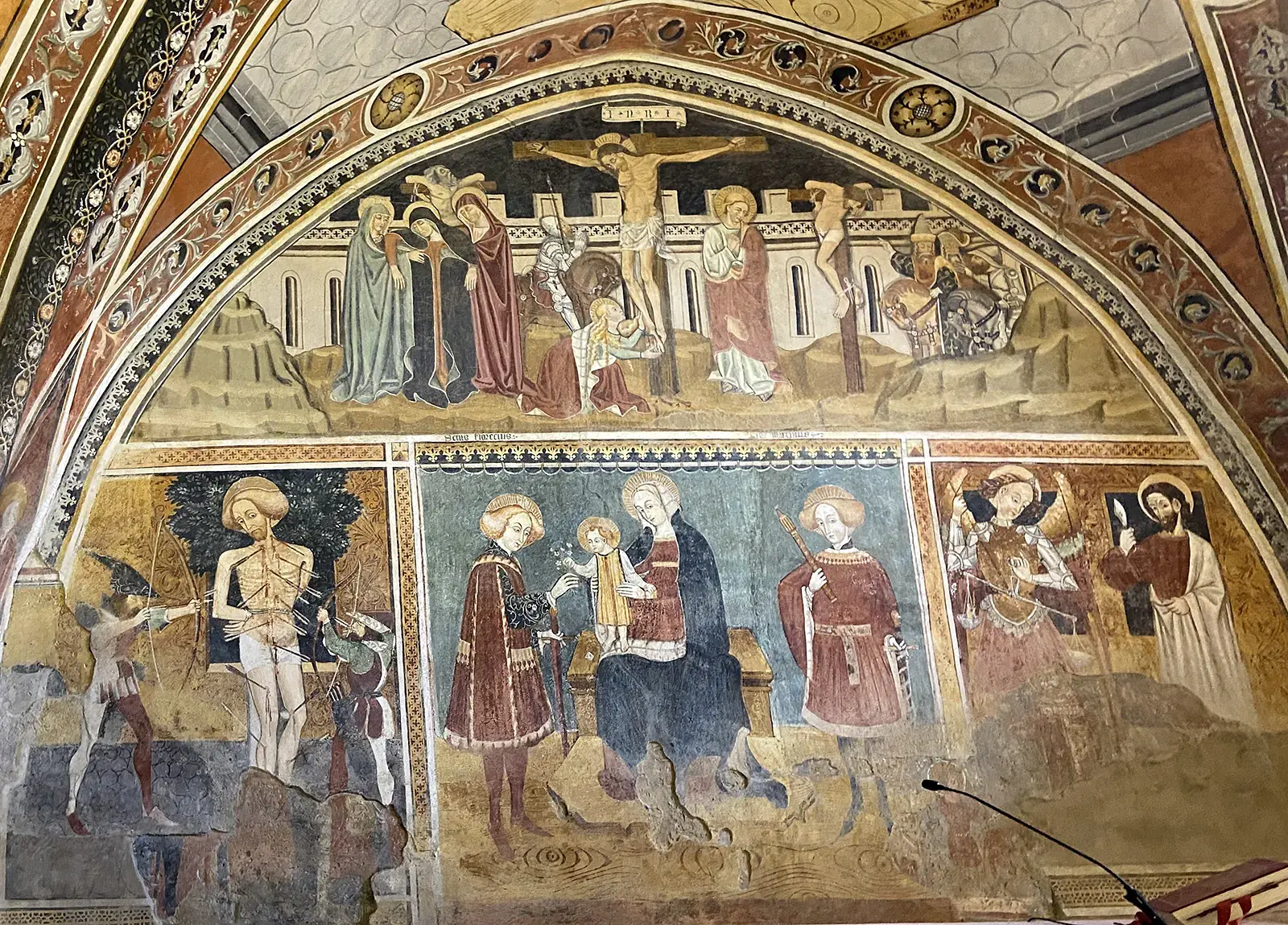
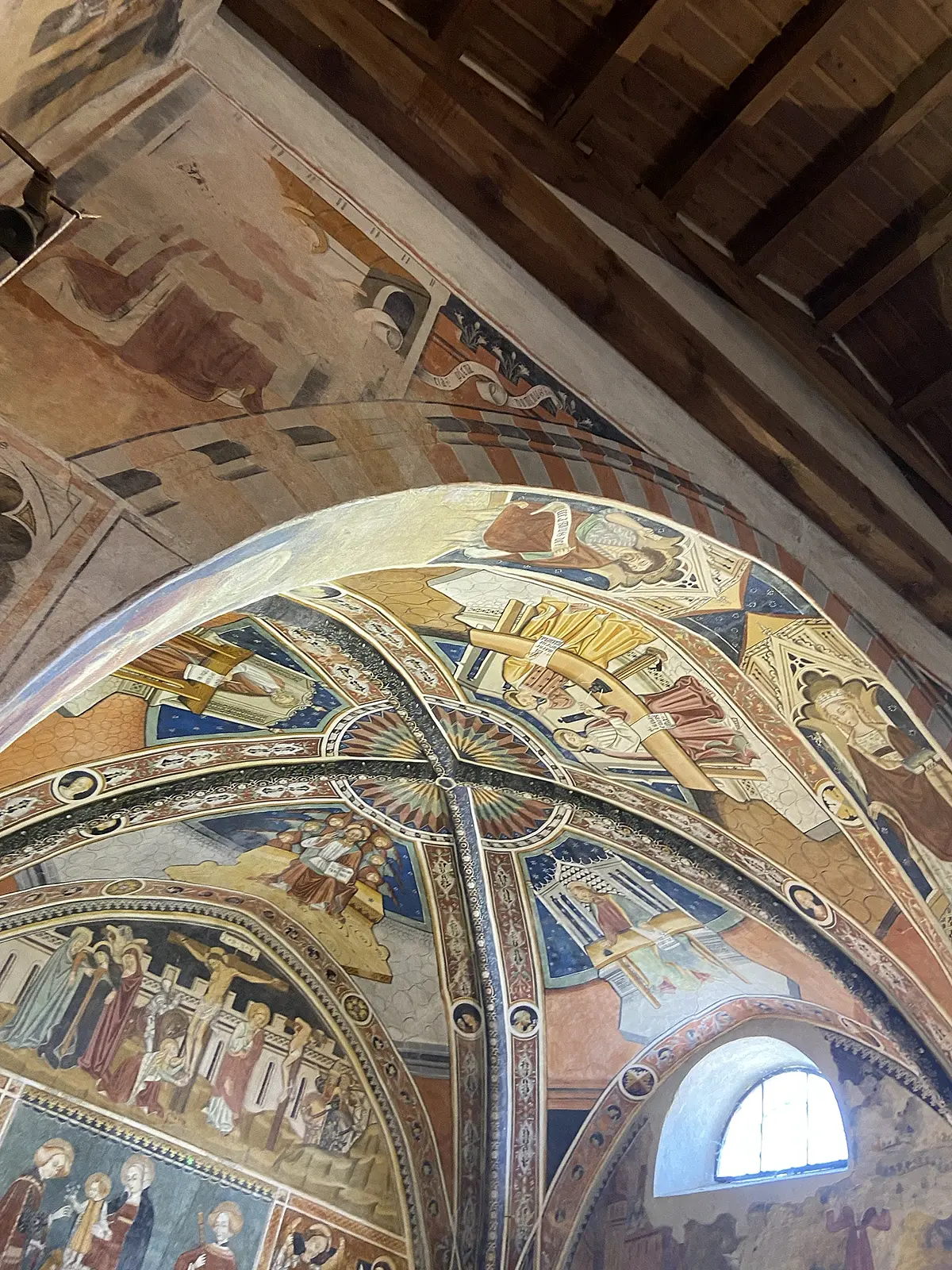
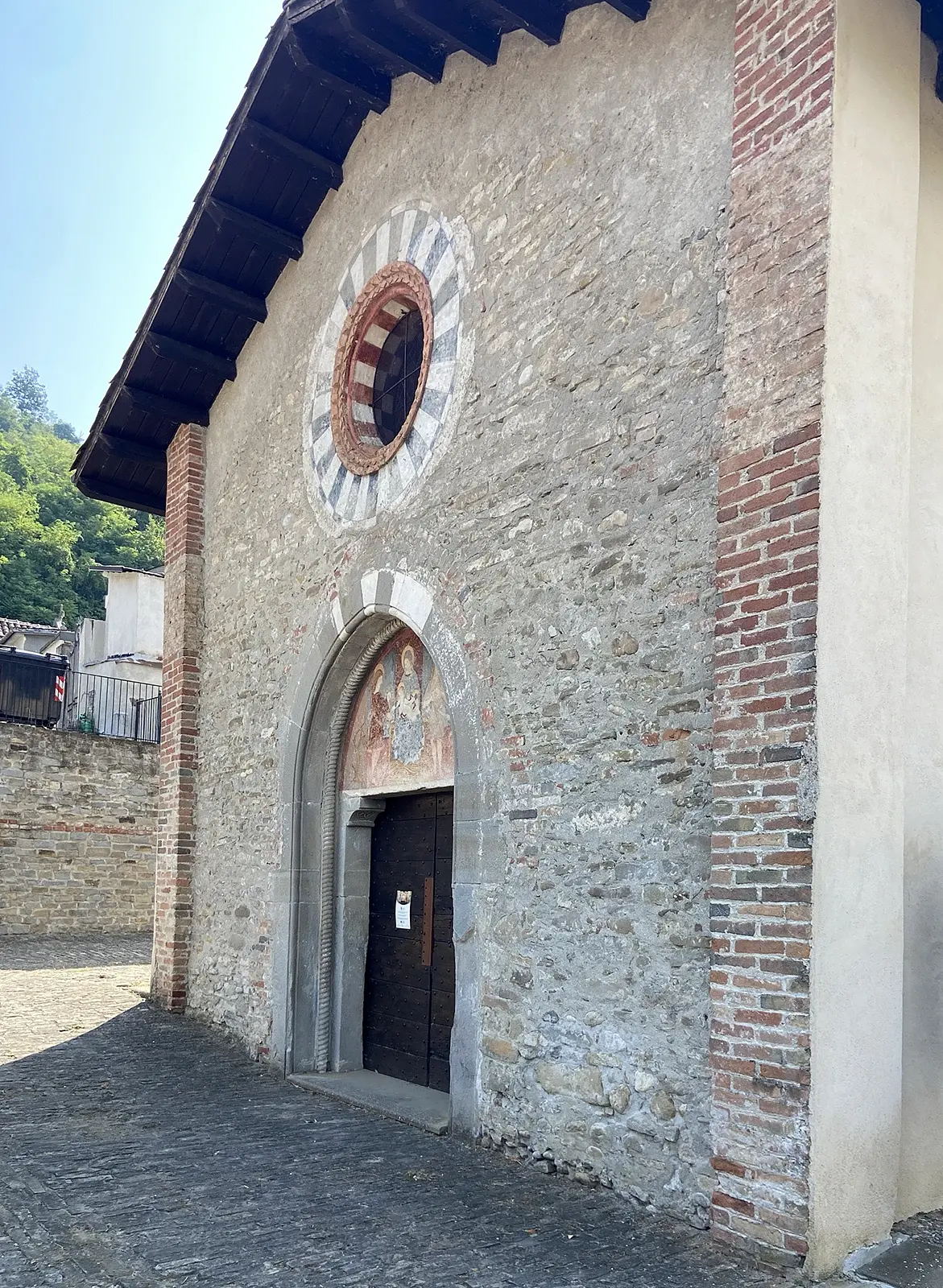
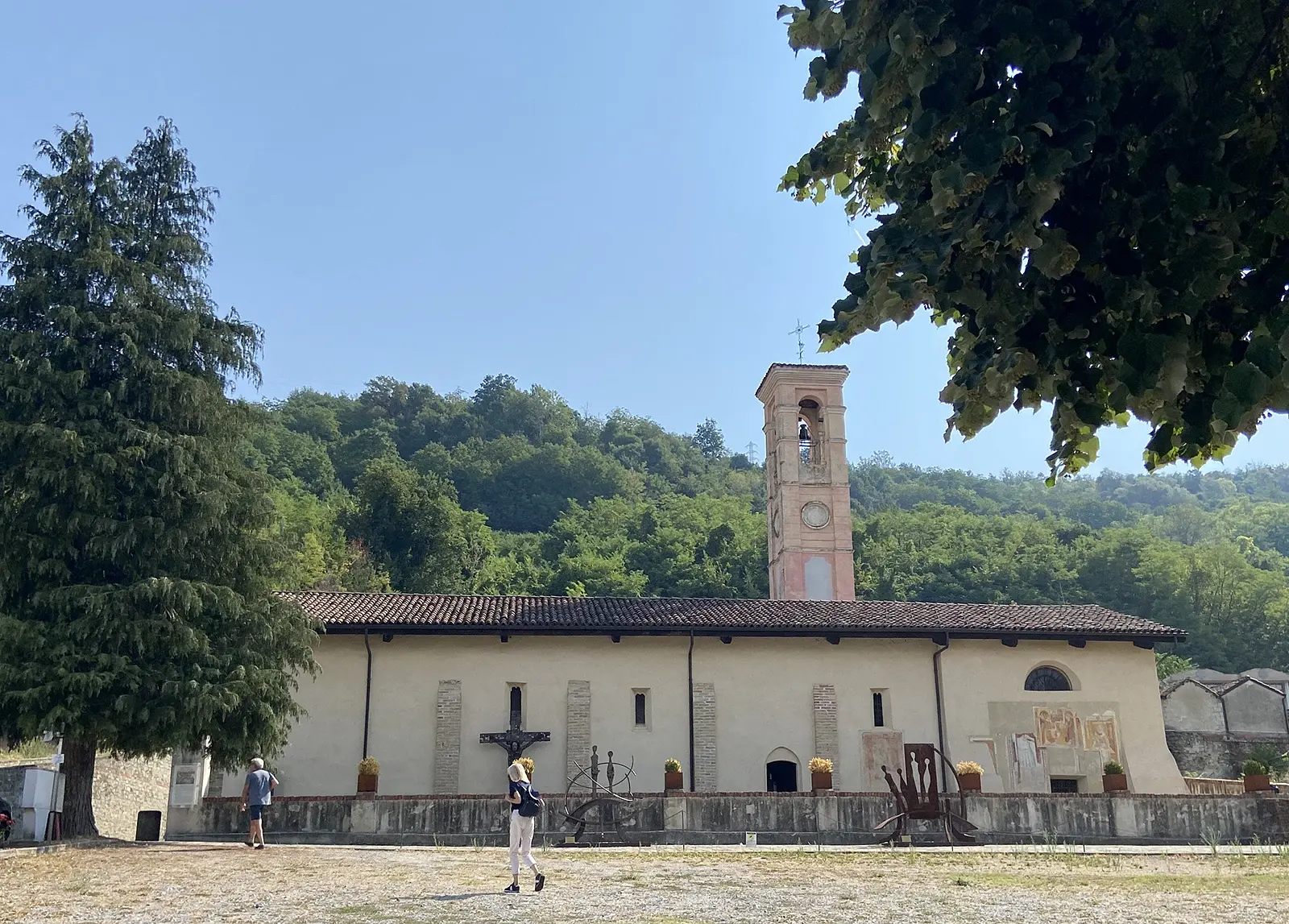
Just outside Bastia Mondovì, in the province of Cuneo, next to the cemetery and surrounded by the tranquility of the countryside, stands the Church of San Fiorenzo. Its unassuming exterior gives no hint of the treasure it holds within. As soon as you cross the threshold, you are struck by awe. You find yourself enveloped by an extraordinary cycle of late-Gothic frescoes that completely cover the walls— over 320 square meters of perfectly preserved surface area!
Why it’s special: A Bible painted on the walls
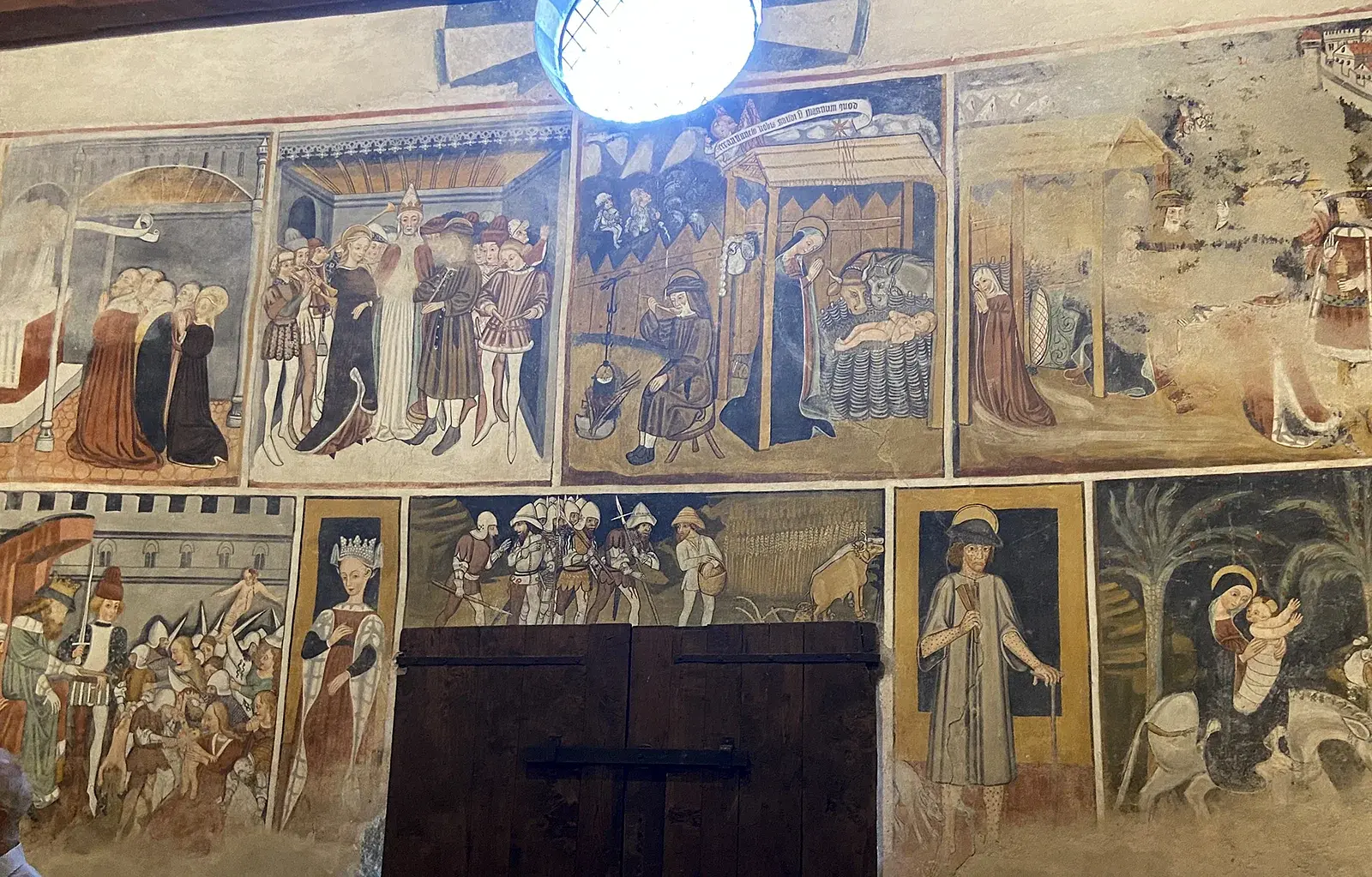
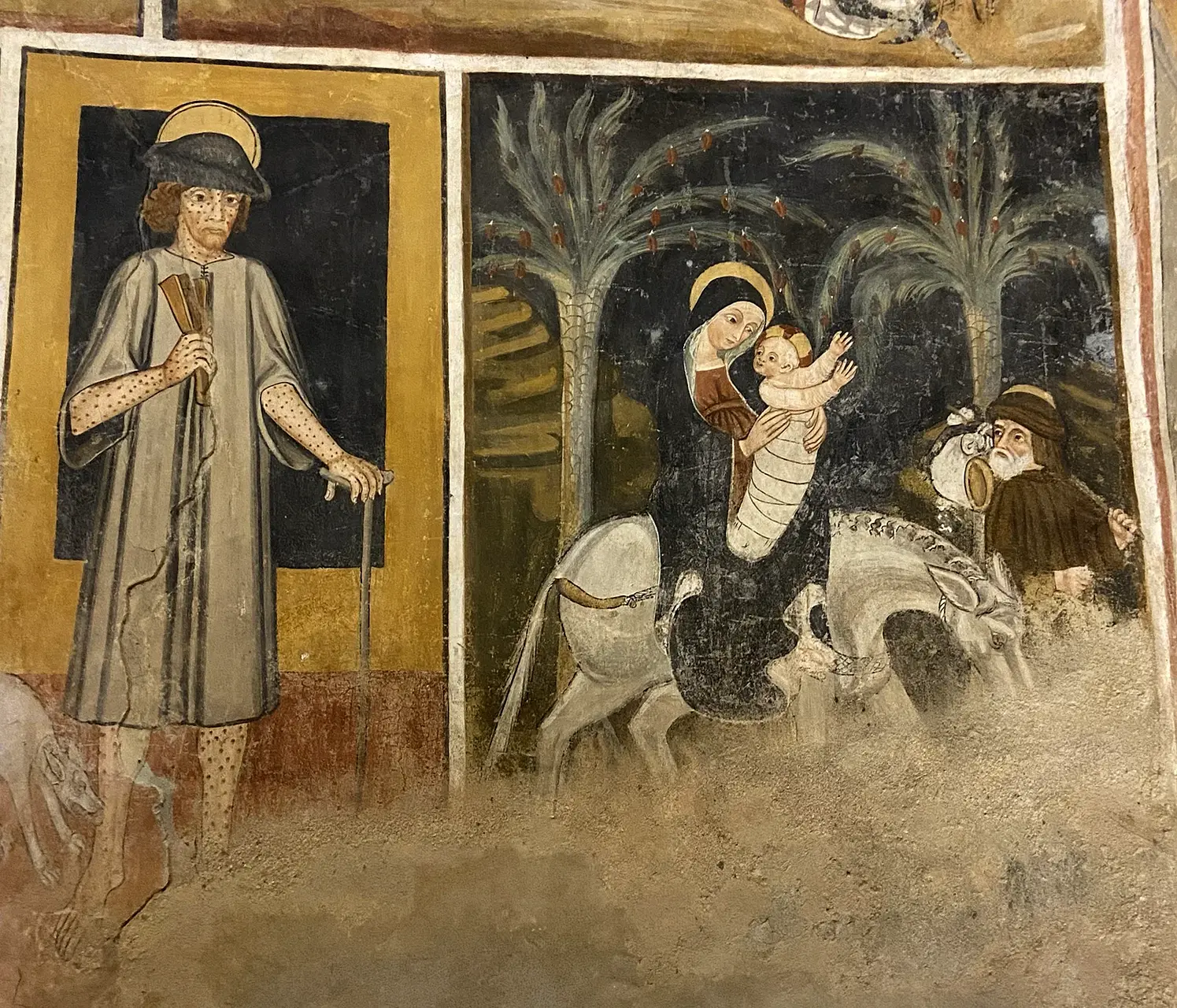
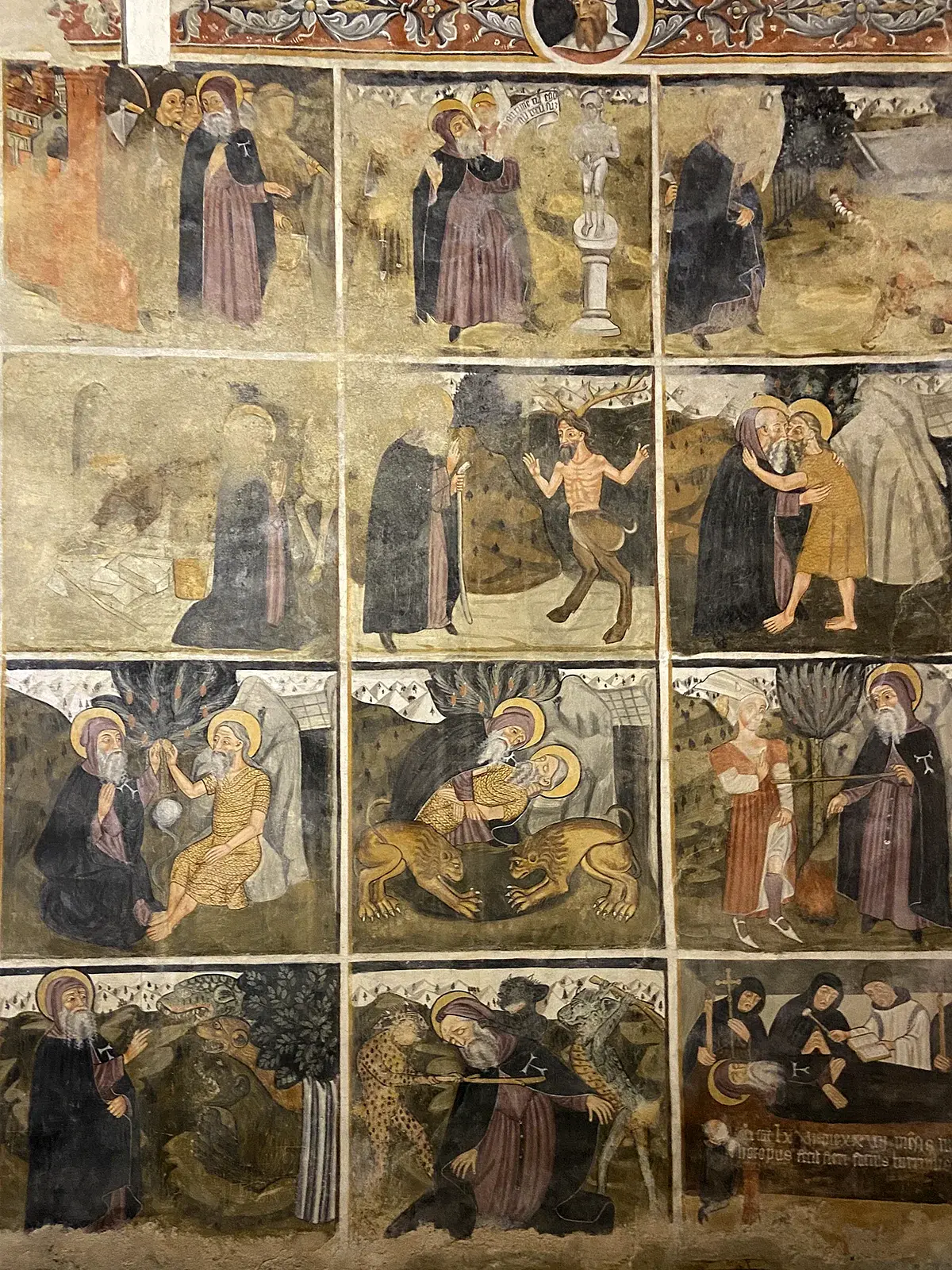
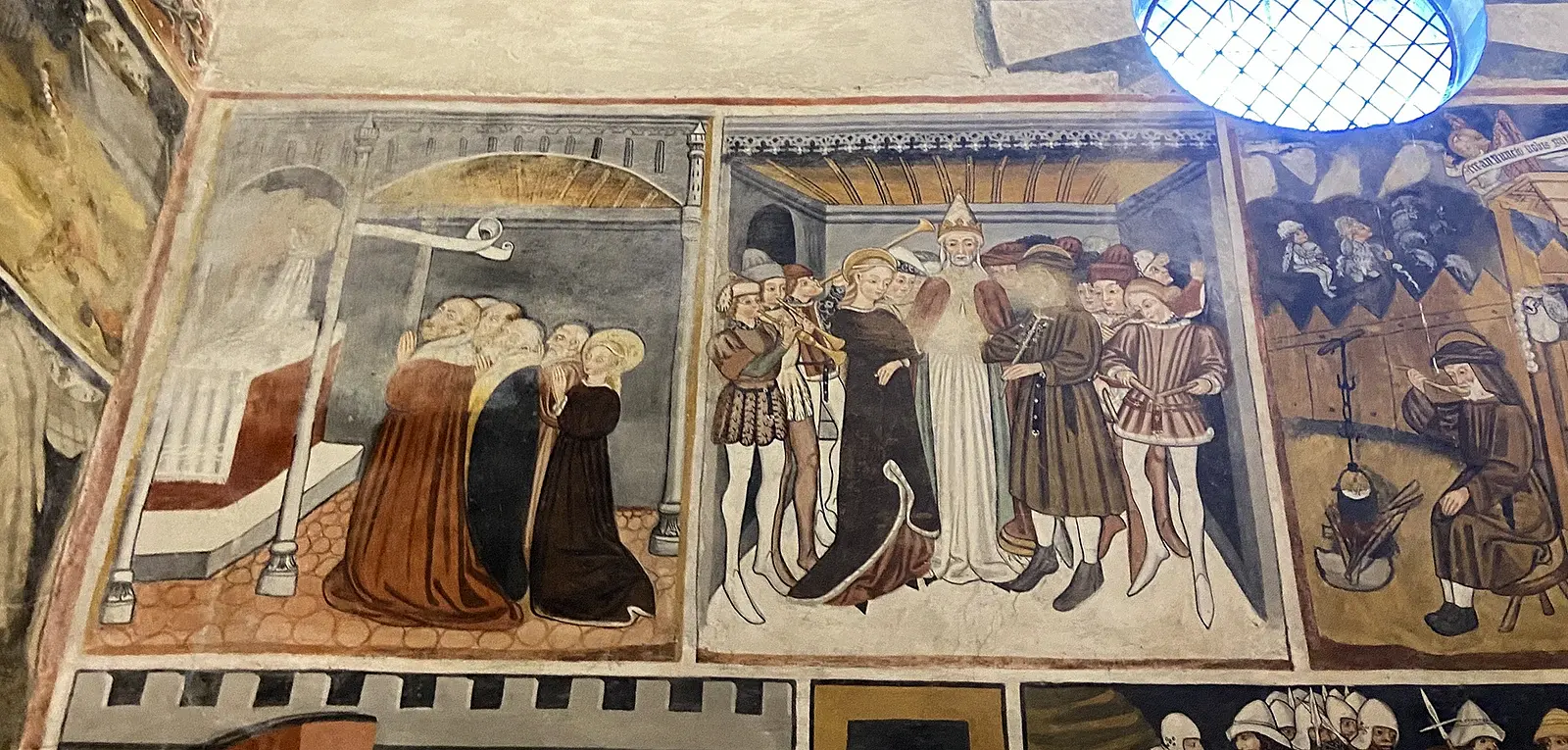
This extraordinary pictorial heritage constitutes one of the most spectacular “Biblia pauperum” in Piedmont. In an era when the population was almost entirely illiterate, the lives of Christ, the Virgin Mary, and the saints were divided into panels and arranged in strips, one below the other. The faithful could “read” the sacred stories by following the images with their eyes, just as we would today in a comic book. Nine panels are dedicatedto the Childhood of Jesus and the Life of Mary, drawing also from the apocryphal Gospels, with tender, domestic scenes; 21 panels narrate the Cycle of Christ’s Passion and Resurrection; 9 depict the Stories of Saint Florentius, the soldier-saint of the Theban Legion, including his miracles and final martyrdom; and 12 portray the Stories of Saint Anthony the Abbot, focusing on his struggles against demons in the desert. In the presbytery are Christ giving his blessing, the four evangelists, the Crucifixion, and Mary enthroned.
The must-see feature: the Last Judgment
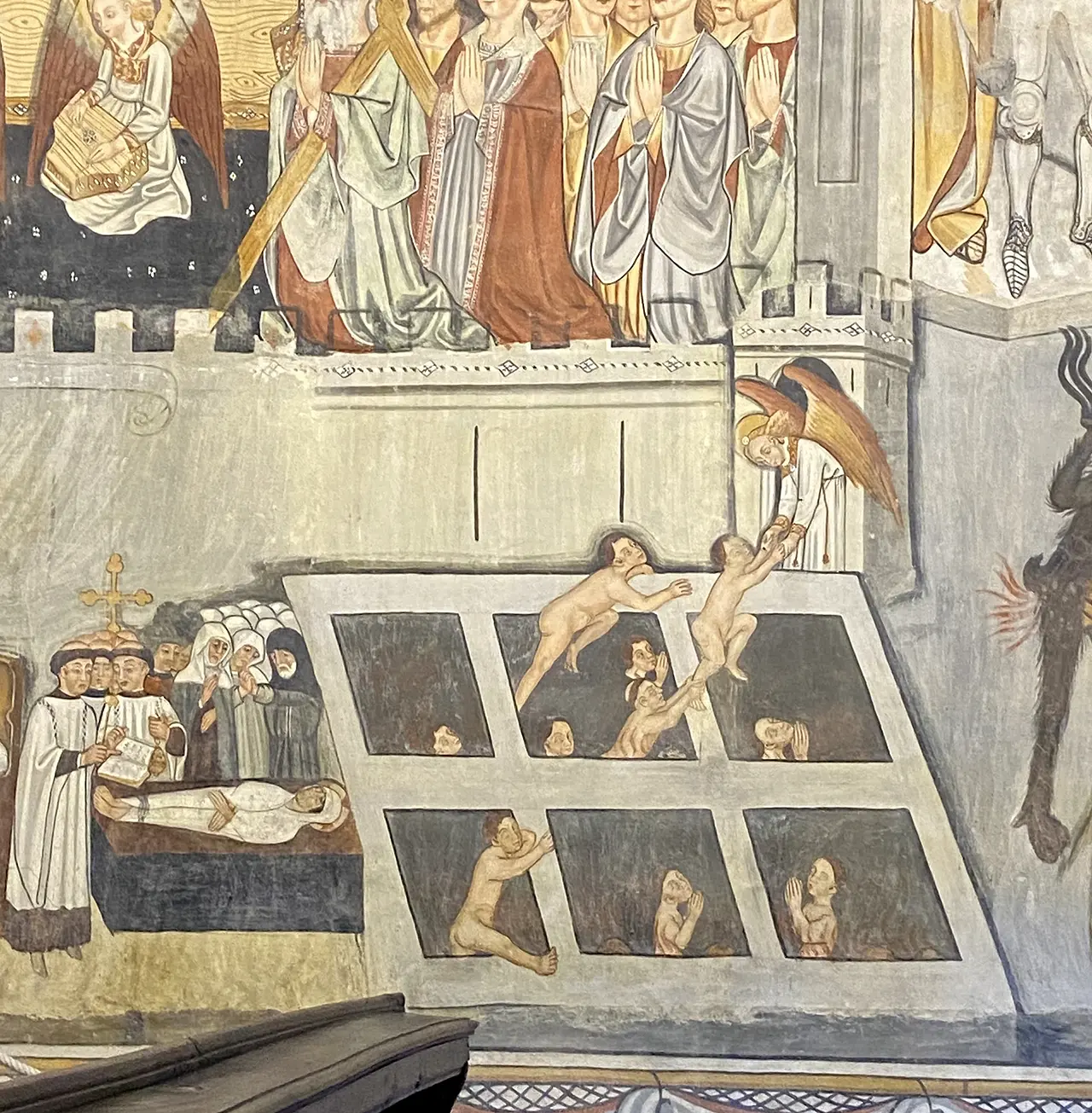
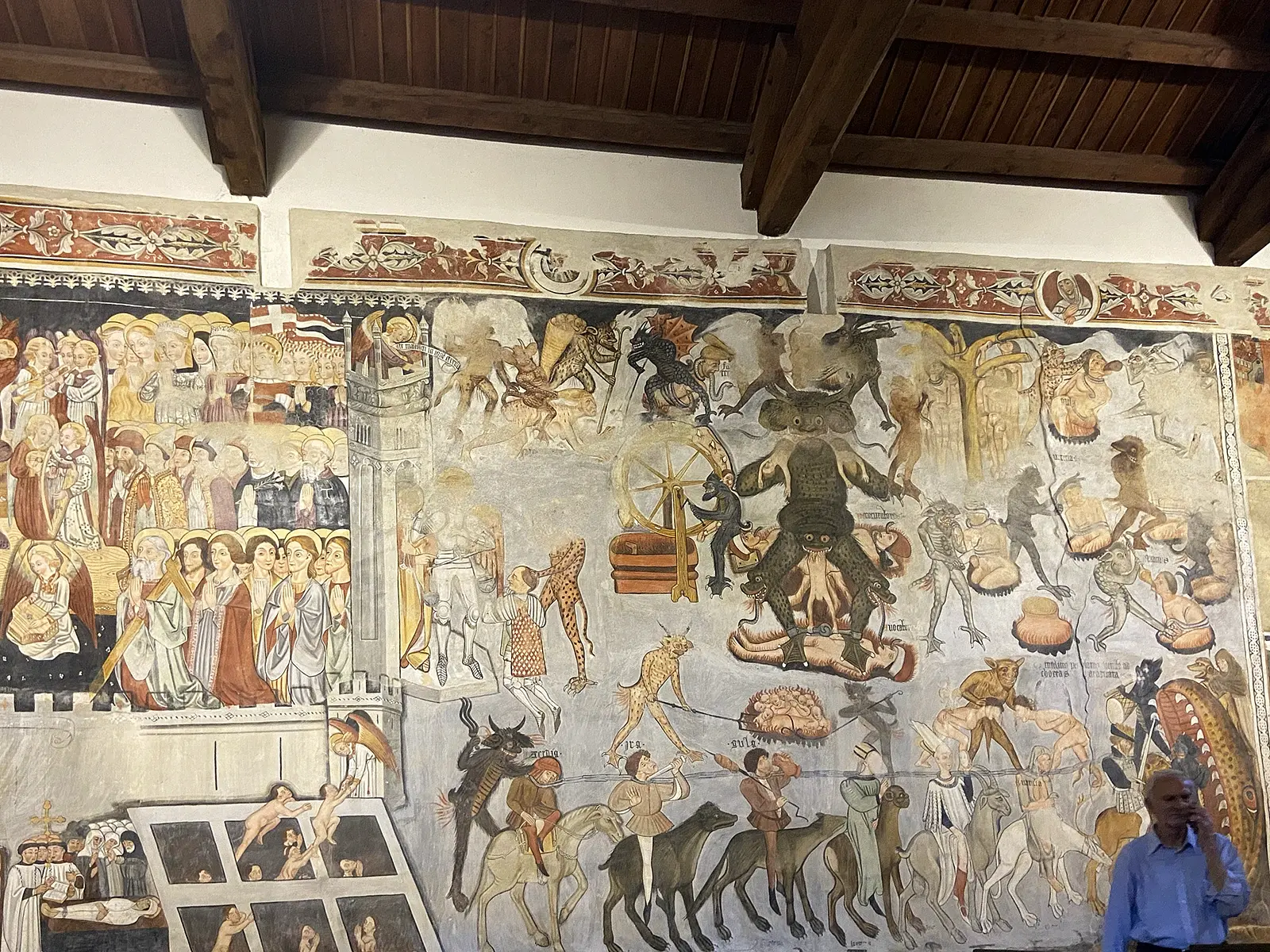
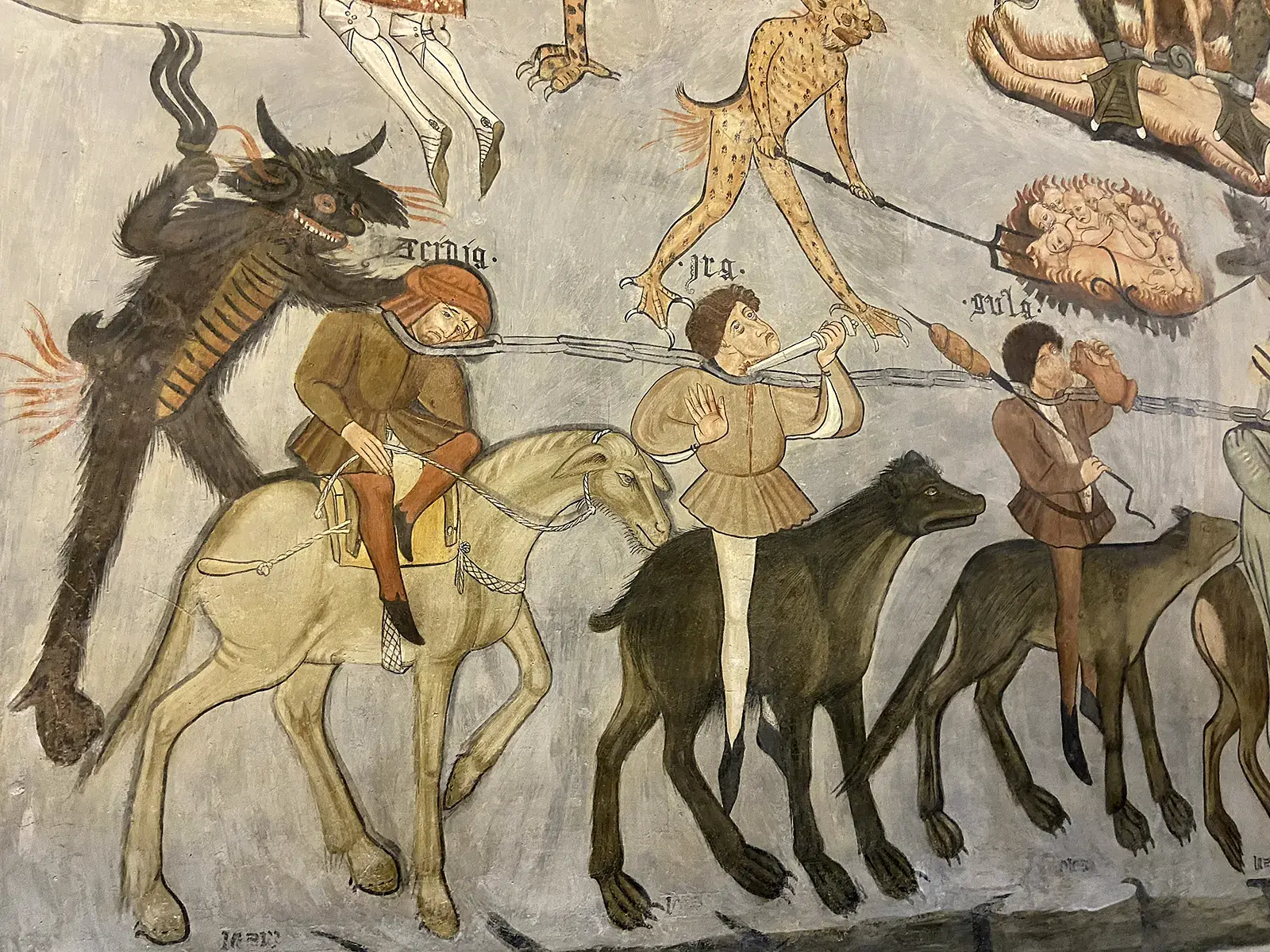
While every corner of the church deserves attention, one element is truly breathtaking: the vast depiction of Hell and Heaven. The scene of the Last Judgment possesses remarkable expressive power: on one hand, the geometric order and serenity of the blessed welcomed into heaven; on the other, a chaotic and terrifying procession of grotesque demons torturing the damned. The punishments, which follow the principle of “contrappasso” (karmic retribution), are depicted with a naive yet raw and detailed realism— albeit with a touch of irony—intended to shock the medieval observer and lead them back onto the straight and narrow.
Fun Fact: Sweet or Biting Details That Bring the Story to Life
There are many curious details to be observed in these frescoes: the procession of sinners bound by a chain—some dressed in the sumptuous garments of the high nobility— in a veiled social satire, suggesting that earthly wealth cannot save one from eternal damnation; the tiny souls emerging from a strange, checkerboard-like Purgatory; the tender, domestic scene in which the newborn Mary is bathed in a basin and then tightly swaddled in white cloths, according to the custom of the time, while maidservants nearby are busy preparing broth for her mother. But the most curious of all is the scene in which Saint Joseph takes on the role of cook: instead of being portrayed off to the side, pensive or asleep, here he is depicted with a ladle in his hand, in the act of tasting chicken broth simmering in a cauldron over the fire—the broth that was served at the time as a panacea for new mothers. Behind him is the delightful detail of a braid of garlic hanging from the wooden poles of the hut.
A Brief History of the Church of San Fiorenzo
The history of San Fiorenzo is linked to its geographic location. It began as a small rural wayside shrine , perhaps at the end of the 10th century , along the ancient Salt Roads— vital arteries connecting the Piedmontese plain to the Ligurian coast. The constant passage of merchants, pilgrims, travelers, and soldiers prompted the local community to gradually expand the structure, transforming it into a square-plan parish church with a cross vault, serving as a place of rest, prayer, and protection for travelers. In the 15th century, the village of Bastia broke away from the influence of nearby Mondovì and formally became part of the domains of the House of Savoy. In 1409, the Savoy fief was entrusted to the wealthy and powerful Della Torre family . The local lord, Count Bonifacio della Torre, decided to radically transform the chapel and hired the finest itinerant painters from southern Piedmont. The walls were painted by several masters of the Piedmontese Gothic style: Giovanni and Enrico Mazzucco, famous local artists responsible for the cycle of Saint Anthony; the Biazaci brothers from Busca, renowned in the Cuneo valleys for their expressiveness; and Antonio da Monteregale, who created the most dynamic and modern scenes.
Enter the Map of Italy's Hidden Wonders and find treasures where you least expect it... Inspire, Recommend, Share...
Collections
The Map thanks:
Enter the Map of Italy's Hidden Wonders and find treasures where you least expect it... Inspire, Recommend, Share...
Where
Collections