
Malatesta Temple in Rimini
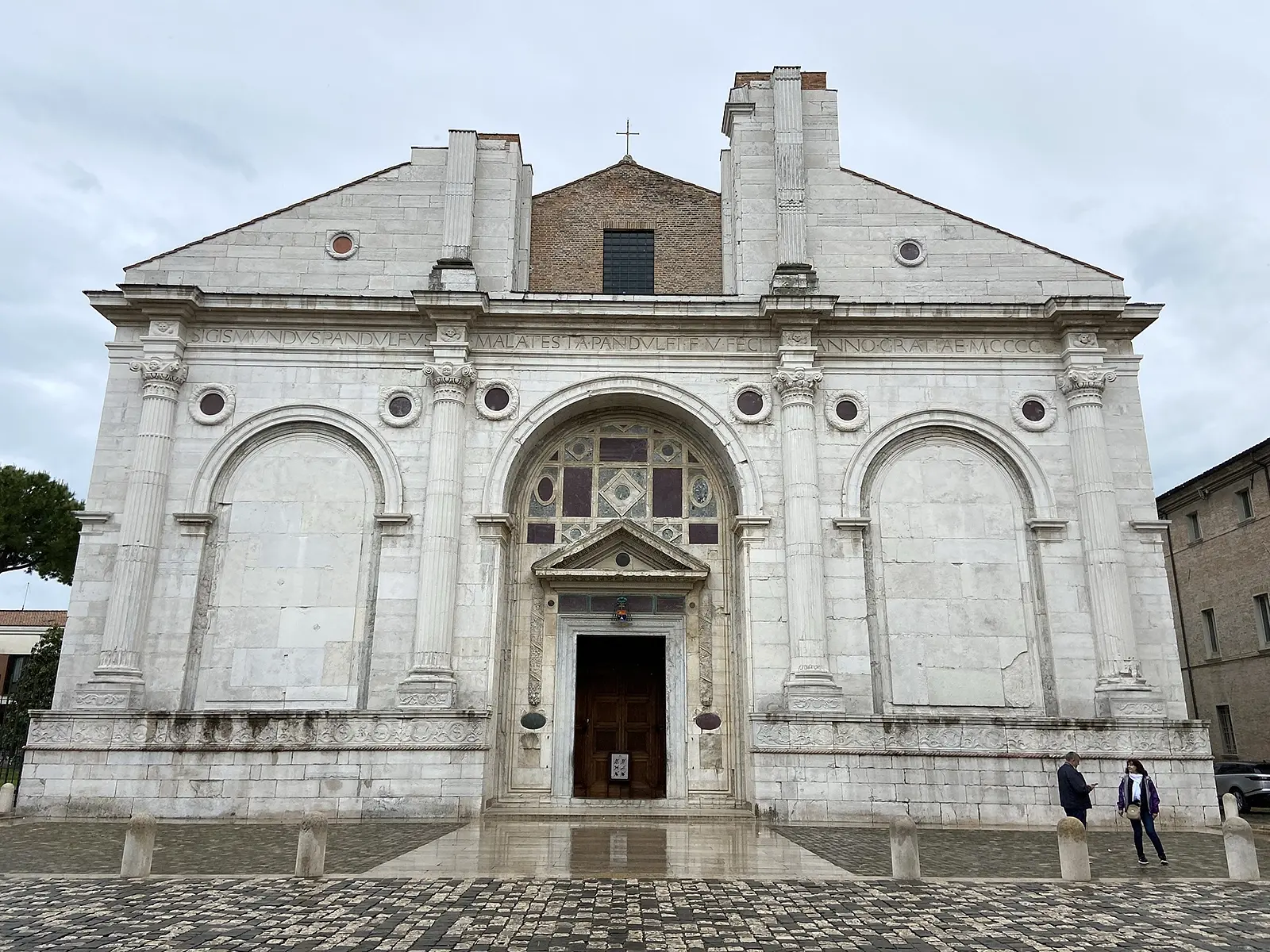
The Malatesta Temple stands out in the heart of Rimini with its snow-white marble, like a magnificent pagan monument


Where

What Is the Malatesta Temple in Rimini and Where Is It?
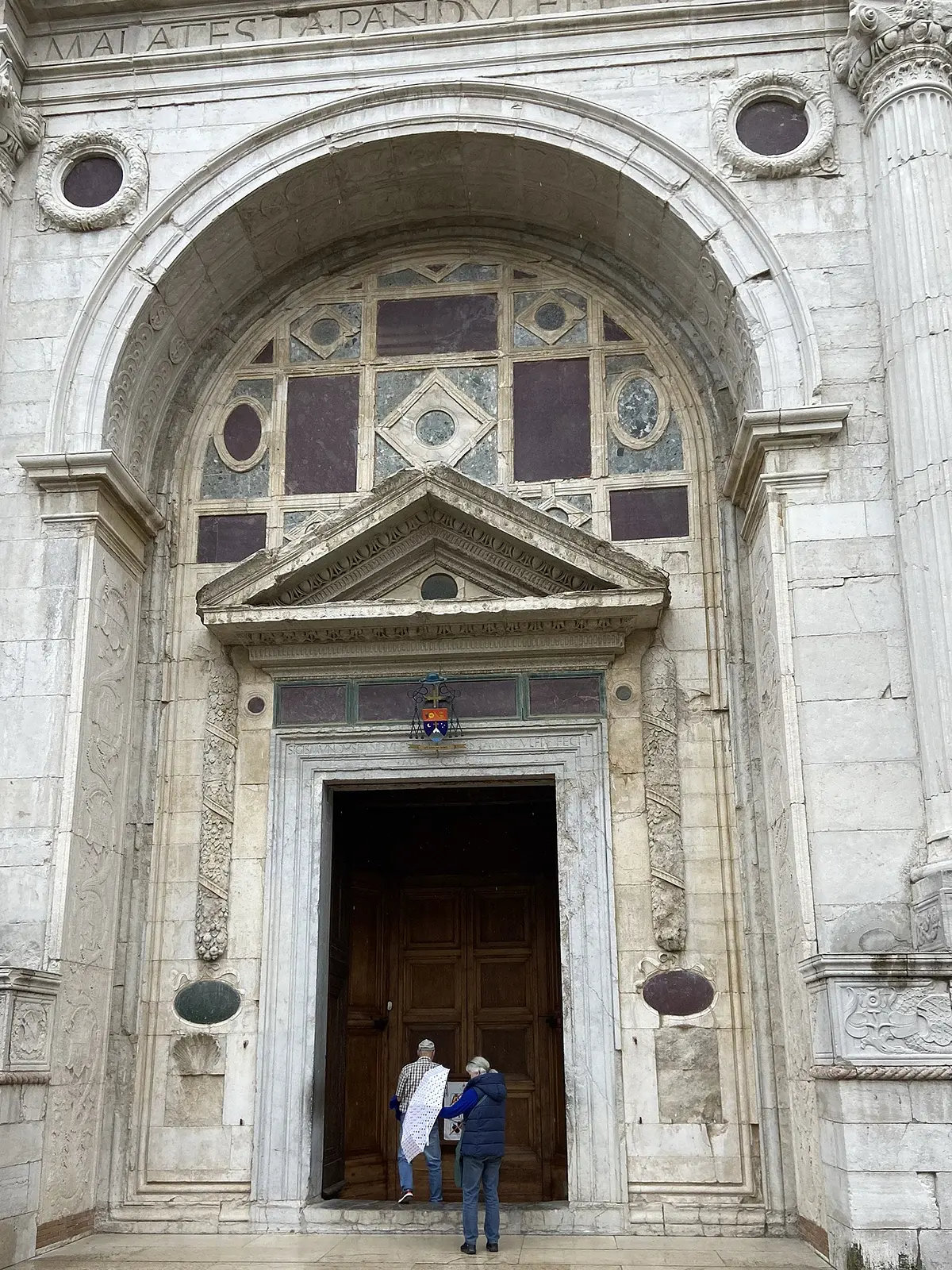
Also known as the Cathedral of Santa Colomba, it is Rimini’s most famous monument and an absolute masterpiece of Italian Renaissance architecture. Although it is a Catholic church in every sense, the structure resembles a Roman temple, a tribute to a newly rediscovered classical antiquity.
A Bit of History
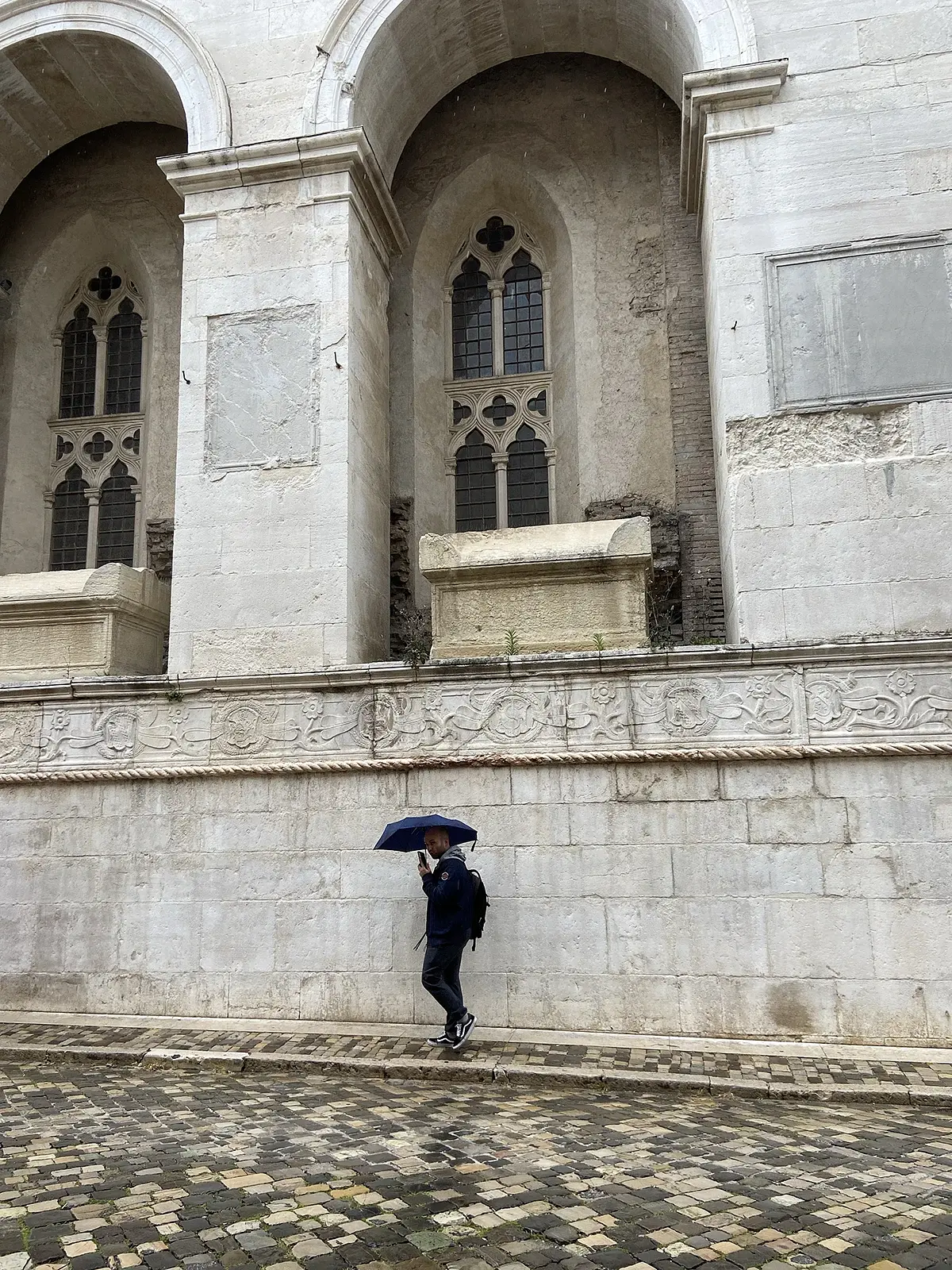
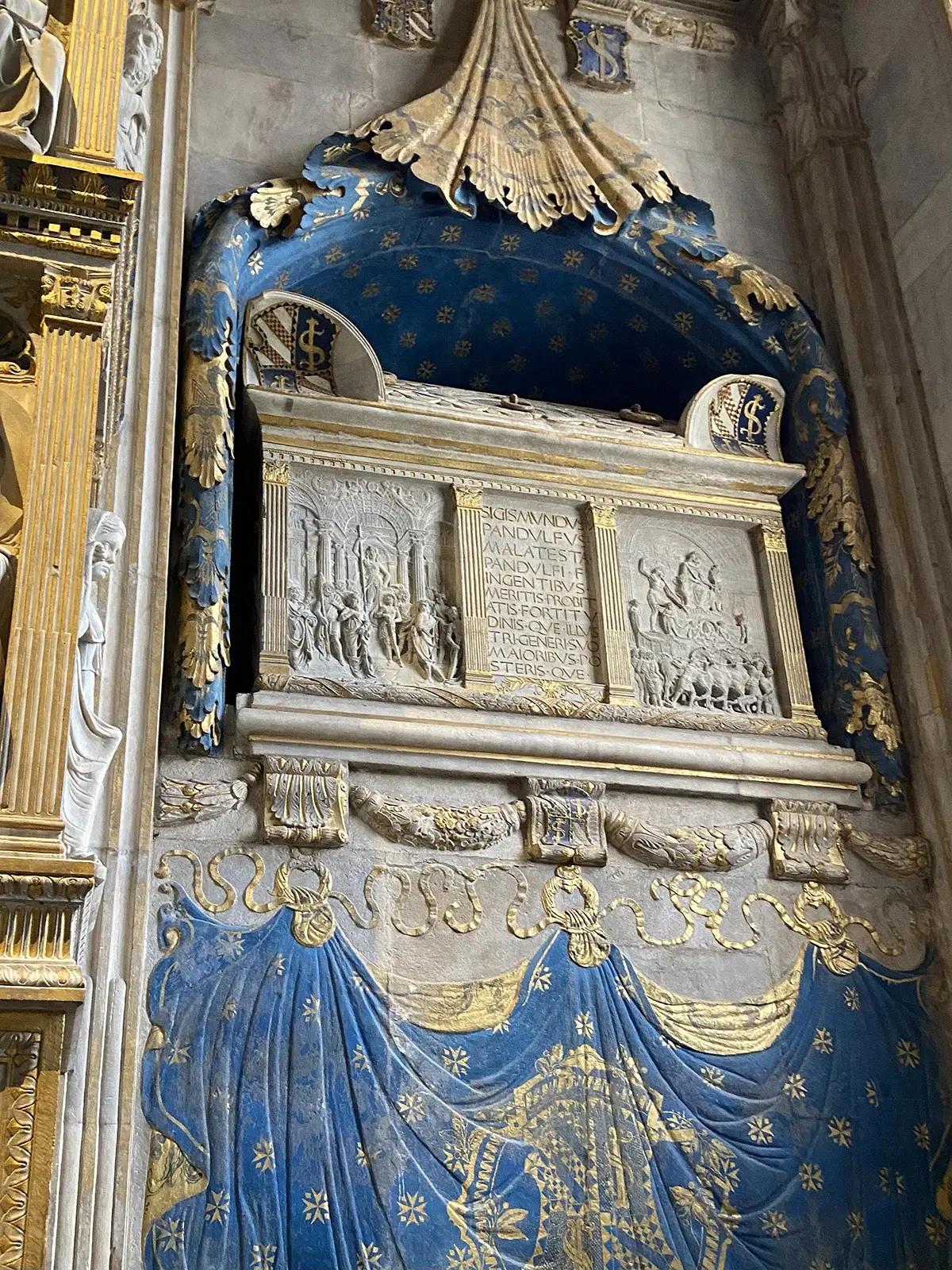
The building stands on the site of a pre-existing 13th-century Gothic church dedicated to St. Francis and used as a burial place by the Malatesta family , who ruled the city. The transformation took place in 1447, when the lord of Rimini, Sigismondo Pandolfo Malatesta, decided to turn the chapel into a mausoleum that would celebrate the family’s fame. In 1450, the renovation project was entrusted to the renowned architect and humanist Leon Battista Alberti. The architect, aware that the old church would not be able to support the weight of the renovation, enclosed the old medieval structure within a bold, self-supporting white marble shell, separated from the church by a cavity, a shell that is clearly visible on the left side of the building and was constructed using reclaimed materials from the ruins of Classe. The work, however, was never completed due to Sigismondo’s rapid political and economic decline—he had been excommunicated by Pope Pius II—so the upper part of the façade remains visibly unfinished.
Why It’s Special: The Decoration That Horrified the Pope
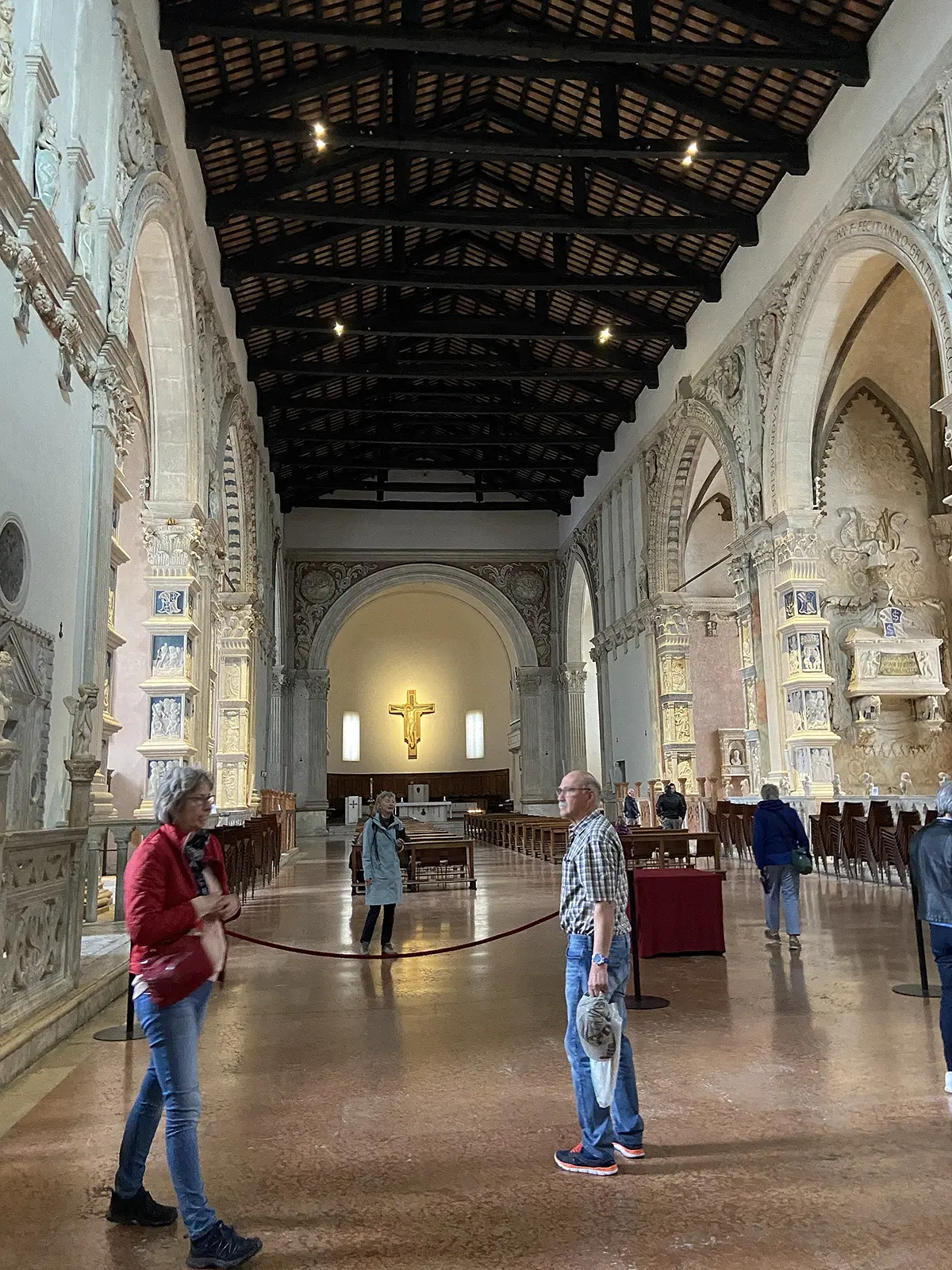
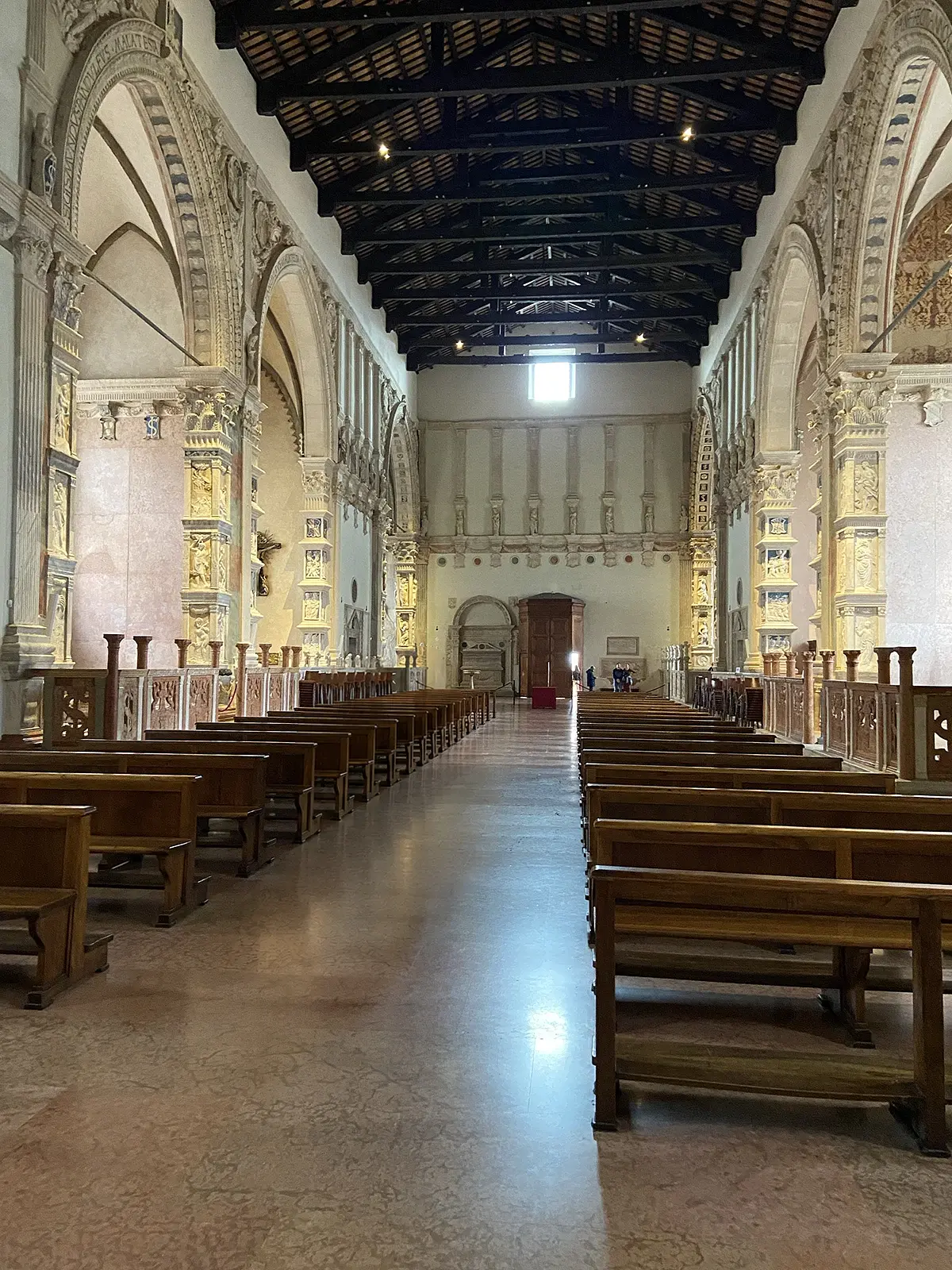
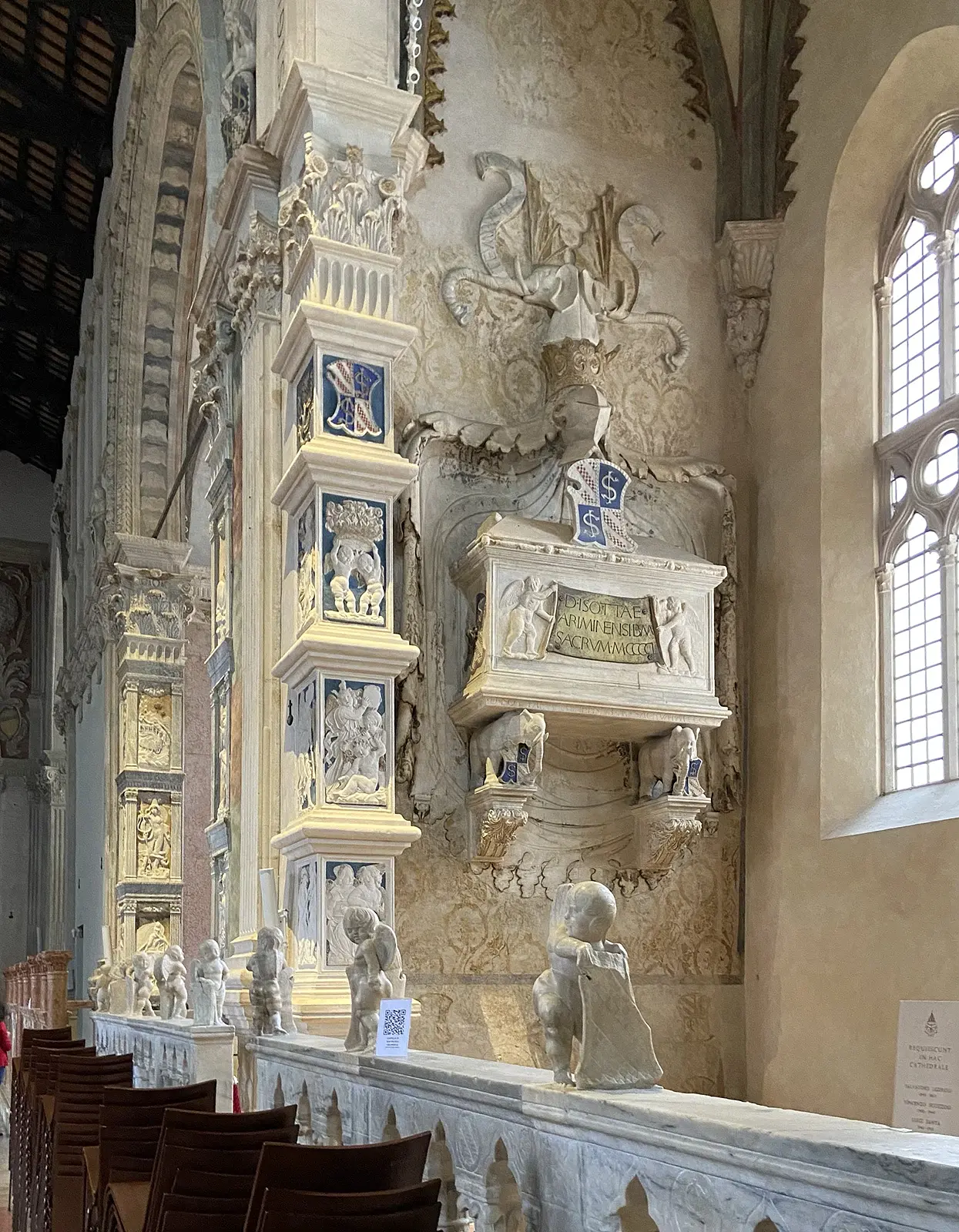
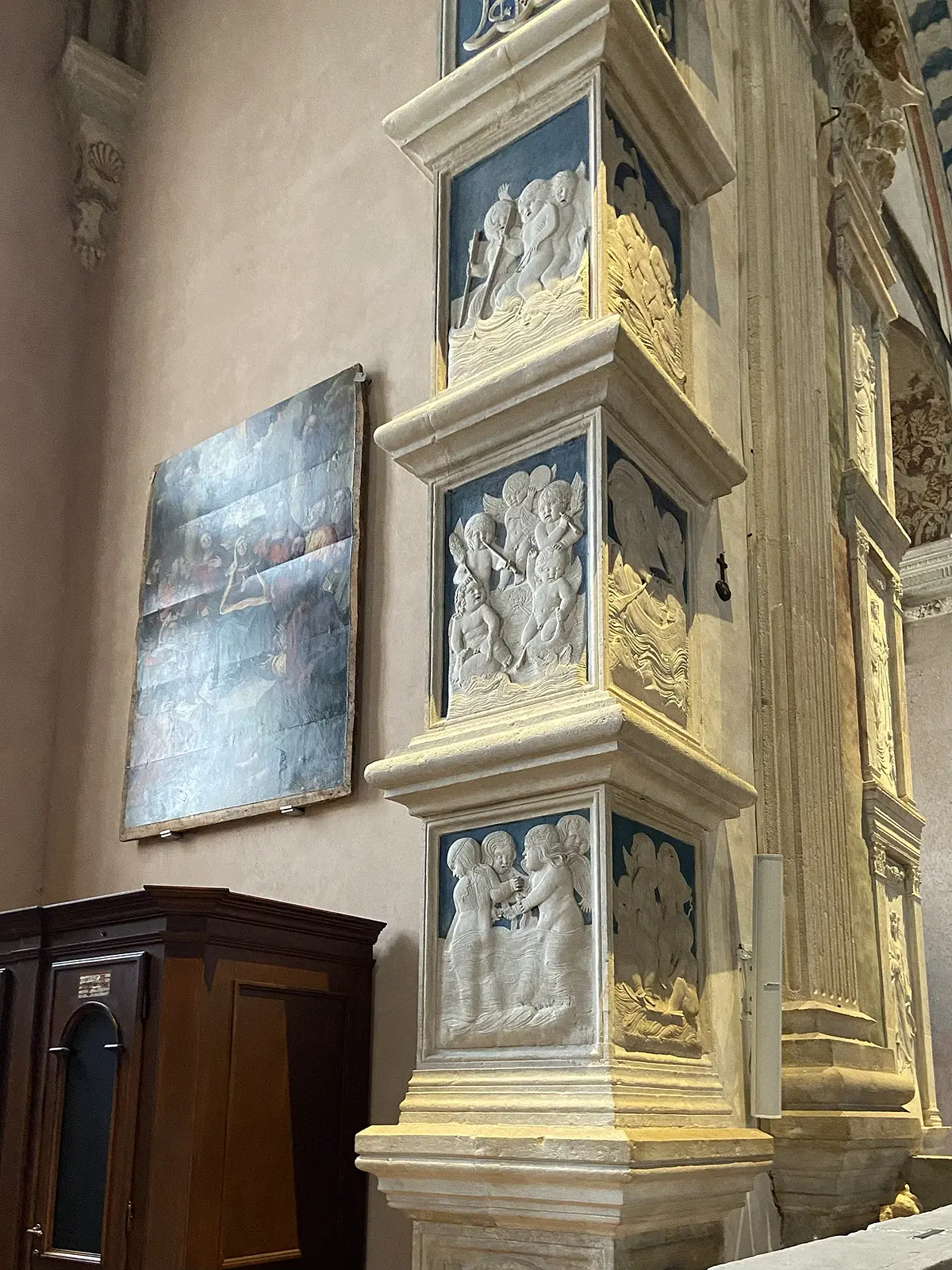
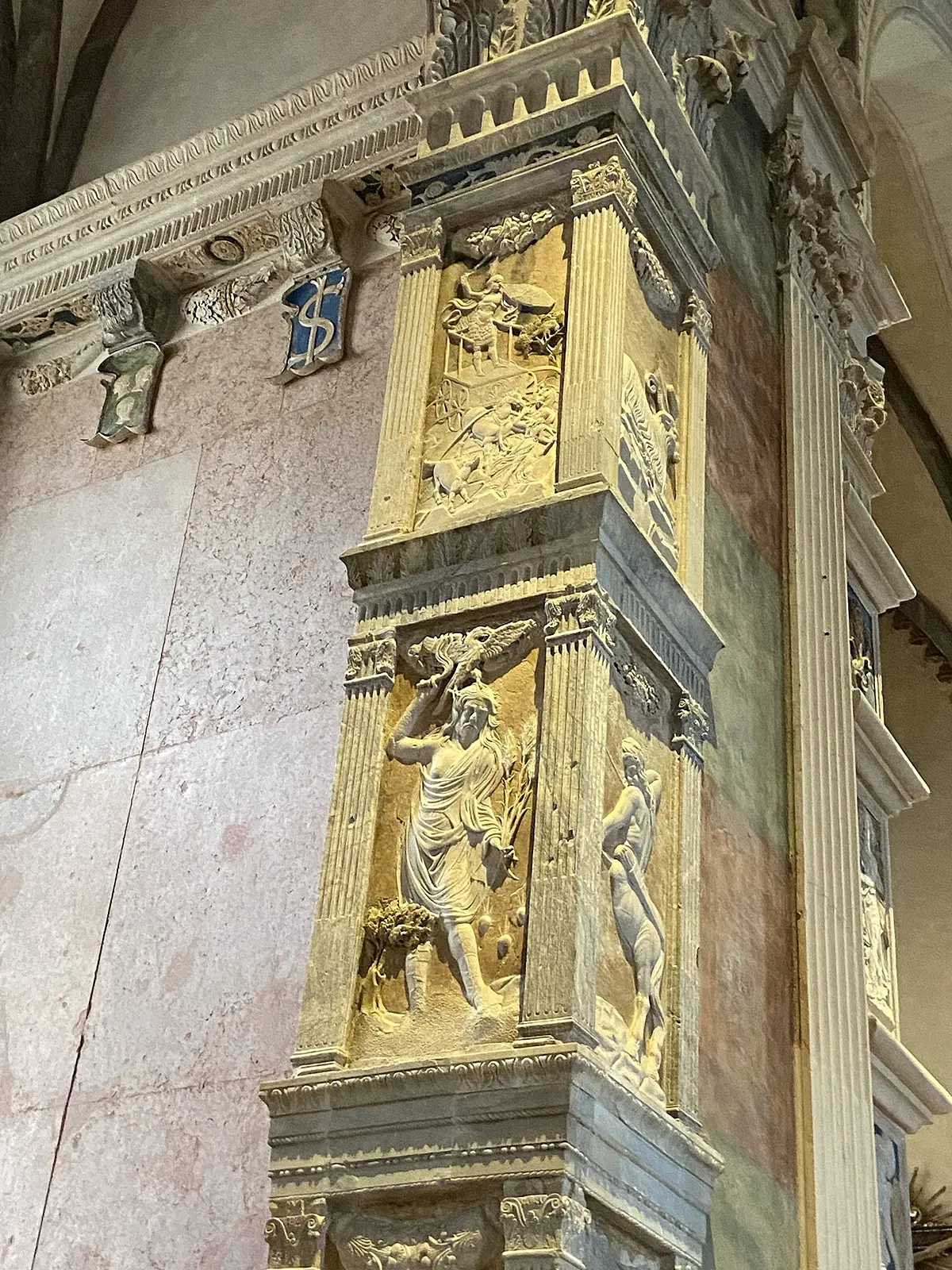
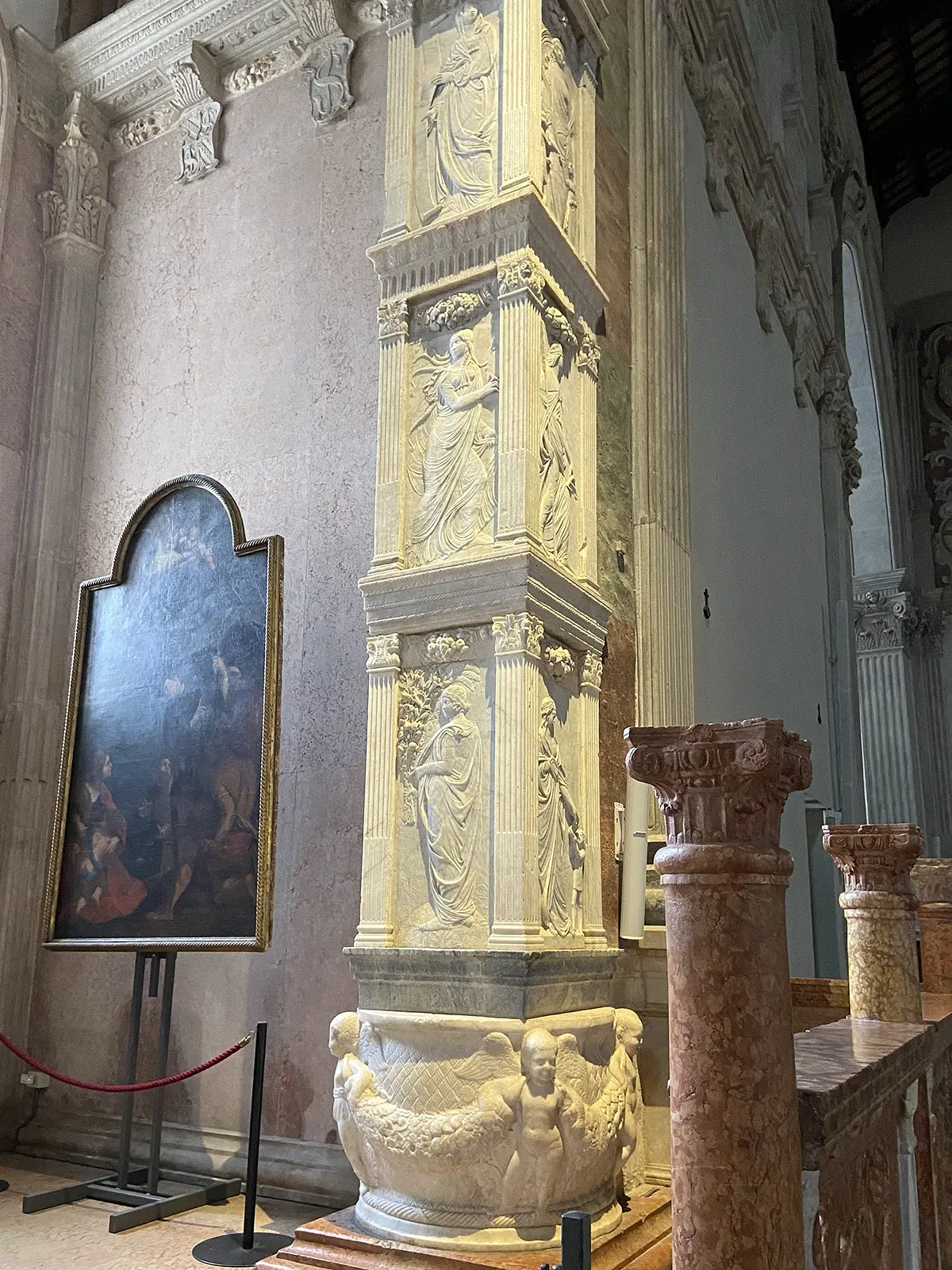
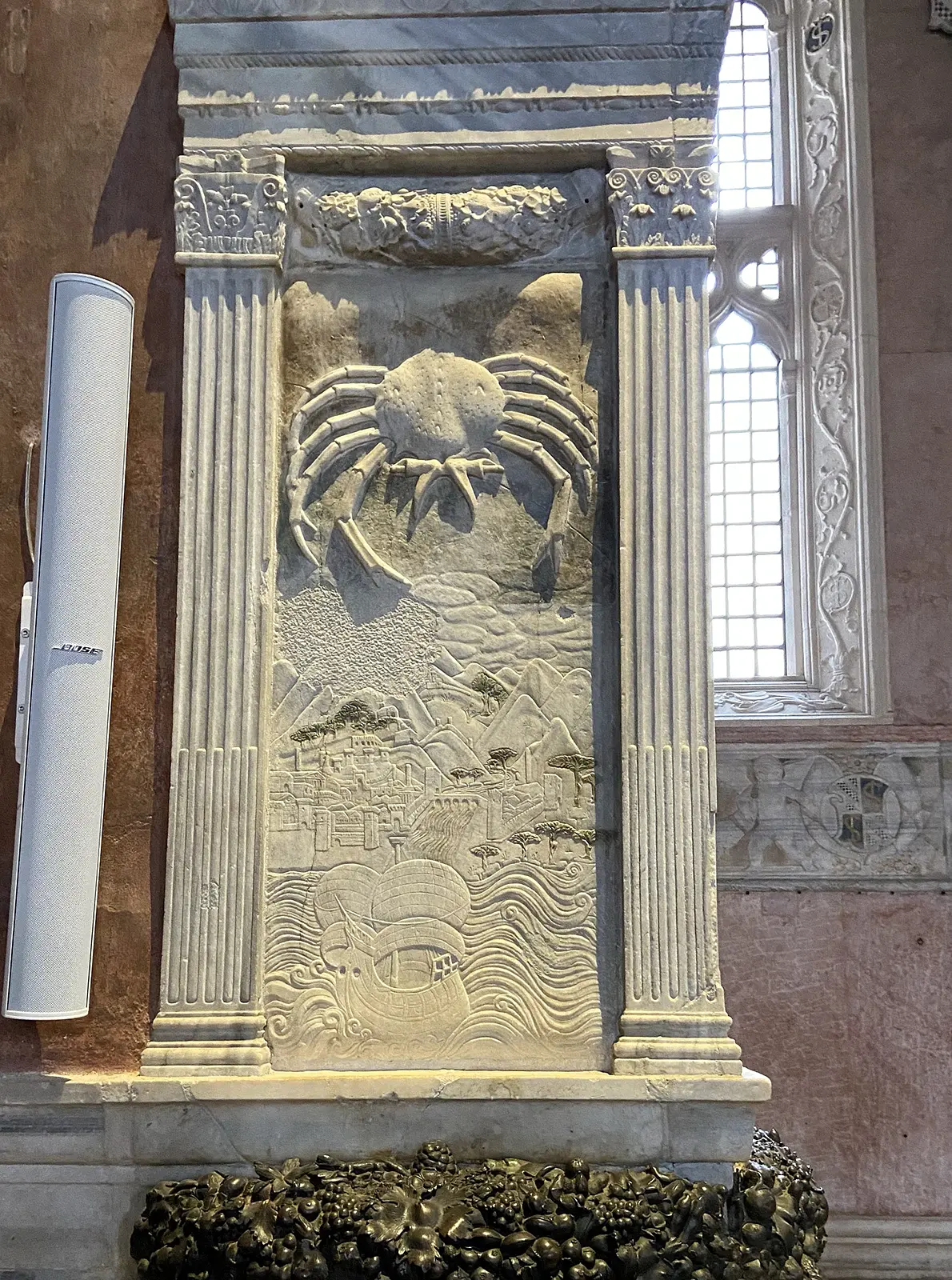
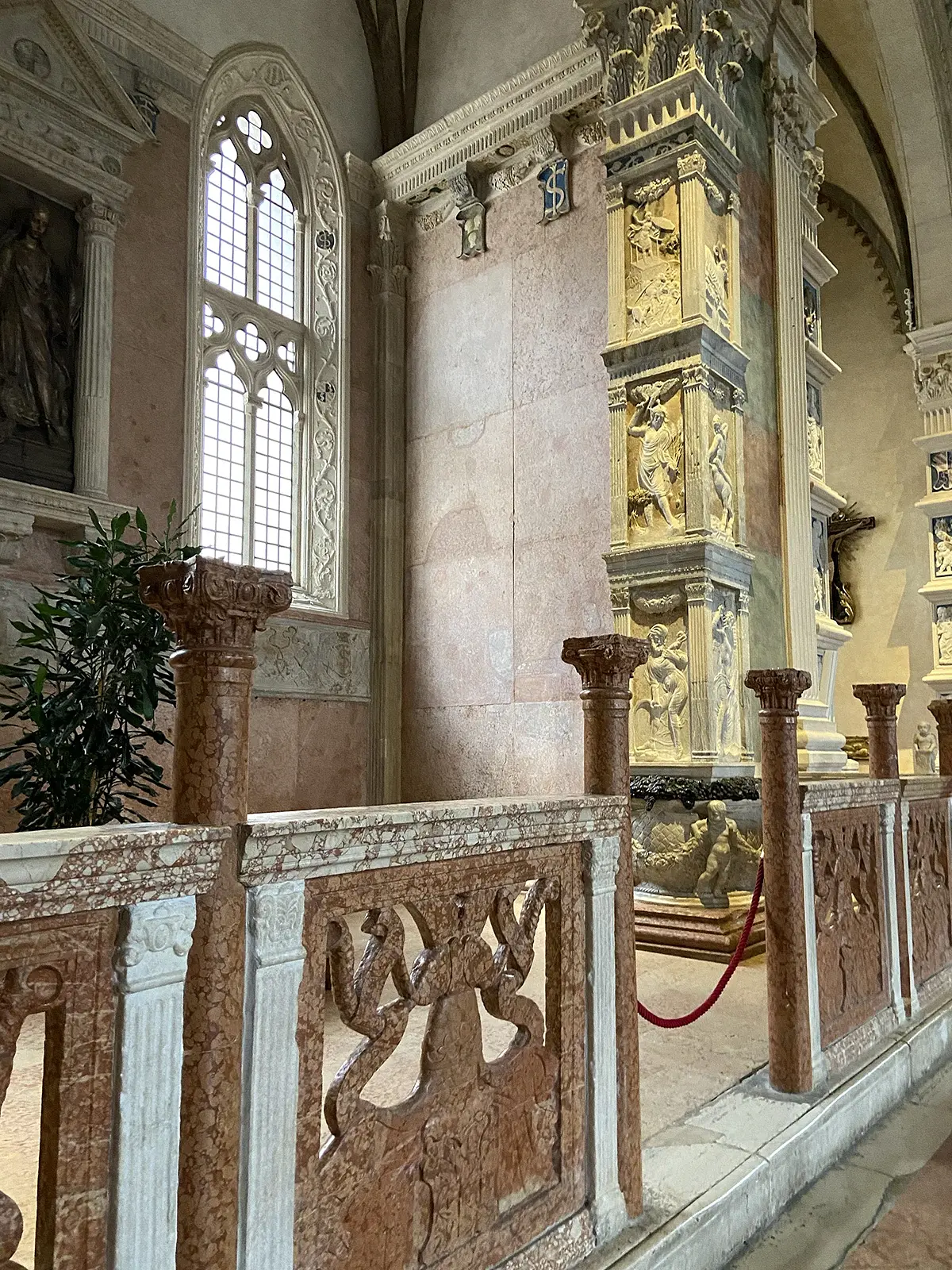
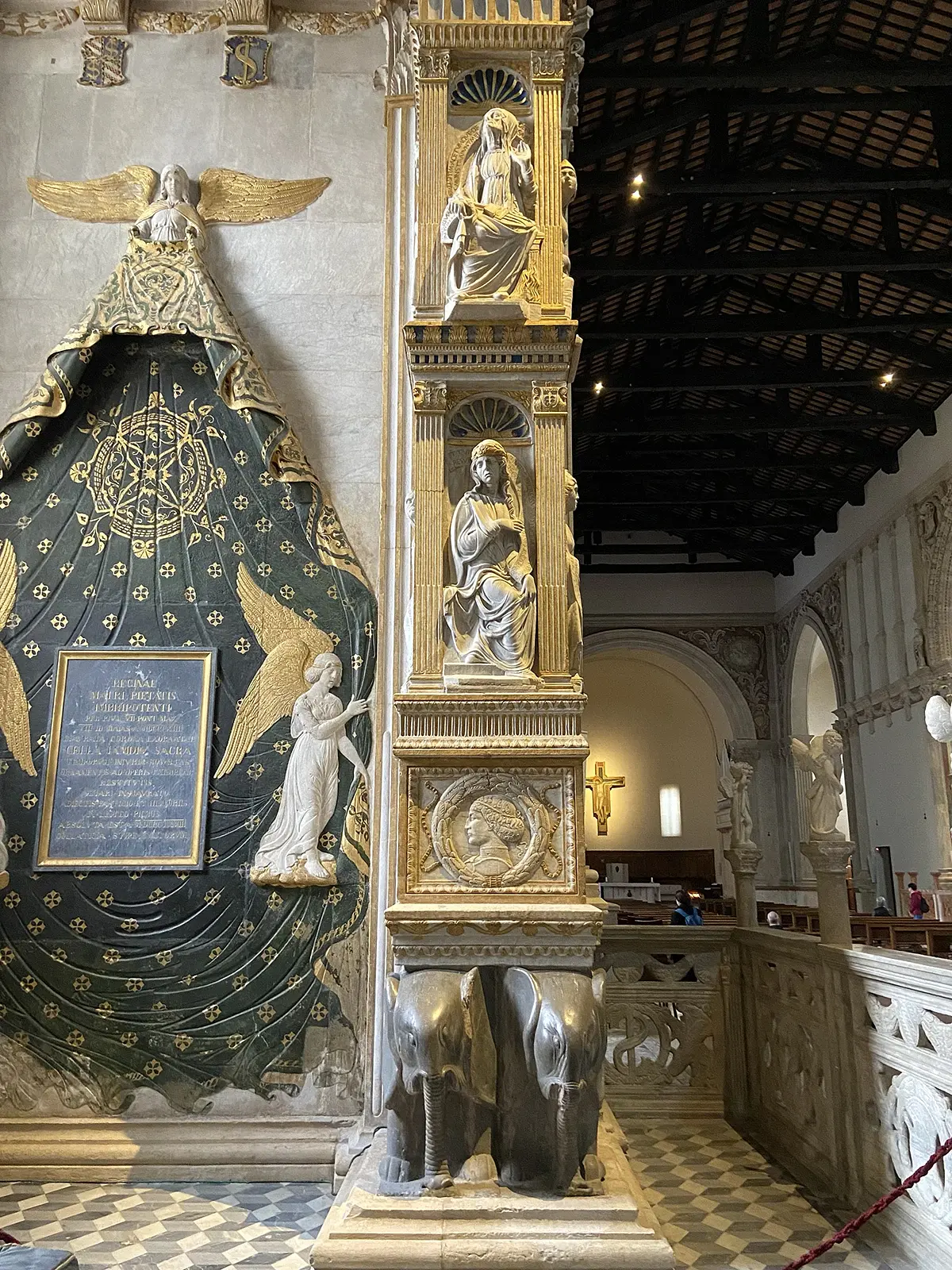
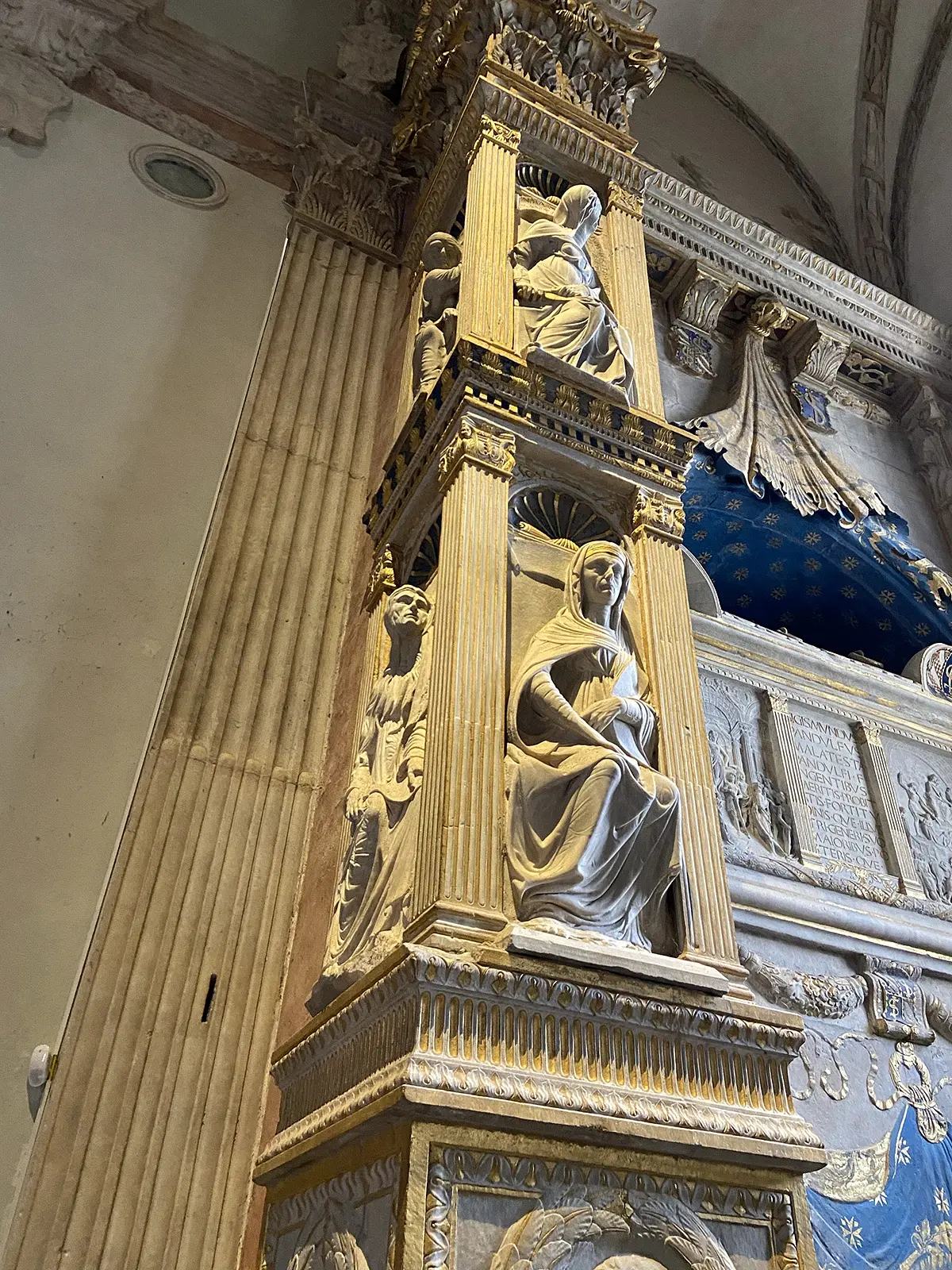
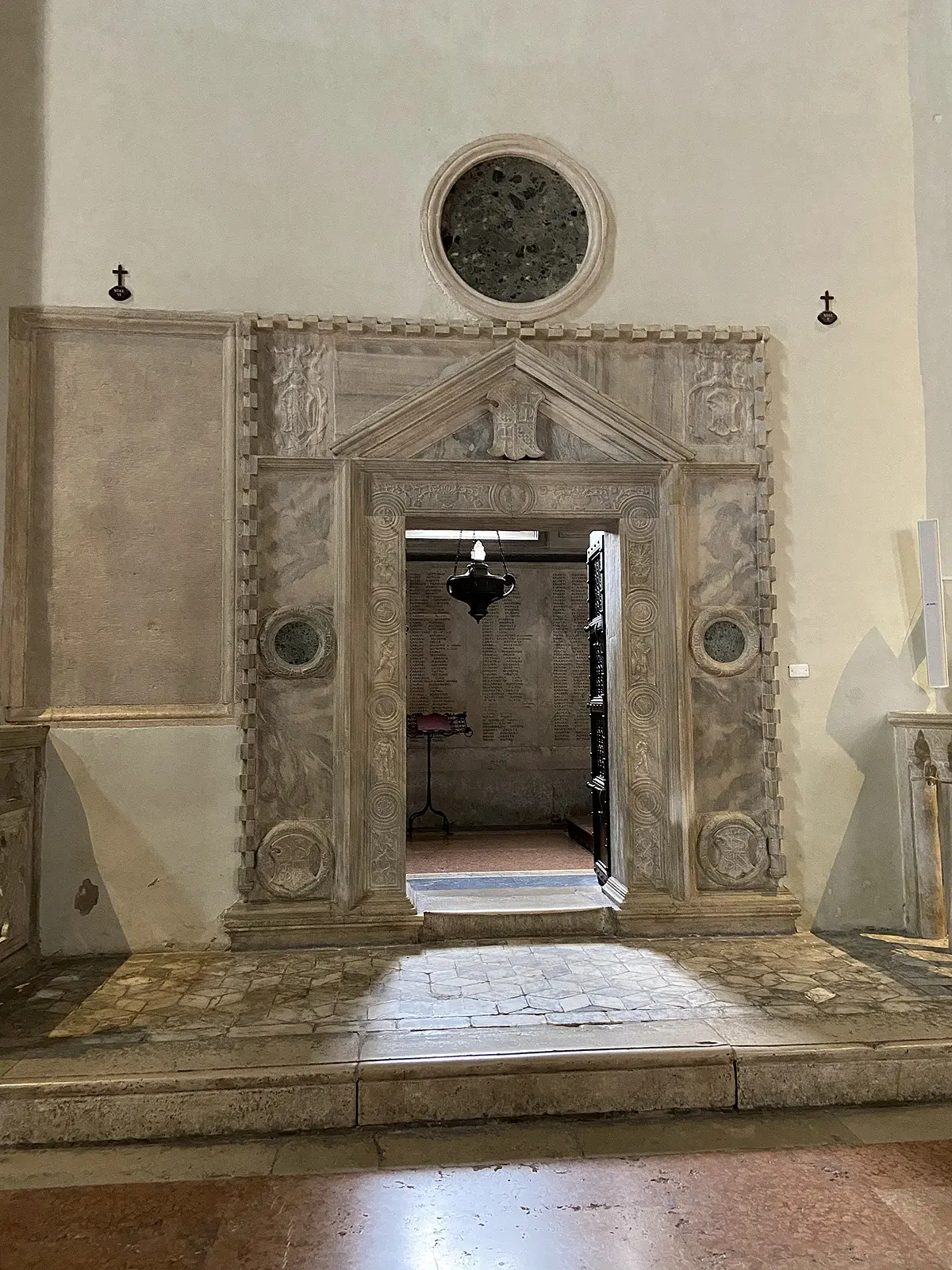
What makes the Malatesta Temple unique is its fascinating fusion of the sacred and the profane. Inside, traditional Christian symbolism is almost entirely absent, replaced by a richly detailed decoration inspired by Neoplatonic philosophy and Greek and Roman mythology. Agostino di Duccio, the creator of the decorative scheme, celebrates the earthly glory of Sigismondo Malatesta and his deep bond with his third wife, Isotta degli Atti. The temple features a single-nave structure flanked by eight chapels— four on the right and four on the left—separated by large Gothic arches. You will find no saints or sacred images here, but rather white bas-reliefs on a blue background depicting zodiac signs and planets, angels and playful cherubs, prophets and sibyls, and personifications of the liberal arts. The pope at the time, horrified by this choice, went so far as to describe the structure as a “temple of demon worshippers” and to excommunicate those who had commissioned it.
Not to be missed: Giotto’s Crucifix
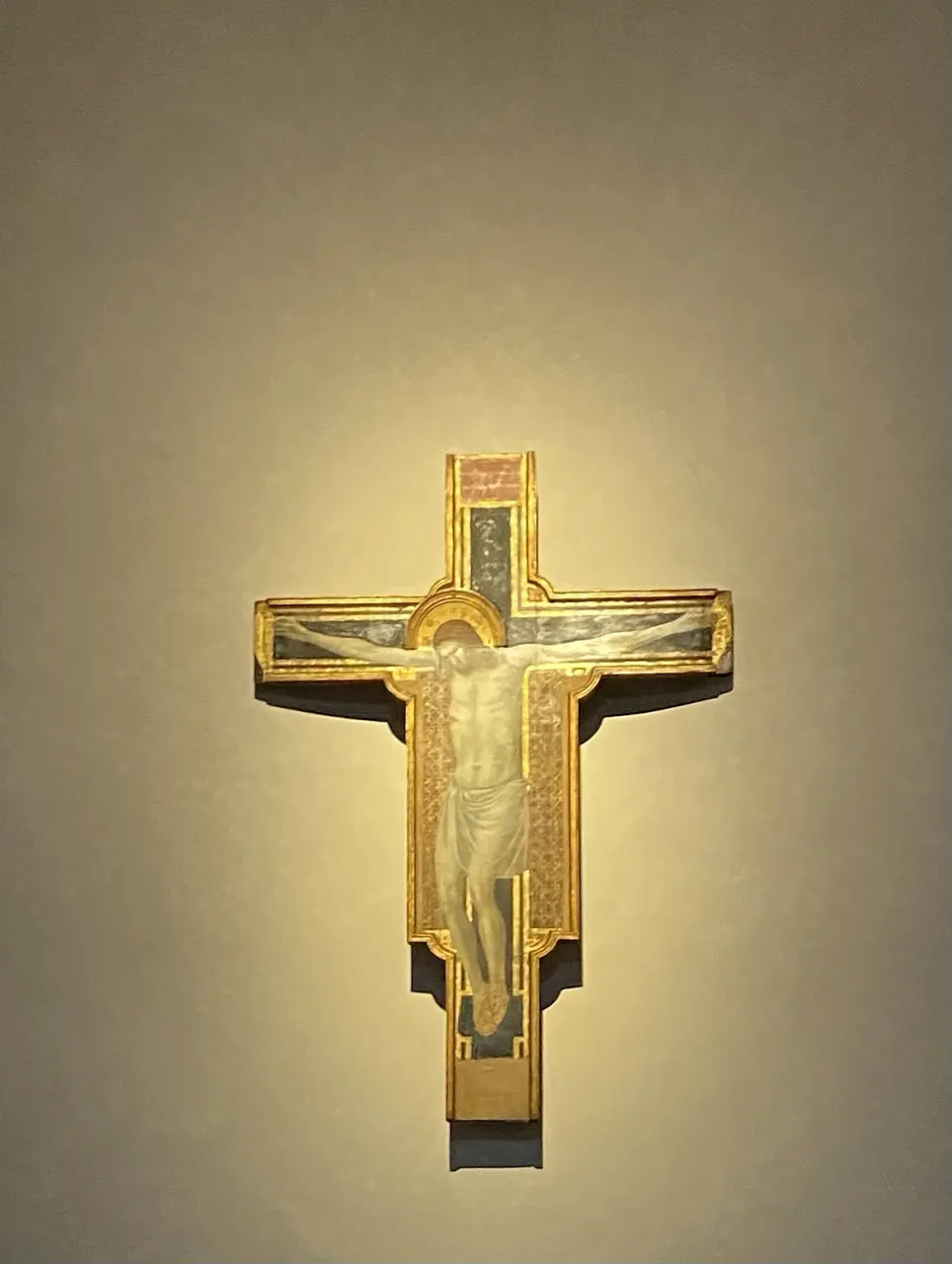
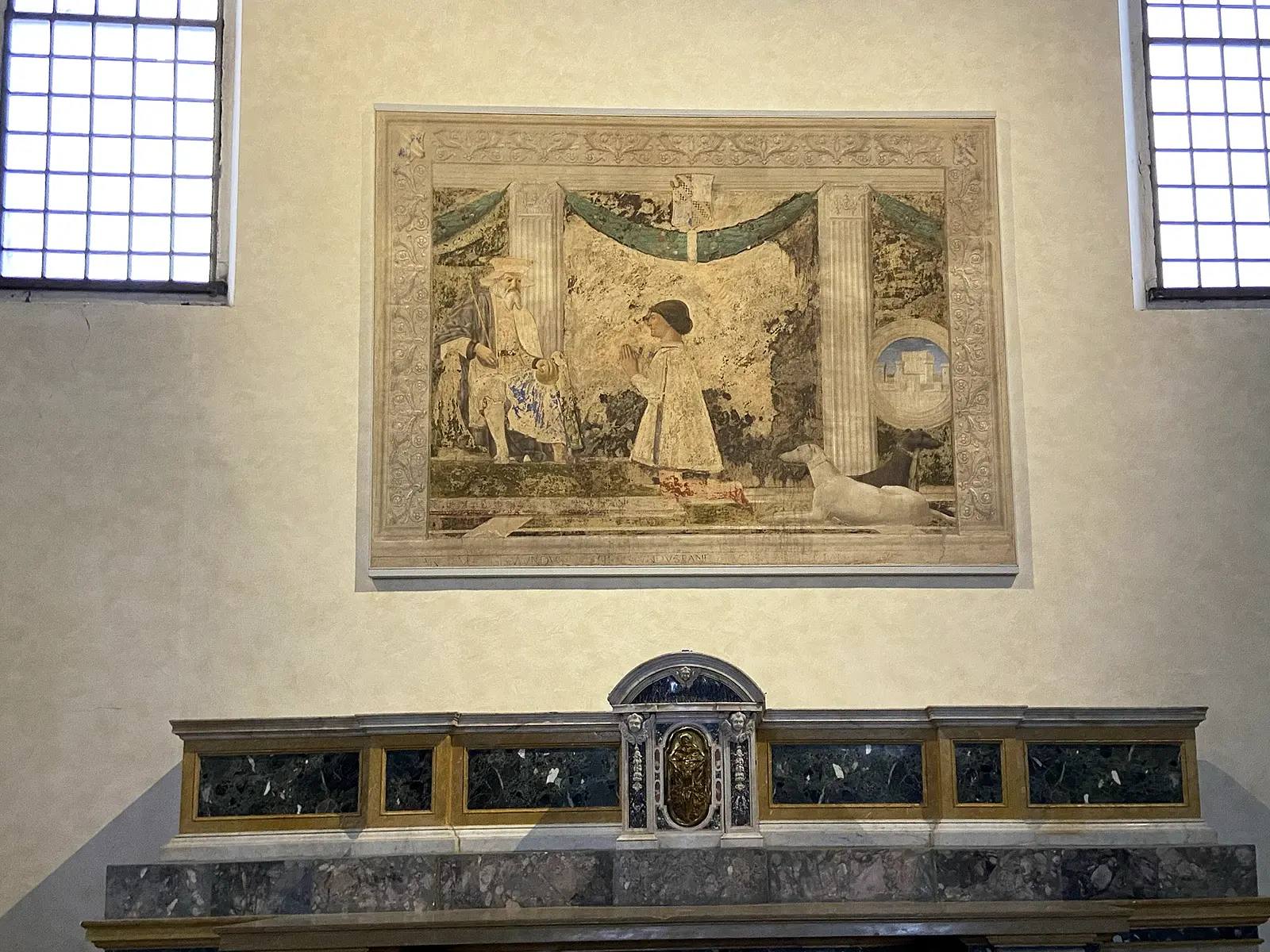
For visitors to the Temple, there is one work of art that deserves a prolonged stop: Giotto’s famous Crucifix, which hangs behind the high altar. Christ’s body is depicted with a dramatic and human realism extraordinary for the time, free from medieval stiffness. In addition to this masterpiece of Gothic painting, the Temple houses Piero della Francesca’s splendid fresco from 1451, which depicts Sigismondo Malatesta kneeling before his patron saint, Saint Sigismund.
A fun fact: the monogram
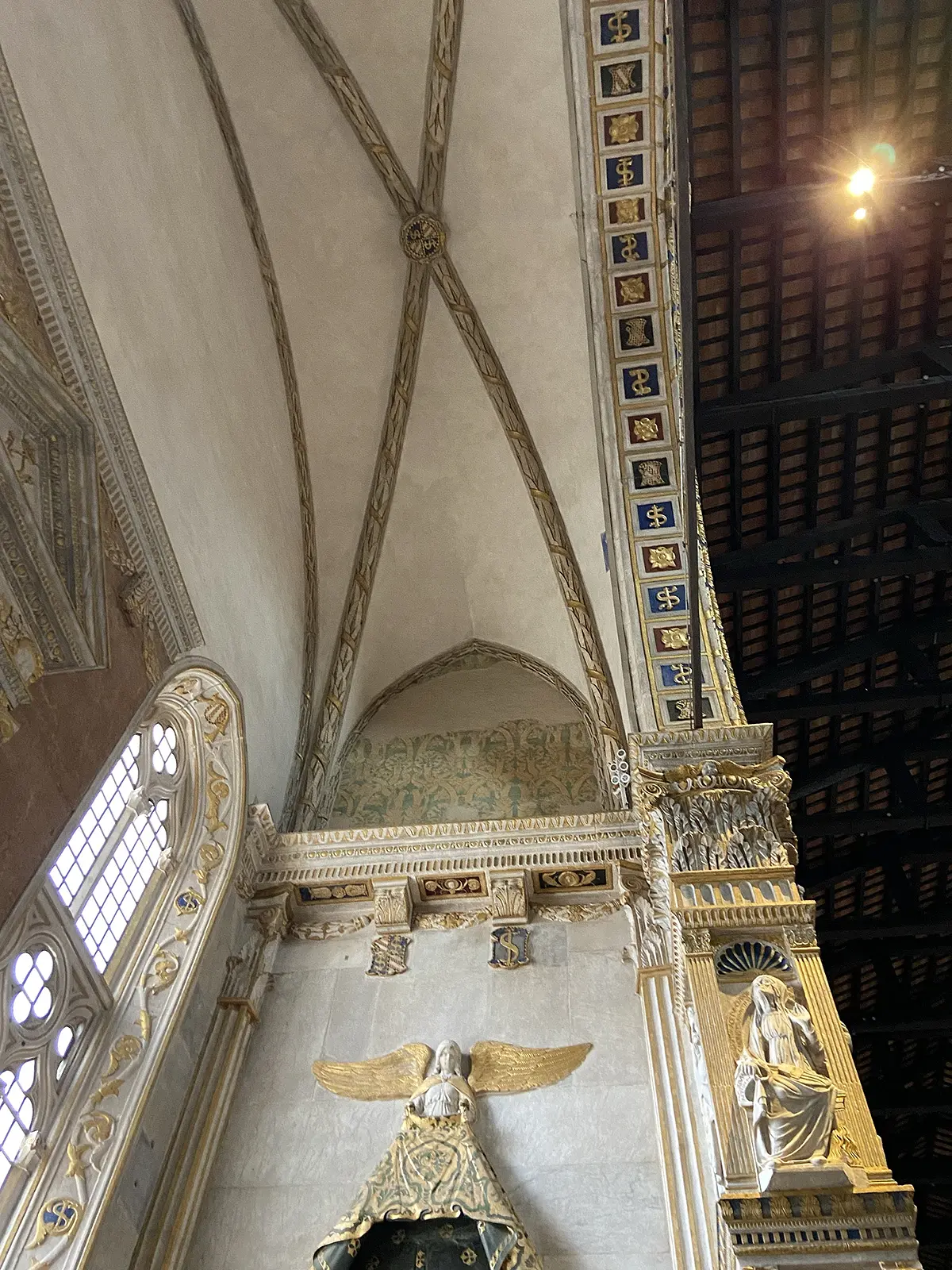
In every corner of the temple, on the pillars and in the chapels, a secret monogram appears repeatedly, featuring the intertwined letters S and I. It is undoubtedly a loving tribute from Sigismondo to Isotta degli Atti, but it also represents the esoteric concept of the coincidence of opposites (the masculine and the feminine, the Sun and the Moon) and mimics the Solomonic knot, a symbol of the indissoluble bond between the divine and the human, and a talisman against negative influences.
Enter the Map of Italy's Hidden Wonders and find treasures where you least expect it... Inspire, Recommend, Share...
Contacts
The Map thanks:
Enter the Map of Italy's Hidden Wonders and find treasures where you least expect it... Inspire, Recommend, Share...
Where
Contacts