
Sanctuary of San Costanzo al Monte, a Hidden Masterpiece
Surrounded by the forests of the Maira Valley, in the province of Cuneo, stands the Sanctuary of San Costanzo al Monte: a stone masterpiece that seems suspended in time


Where
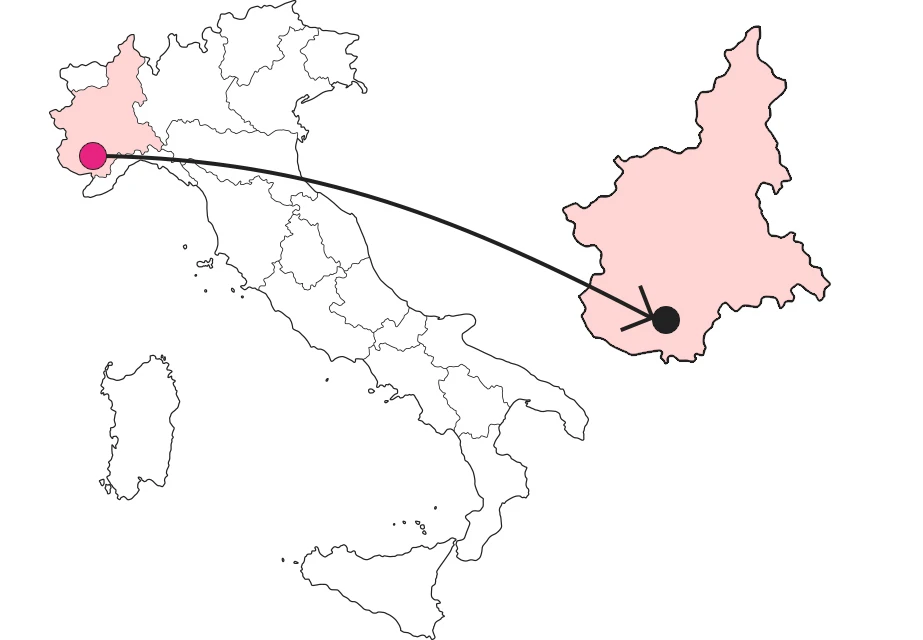
What Is the Sanctuary of San Costanzo al Monte and Where Is It?
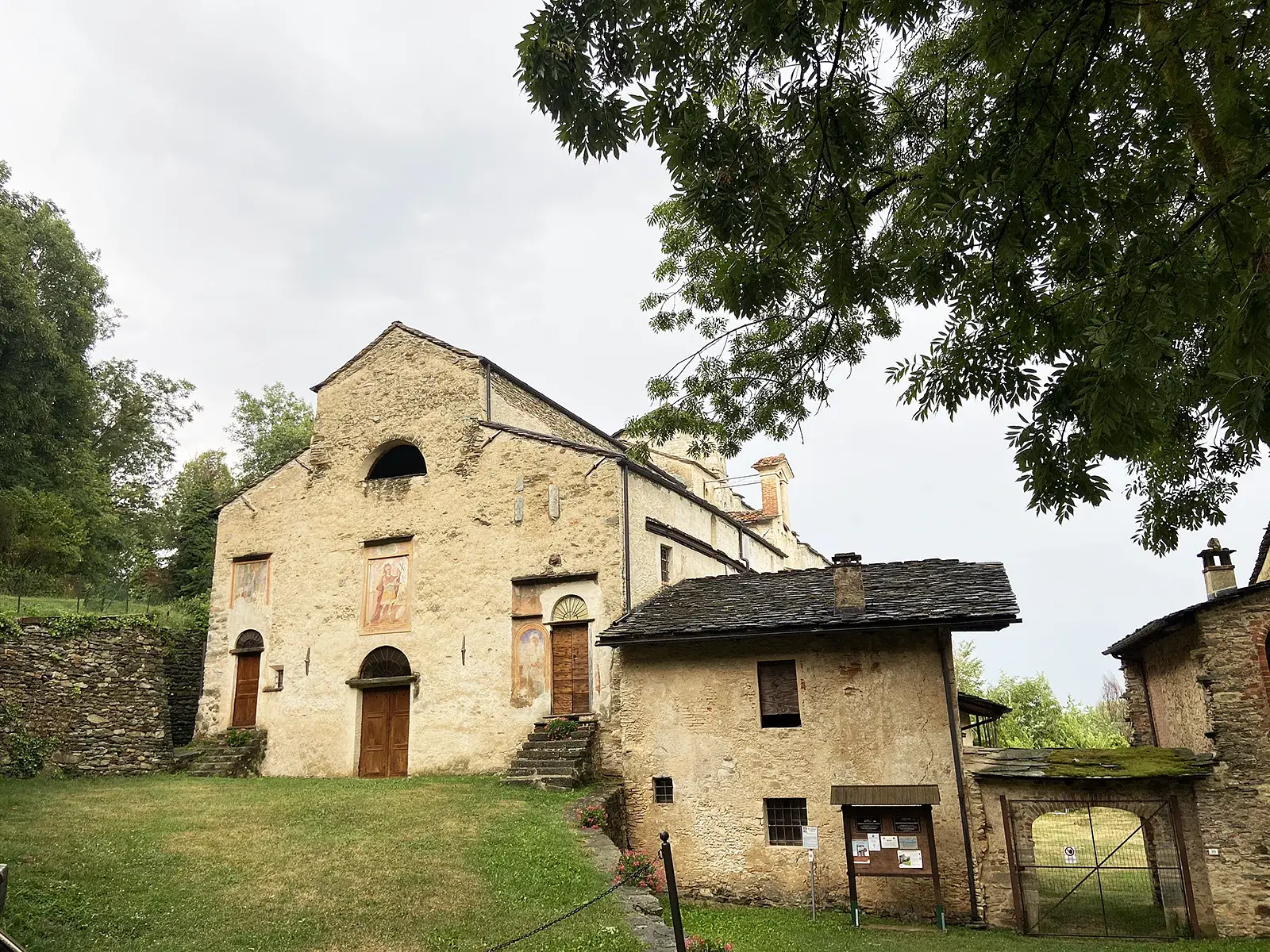
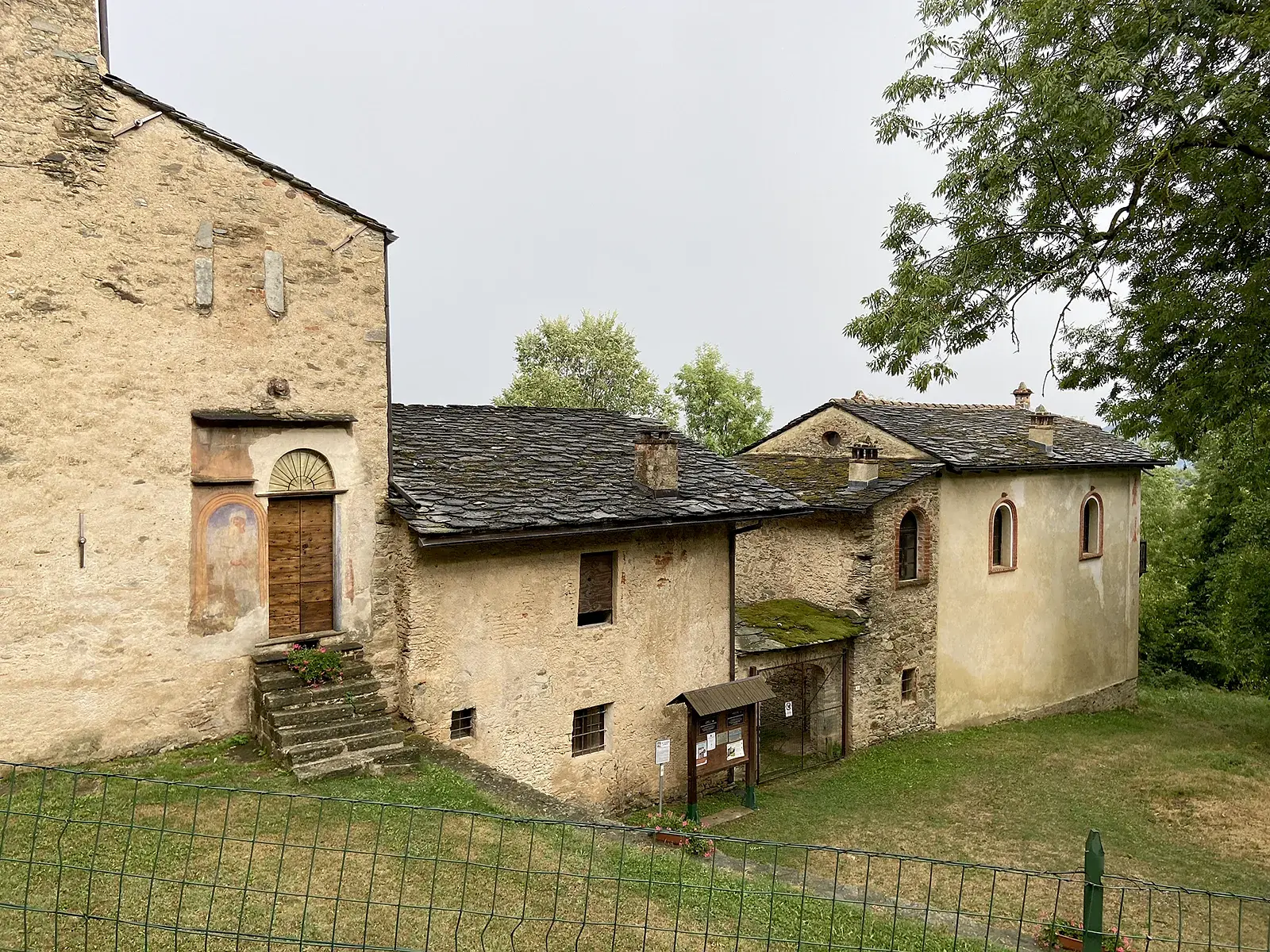
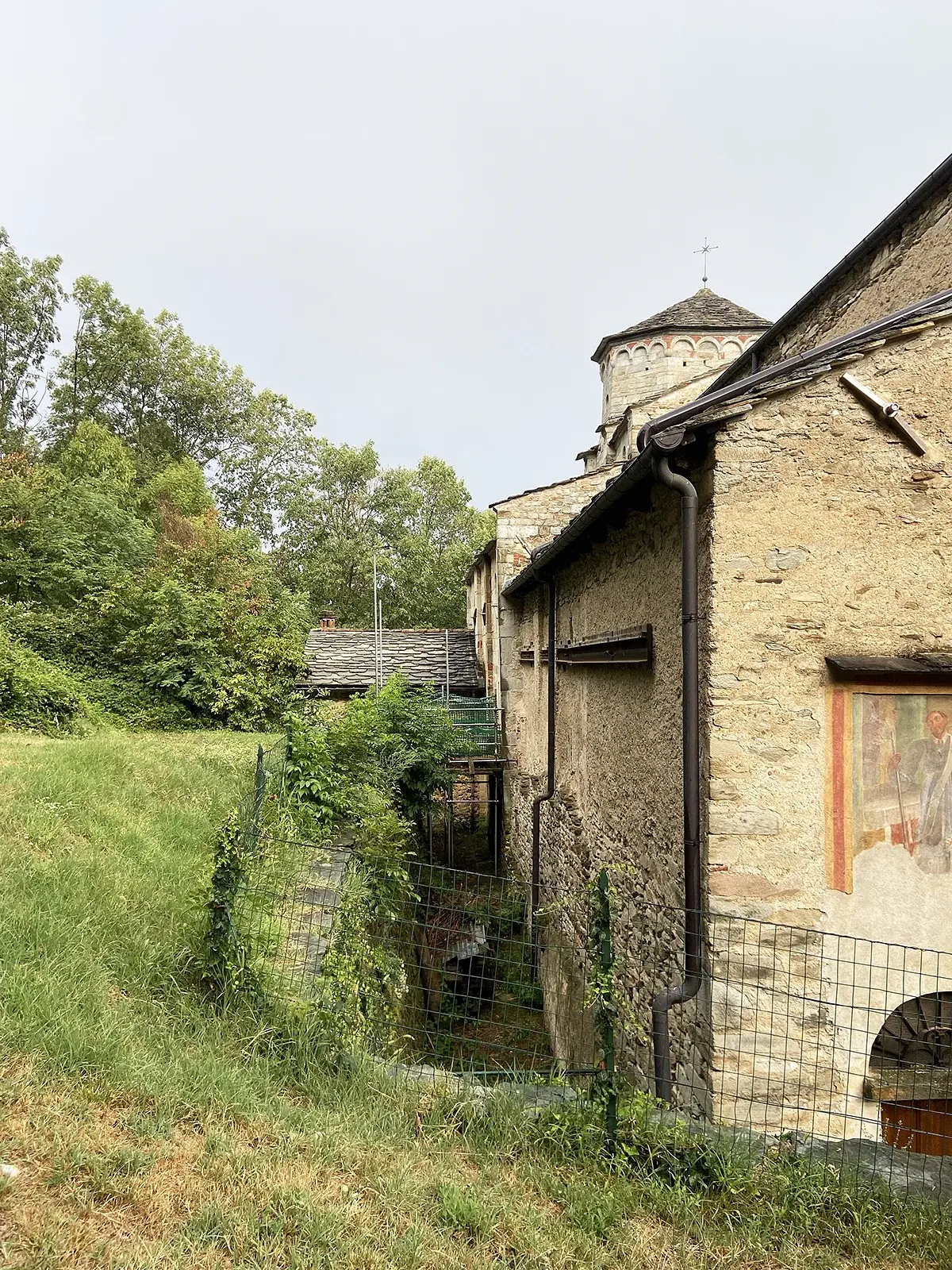
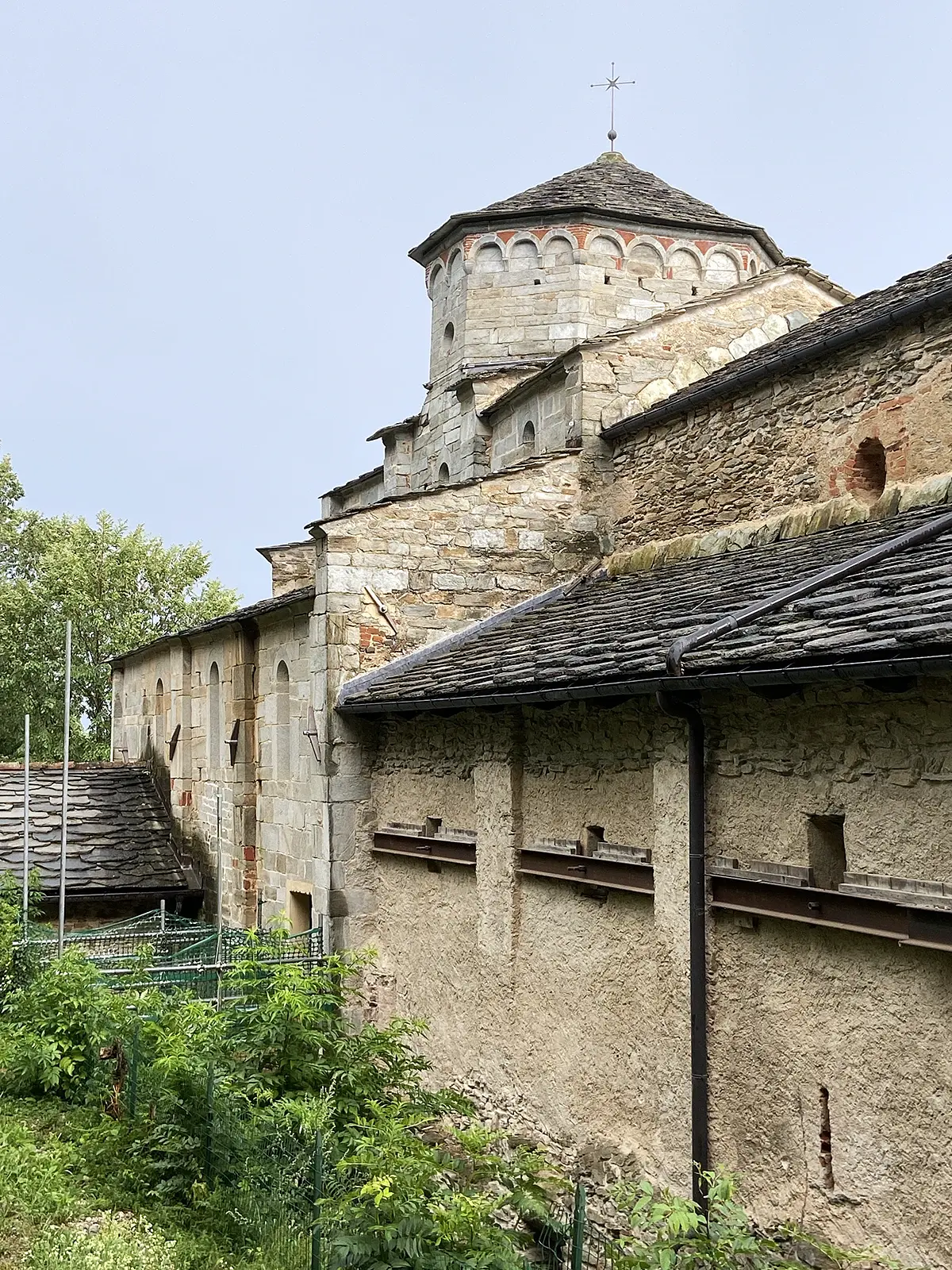
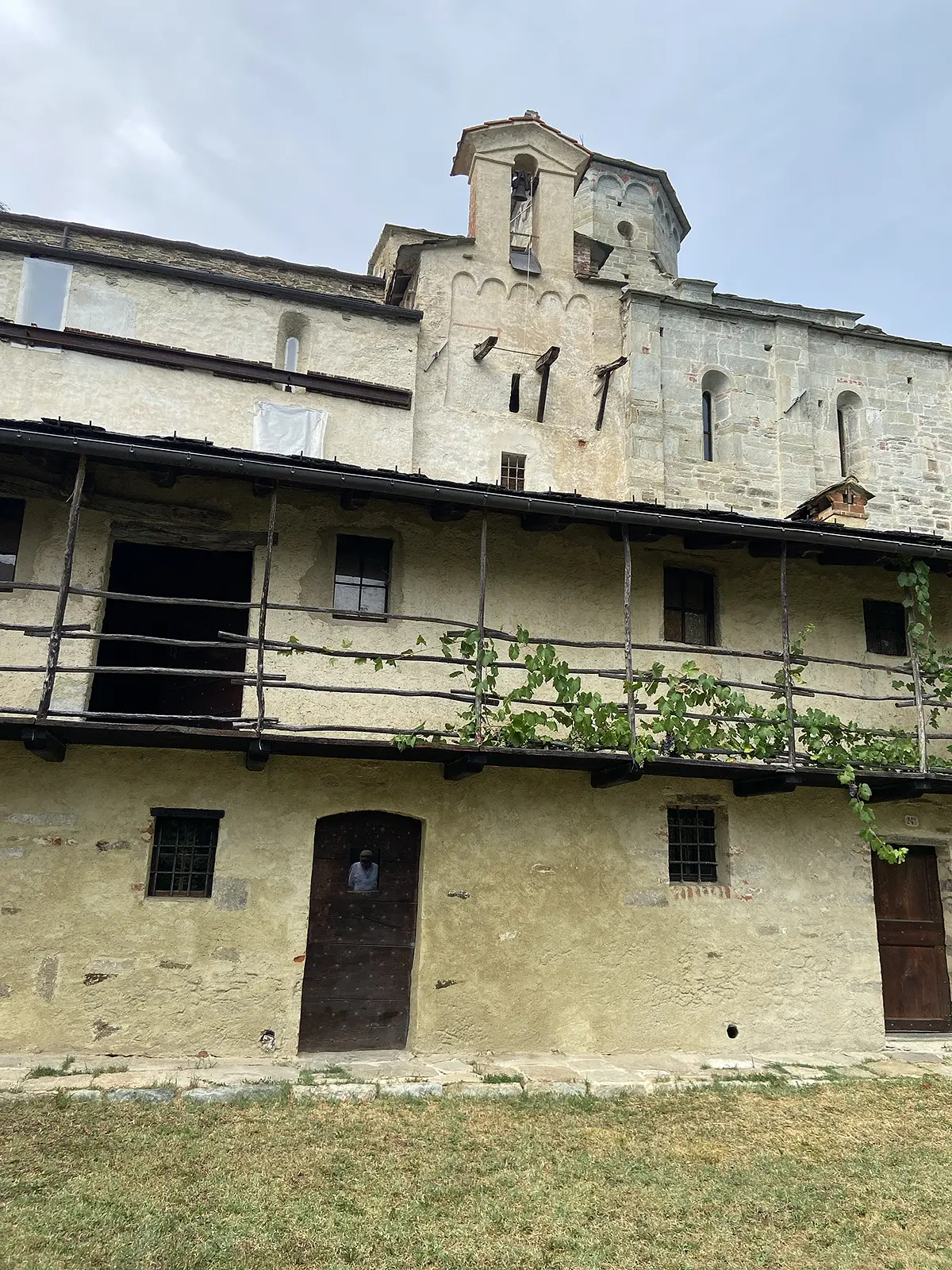
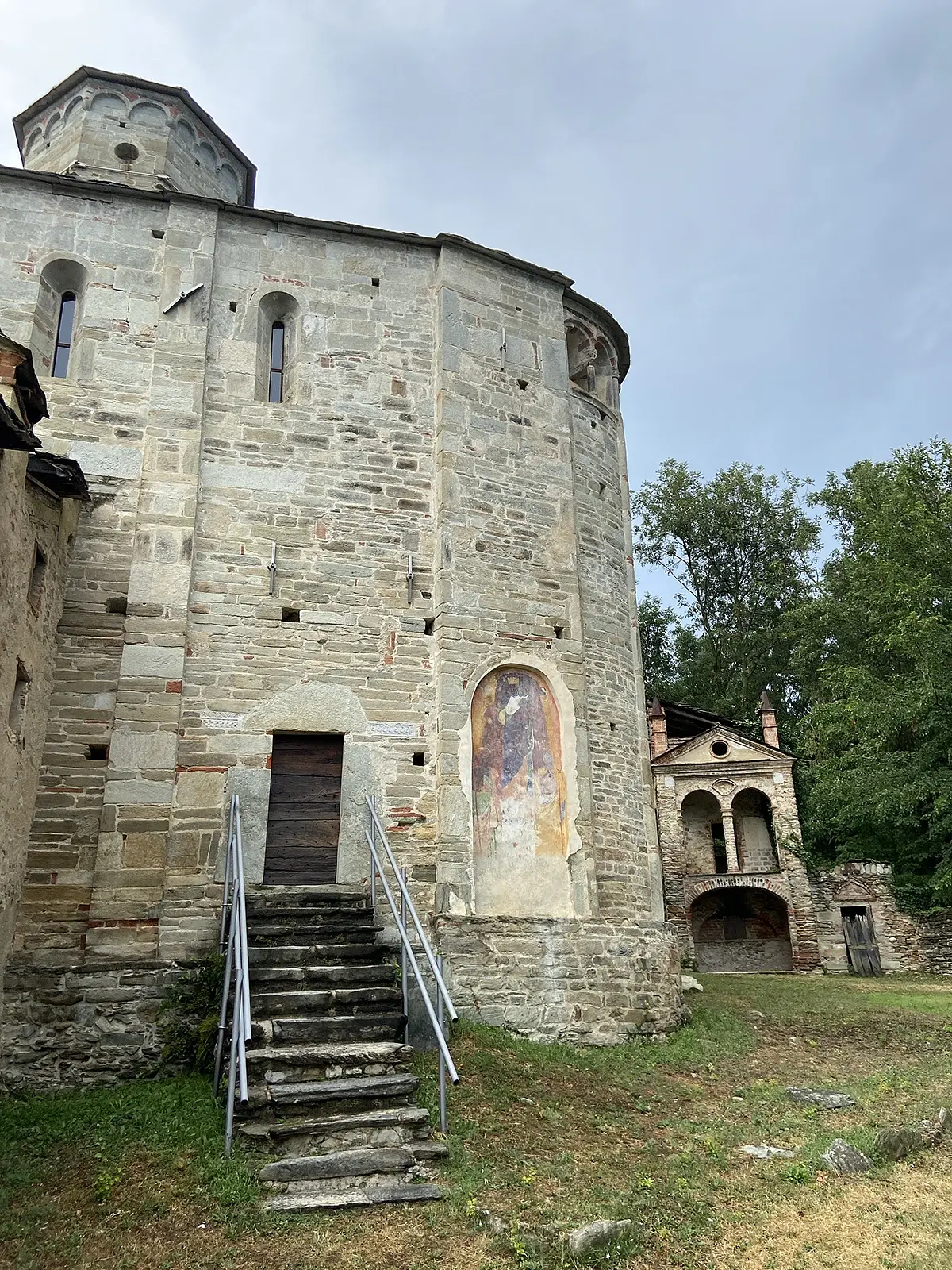
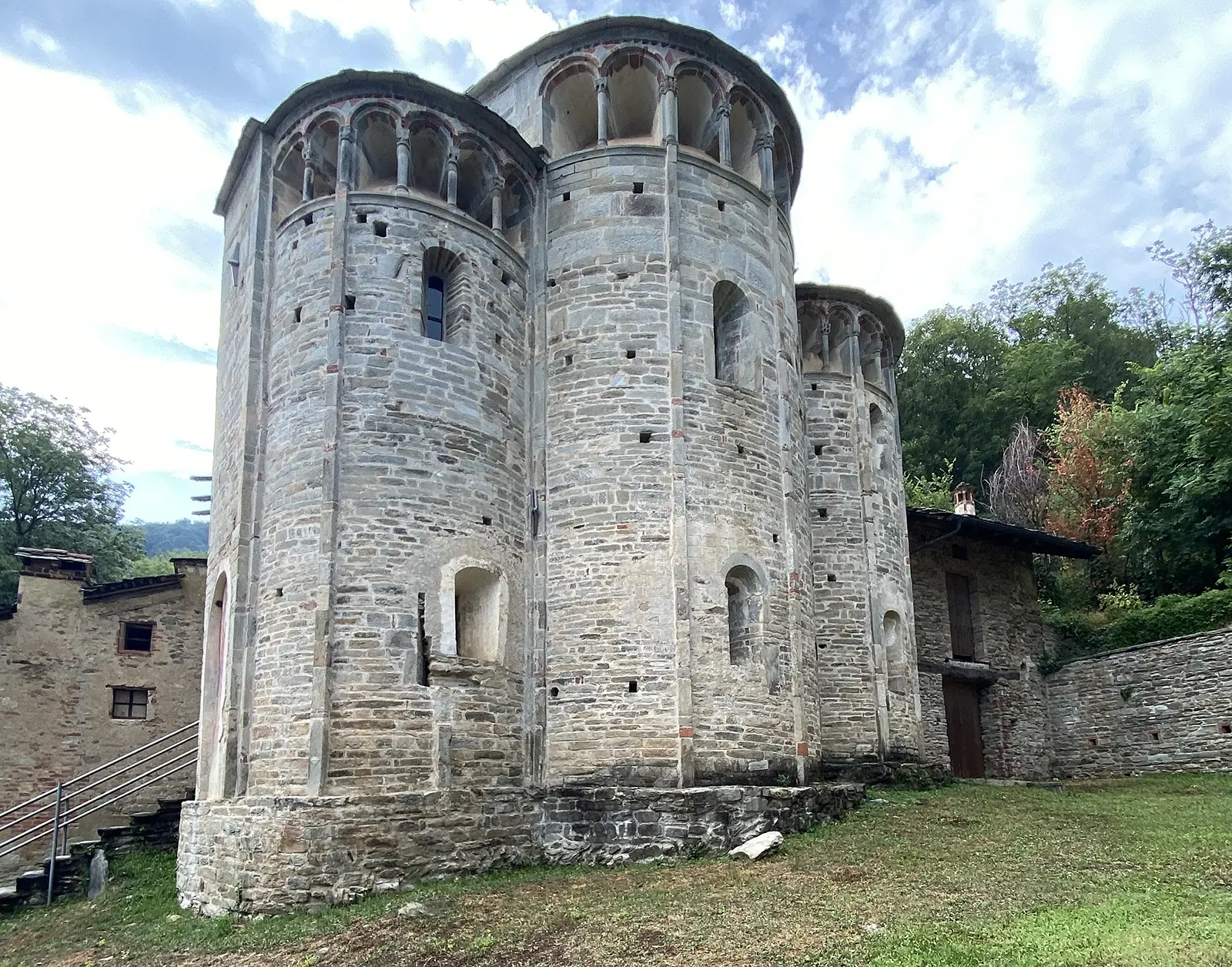
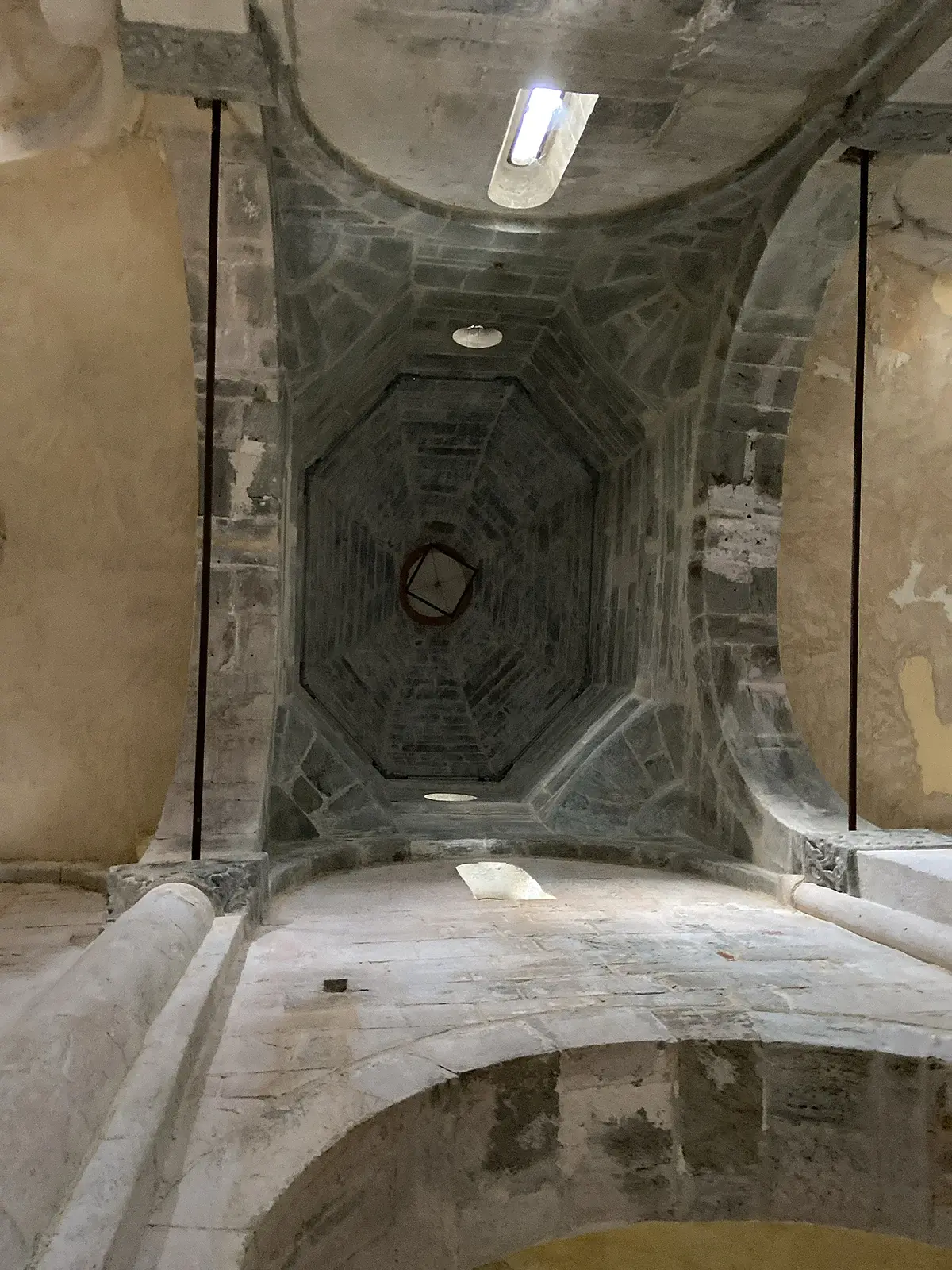
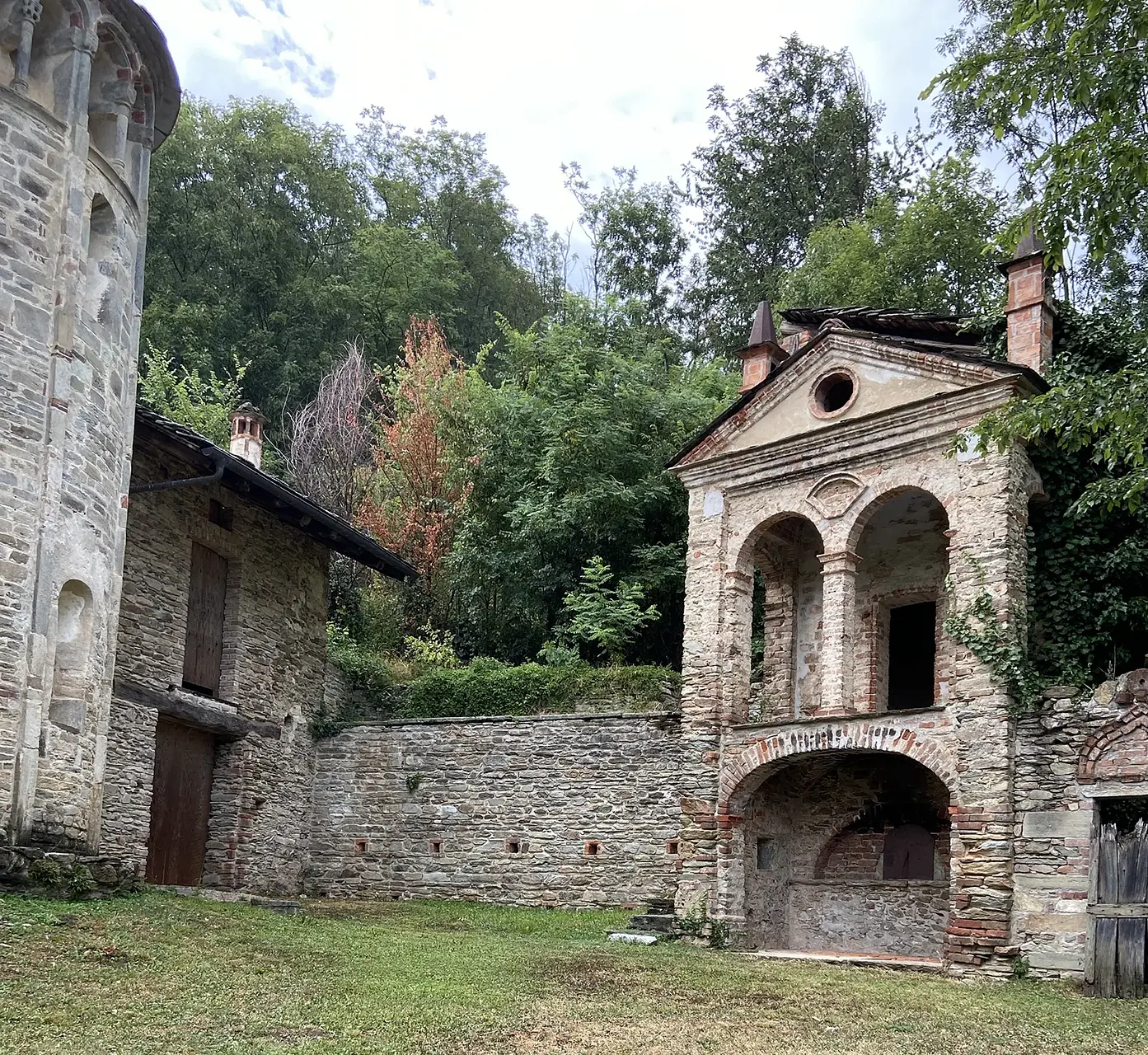
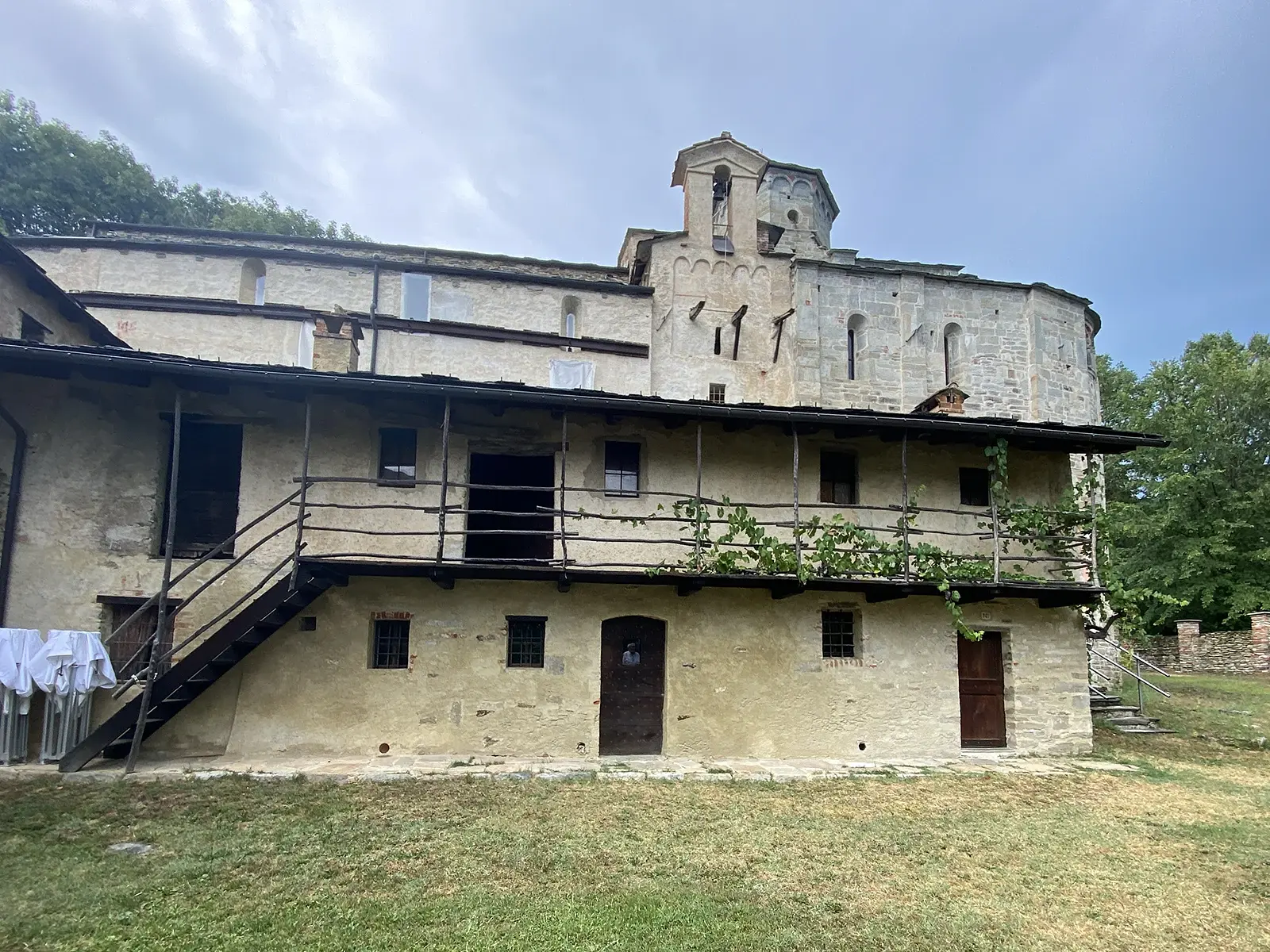
This extraordinary medieval monument , isolated from everything else, is located at an elevation of 807 meters on the slopes of Monte San Bernardo, within the municipality of Villar San Costanzo. It is one of the most fascinating and mysterious historical and architectural sites in all of Piedmont. The complex, surrounded by buildings from various eras—one of which is built against its right side — consists of three distinct churches: two completely superimposed on top of one another, with the third, at the front, serving as a narthex. The façade is that of the narthex, featuring a double-gabled roof, an 18th-century addition. The rear is splendid, featuring three imposing semicircular apses made of light gray stone, punctuated by pilasters and crowned by deep galleries. Together with the magnificent lantern tower, this is the most distinctly Romanesque part of the complex.
Why it’s special: superimposed churches
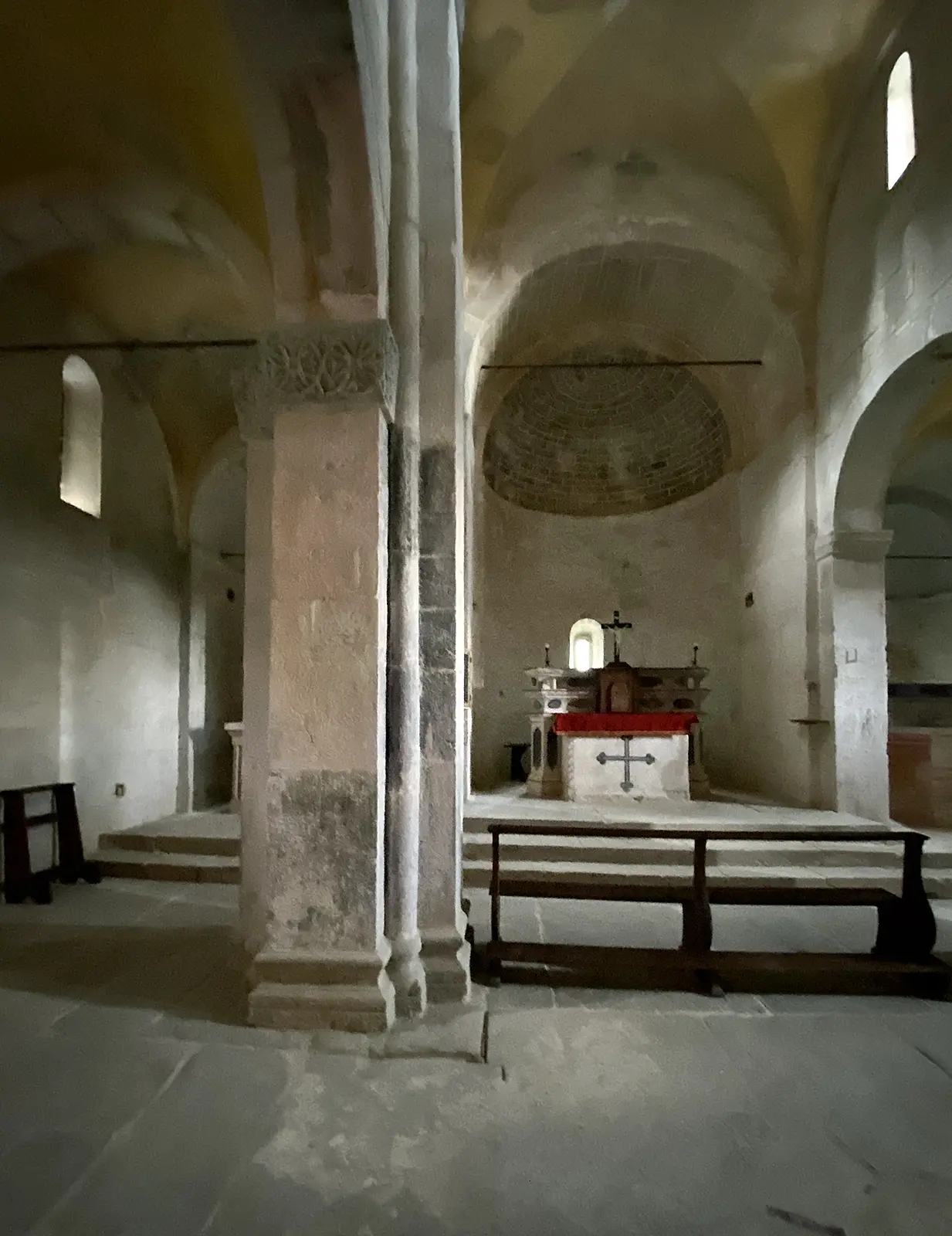
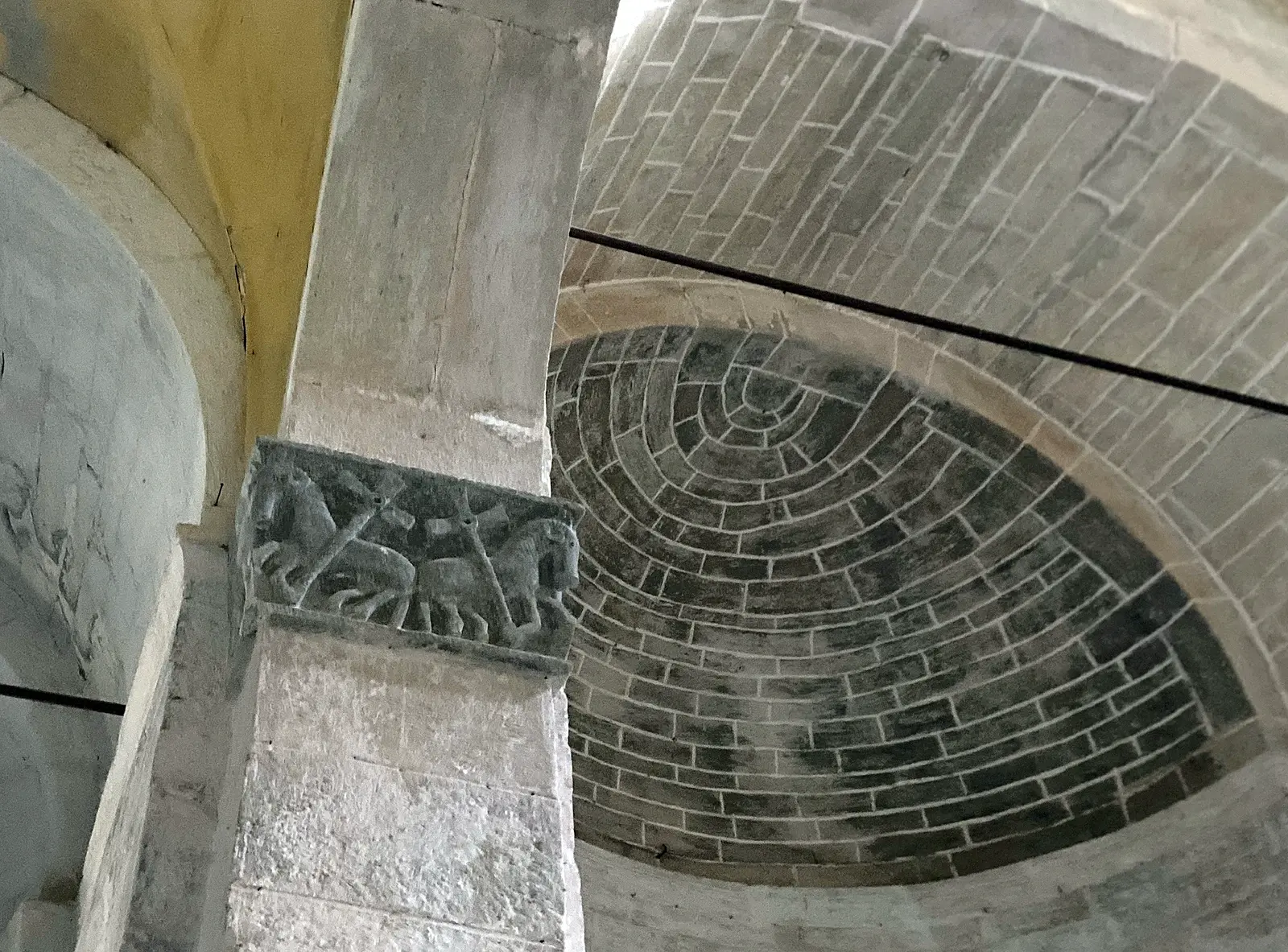
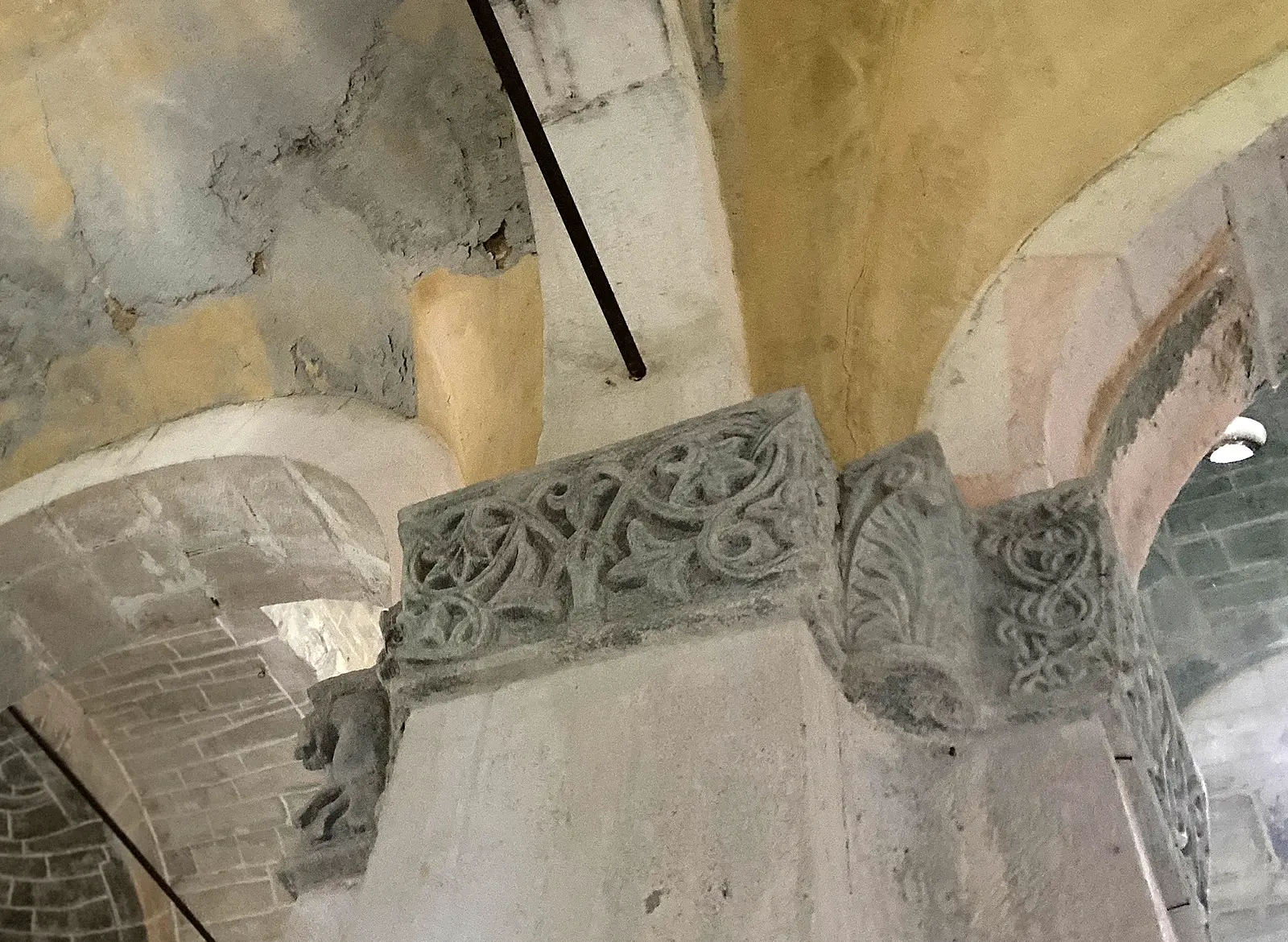
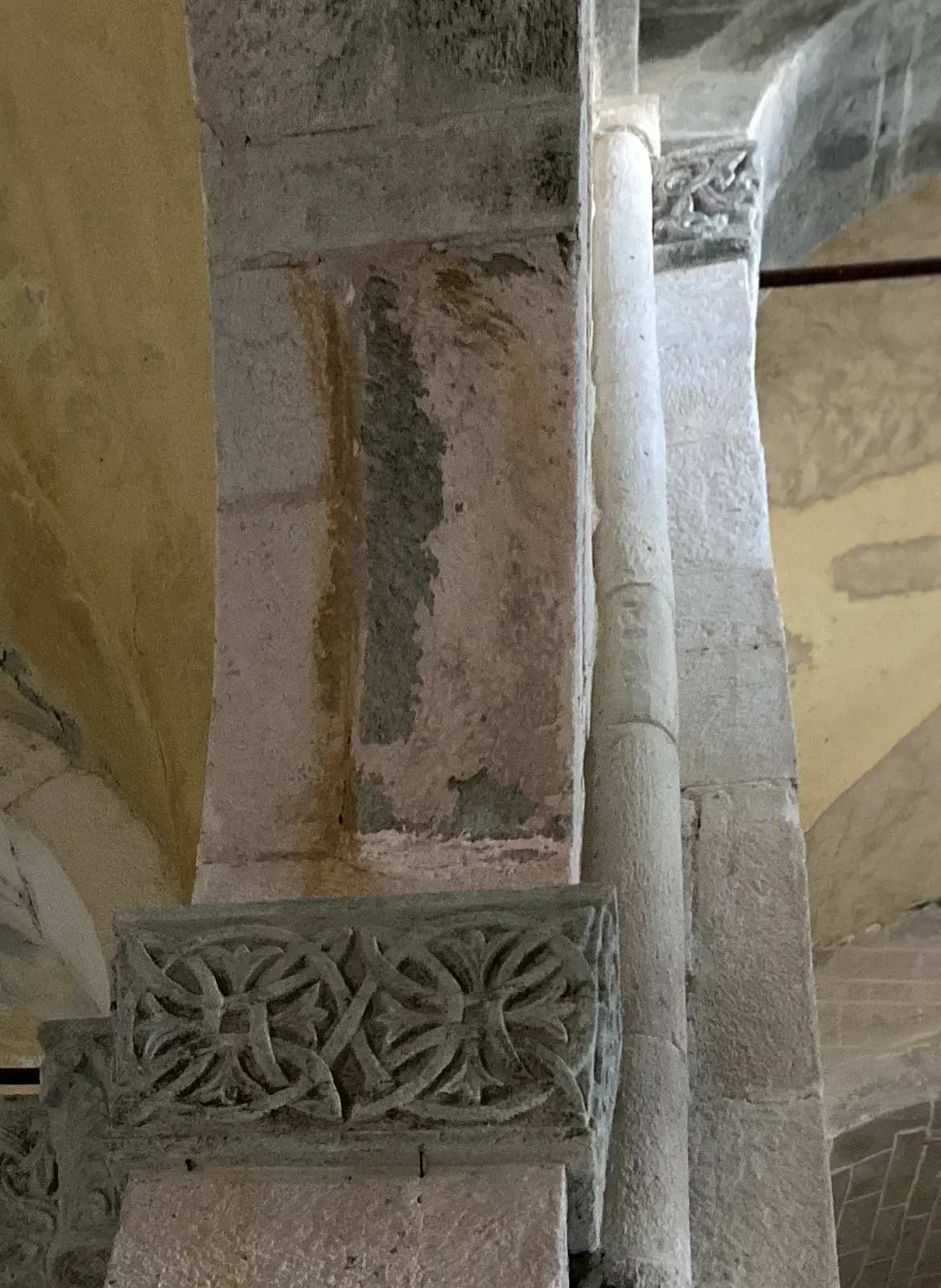
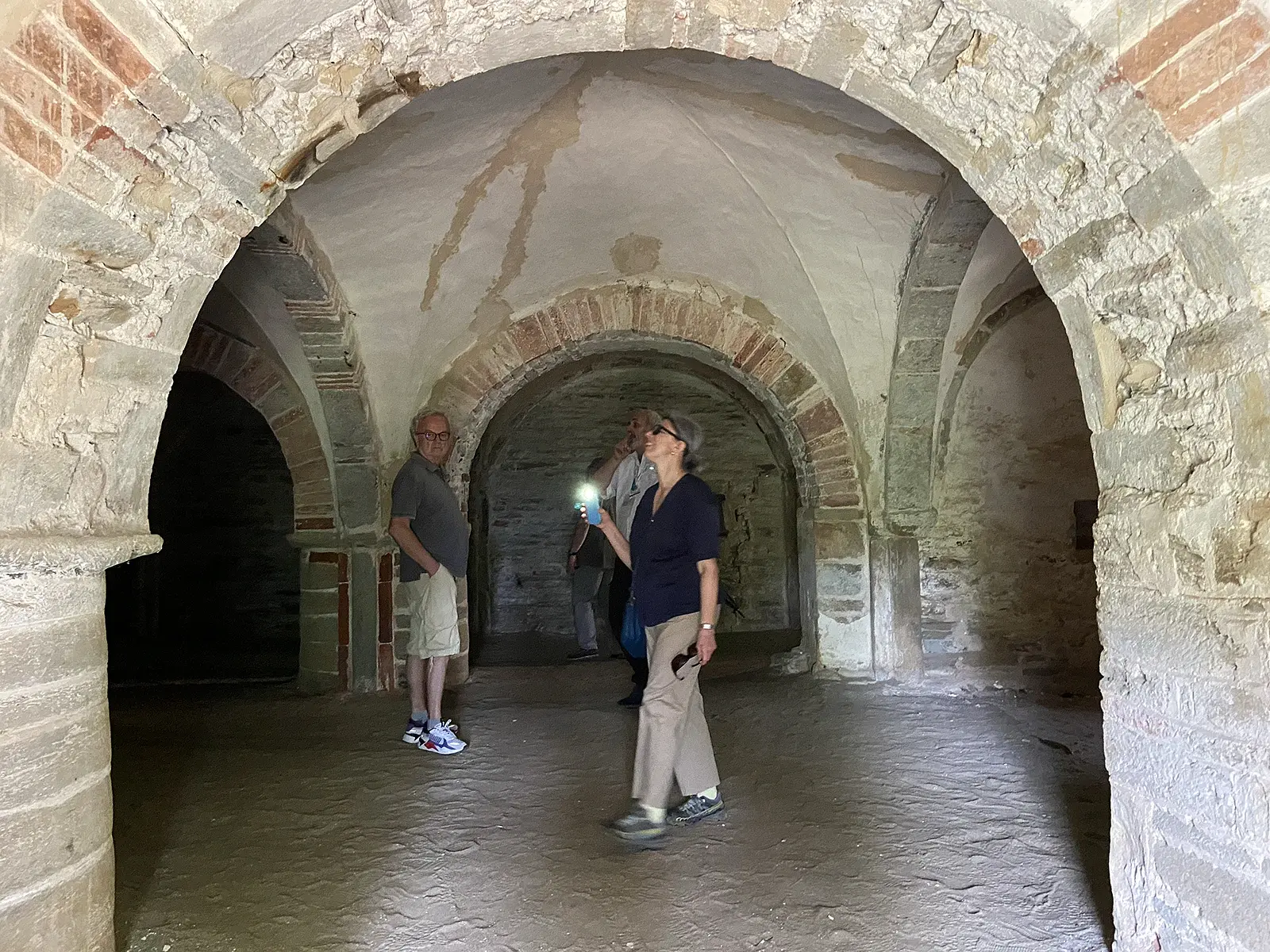
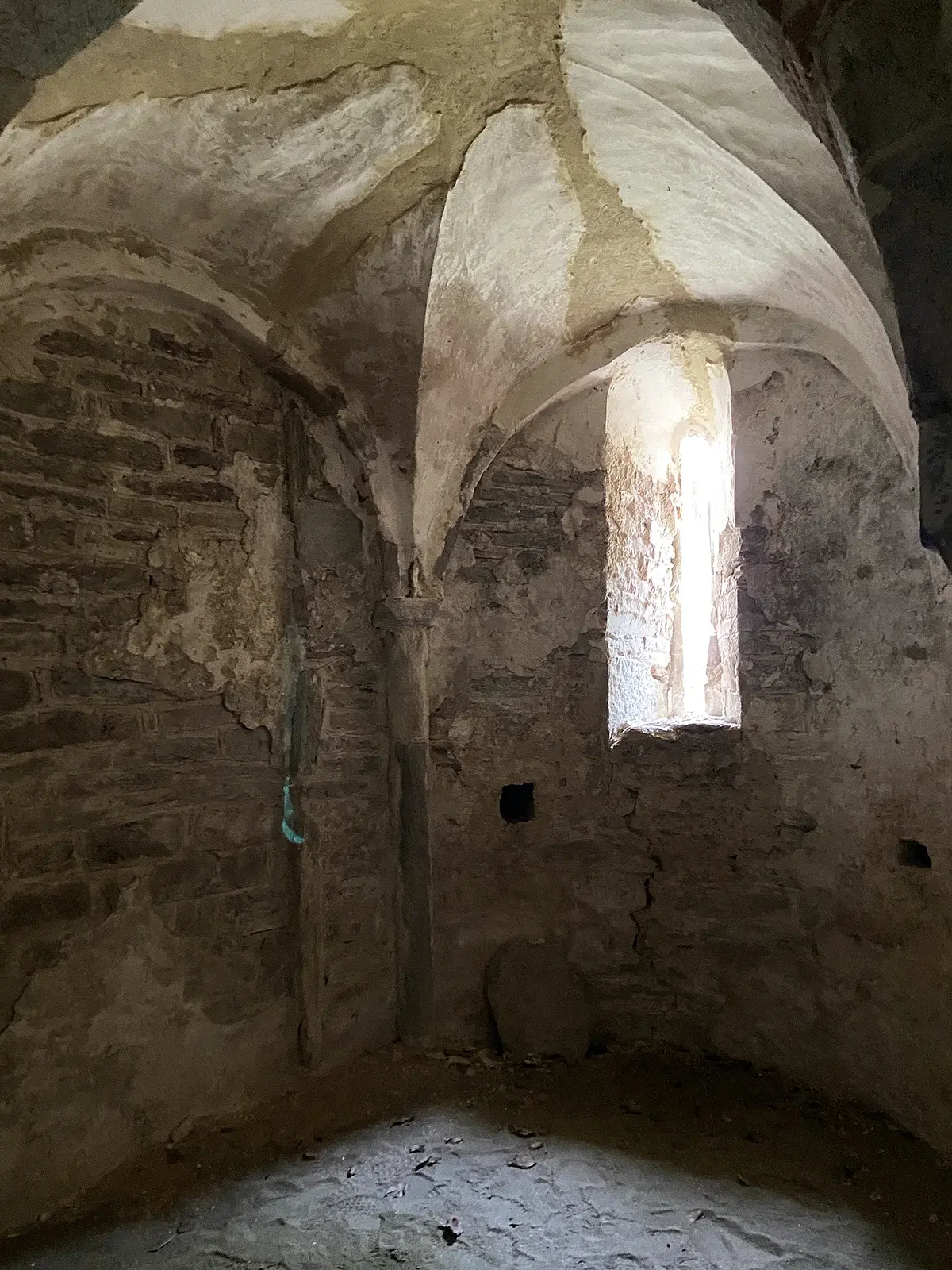
What makes this complex unique is that the lower church is not a crypt but a full-fledged church, with the same layout as the upper one, supported by massive pillars and dimly lit by narrow, splayed windows. The upper church, taller and brighter, possesses the simple elegance of the Romanesque style: a three-nave hall with barrel vaults supported by massive pillars and ending in three apses. Notable are the capitals carved from local stone, featuring two-tailed mermaids, monsters, animals, and imaginative plant motifs.
A peek at the church under restoration
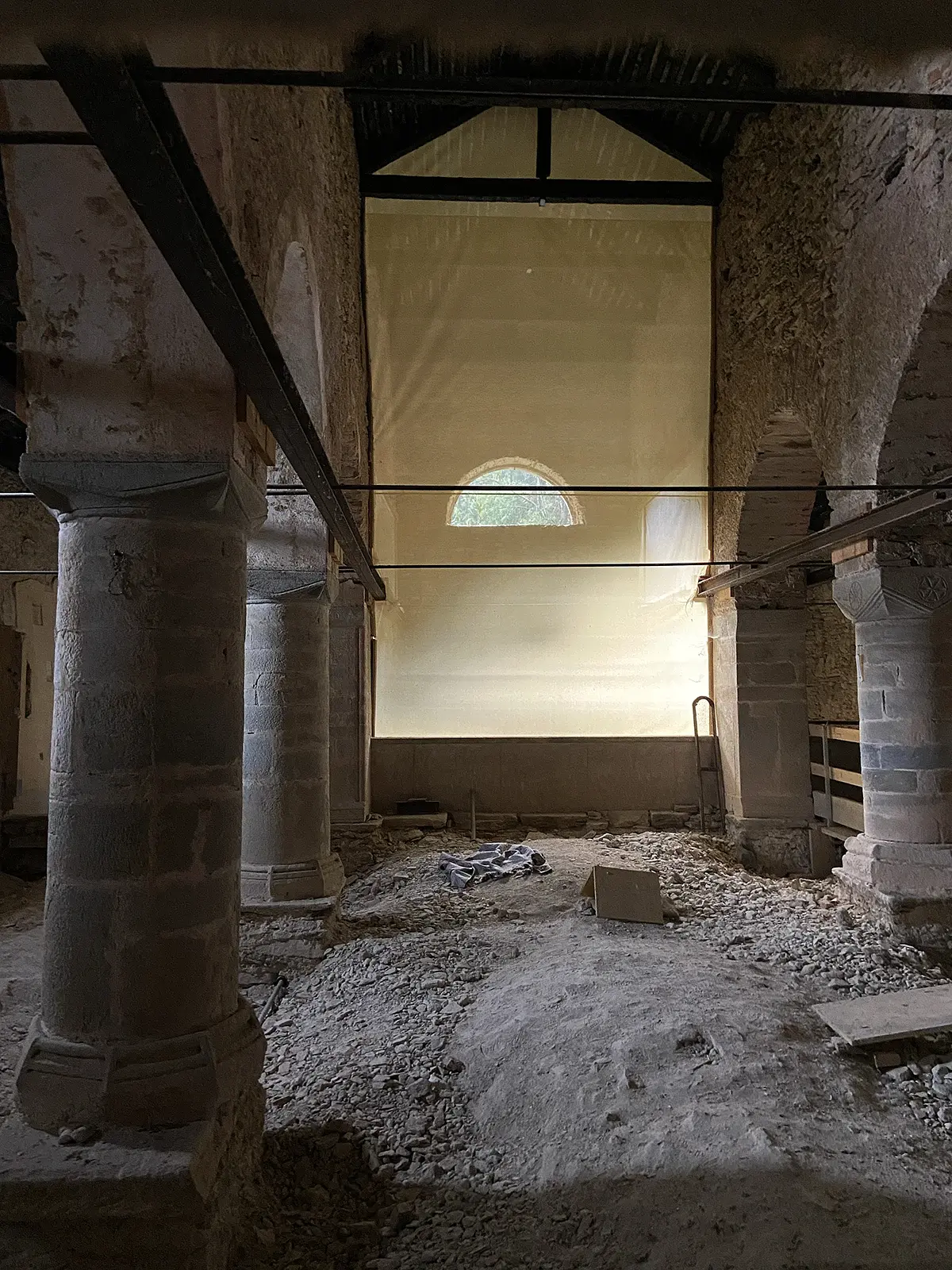
From a wooden partition , you can catch a glimpse of the church that serves as a narthex— a later addition, also with three naves—supported by sturdy columns made of gray stone blocks. Unfortunately, access is prohibited; during the restoration work, in 2019, a rare cycle of Romanesque frescoes was uncovered on the church walls; these are particularly interesting because they depict narratives drawn from the apocryphal Gospels— excluded from the official canon of the Catholic Church but widely prevalent in medieval popular culture.
A Bit of History: Saint Constantius and His Sanctuary
Between 303 and 305 A.D., under Emperor Diocletian, Constantius—a Roman soldier of the Theban Legion who had converted to Christianity — took refuge in the woods of Mount San Bernardo to escape the authorities but was discovered and killed. In the 5th century , a votive chapel was built on the site of his martyrdom . In the 8th century, the Lombards erected an important Benedictine abbey there . However, this cultural oasis was brutally destroyed at the beginning of the 10th century, when waves of Saracens invaded southern Piedmont, plundering and destroying the entire monastery. Part of this church may have survived in the eastern section of the crypt, which is visibly older than the rest.
Its revival is attributed to Countess Adelaide of Susa, who, around 1109, had the sanctuary rebuilt. The work was completed in 1190 with the construction of the current church, featuring two superimposed stories, designed by the Comacine masters. In the late 13th century, the atrium was added.
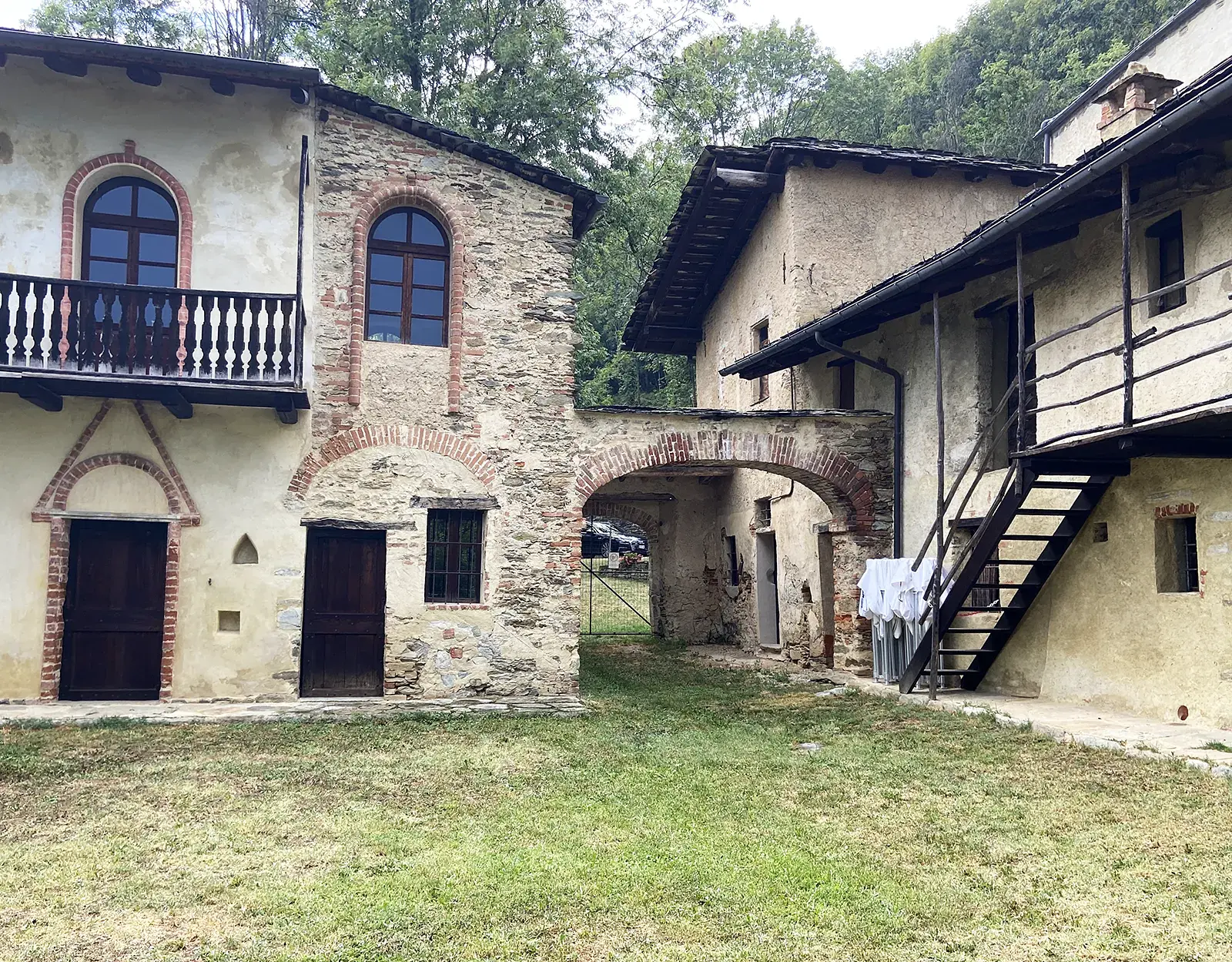
Over the centuries, the abbey lost its power and the building fell into disrepair. During the Napoleonic era , it was sold to private owners and converted into a rural dwelling, which explains the rustic buildings surrounding it. In the 20th century, major restoration work began, removing the added partitions from the naves. More recent interventions have definitively stabilized the structure and revealed the medieval frescoes. Work is currently on hold due to a lack of funds.
Fun Fact: Saint Costanzo and the Ciciu del Villar
The most famous folk legend associated with the Sanctuary is linked to the history and geography of the area. It is said that while Saint Costanzo was fleeing into the woods, pursued by a hundred Roman soldiers sent to kill him, he turned around and shouted at his pursuers: “O incorrigible sinners, O wretched ones with hearts of stone! In the name of the true God, I curse you. May you, too, become stones!” Instantly, the hundred legionnaires turned into the characteristic mushroom-shaped stone columns that can still be seen today in the nearby Ciciu del Villar geological reserve .
Enter the Map of Italy's Hidden Wonders and find treasures where you least expect it... Inspire, Recommend, Share...
Contacts
The Map thanks:
Enter the Map of Italy's Hidden Wonders and find treasures where you least expect it... Inspire, Recommend, Share...