
Chapel of St. George in Villar San Costanzo
At the entrance to Va Maira lies the village of Villar San Costanzo. Inside the parish church of San Pietro in Vincoli is the extraordinary Chapel of San Giorgio, a gem of late Gothic painting



Where
What Is the Chapel of St. George and Where Is It?
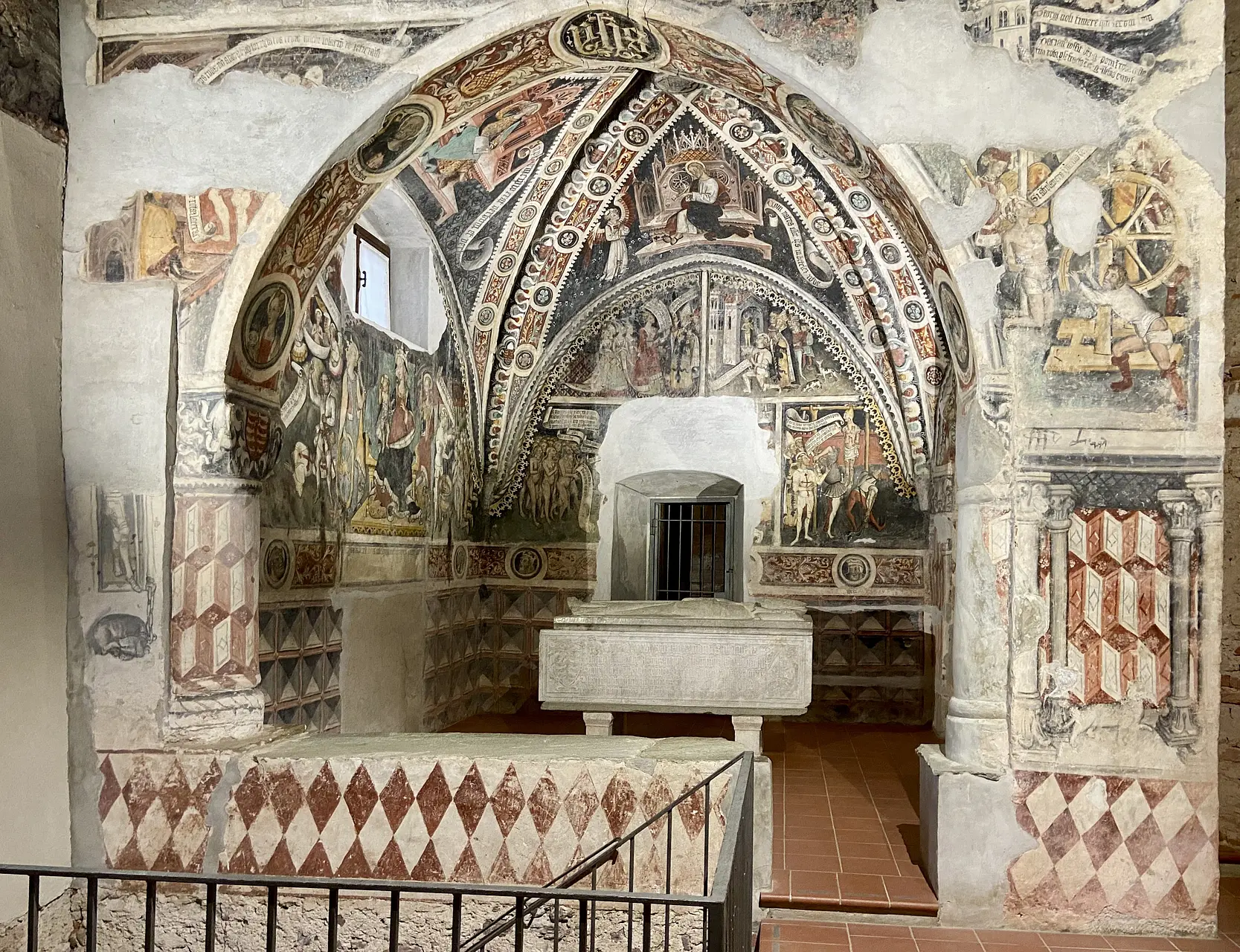
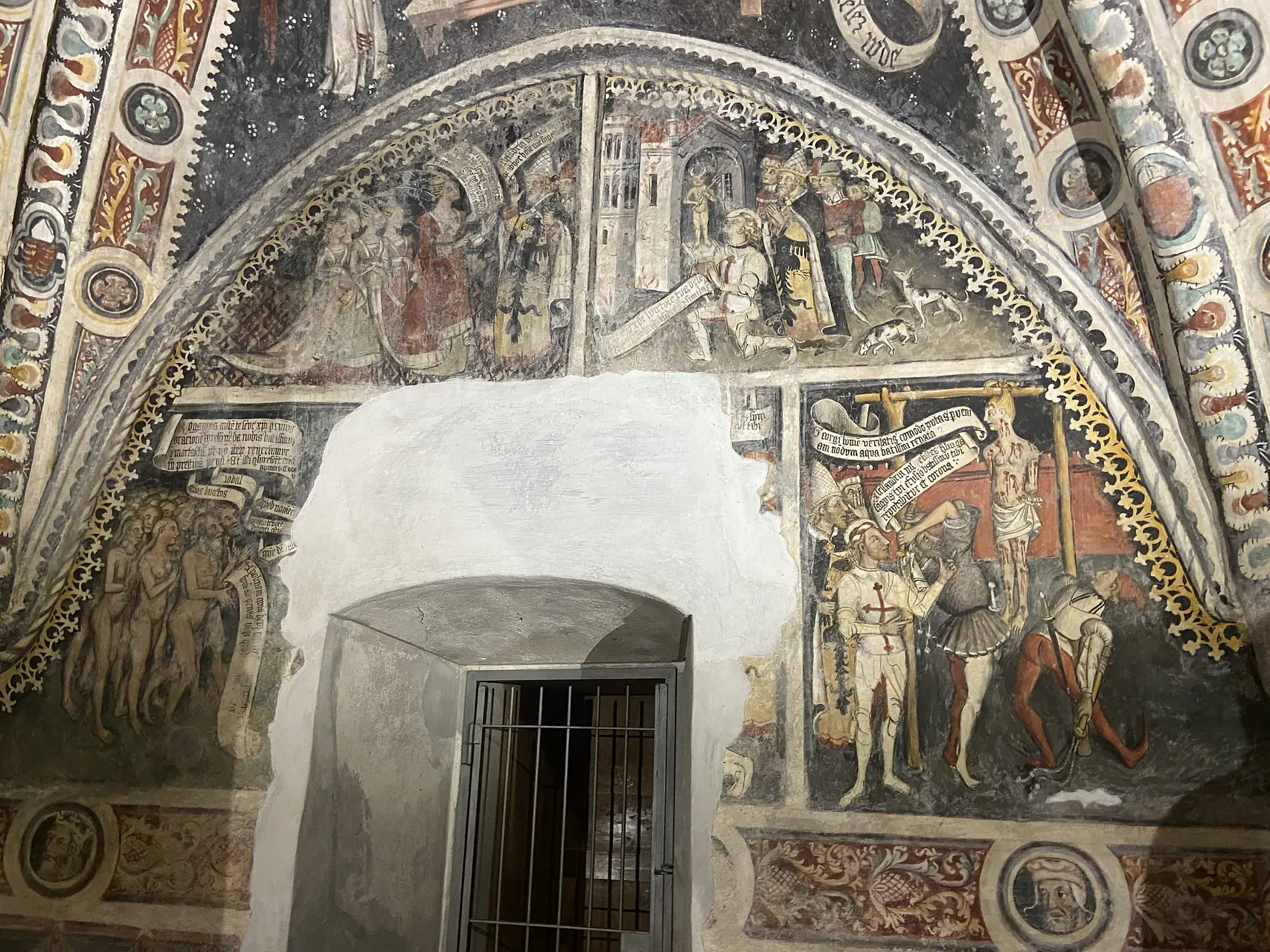
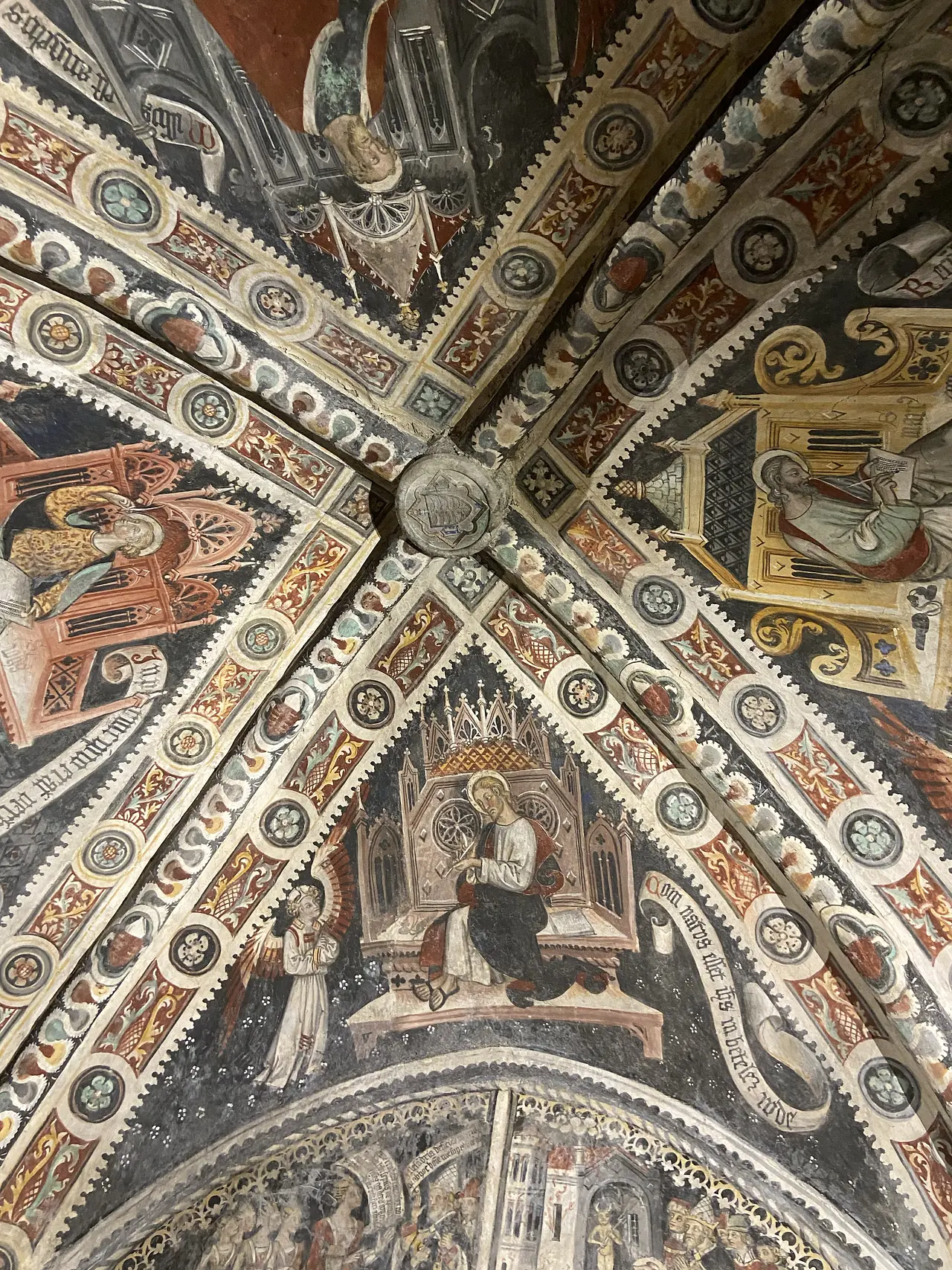
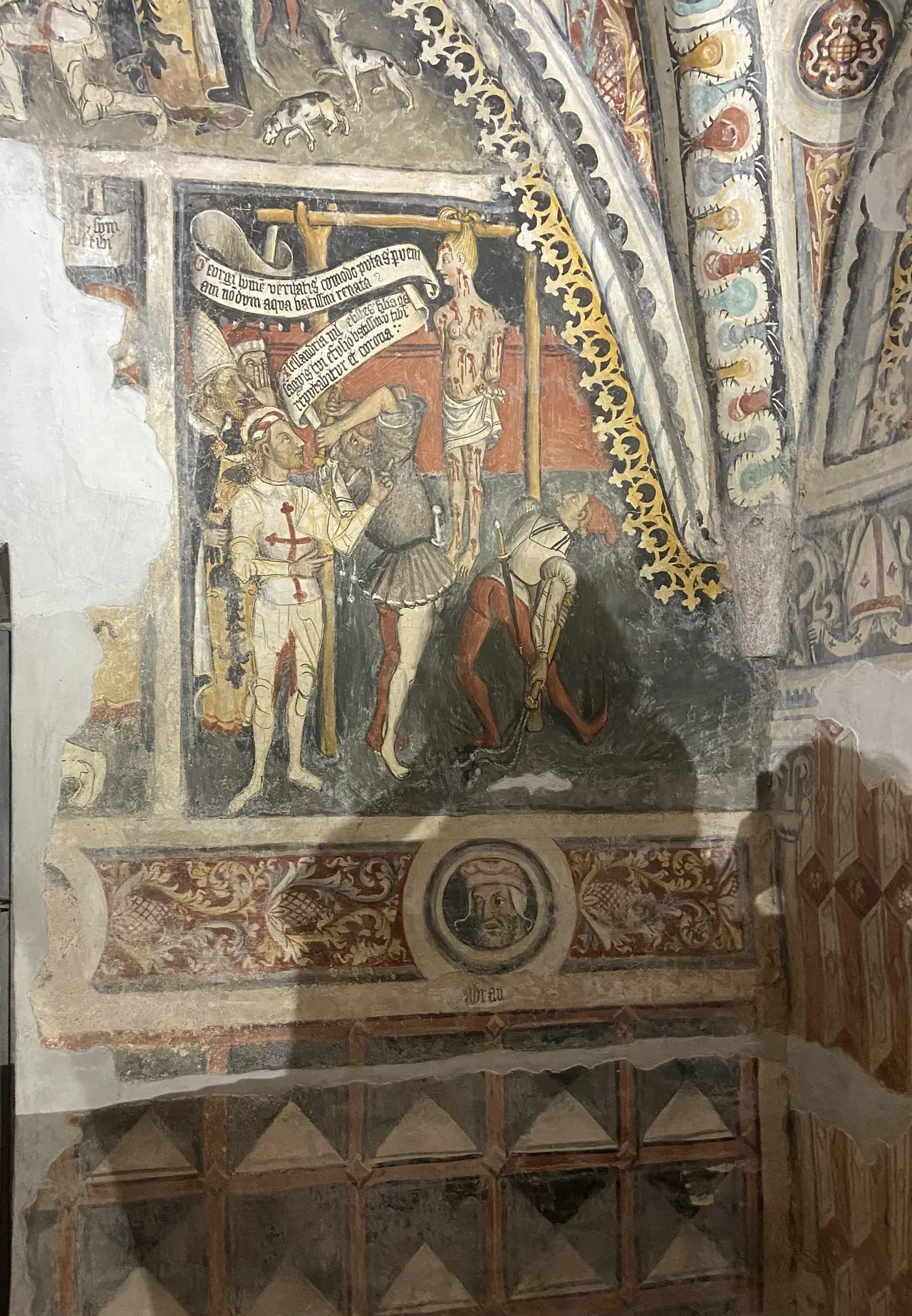
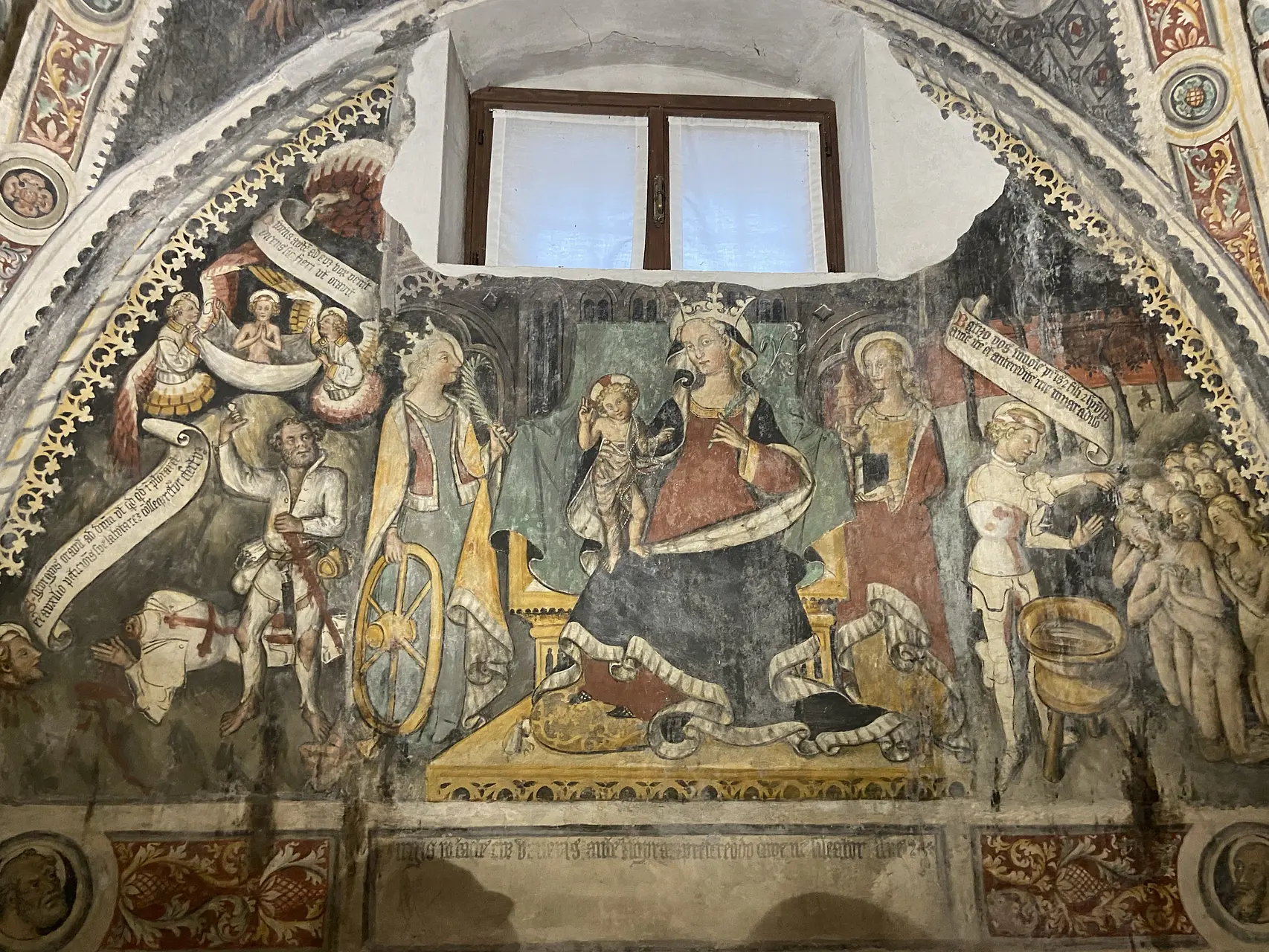
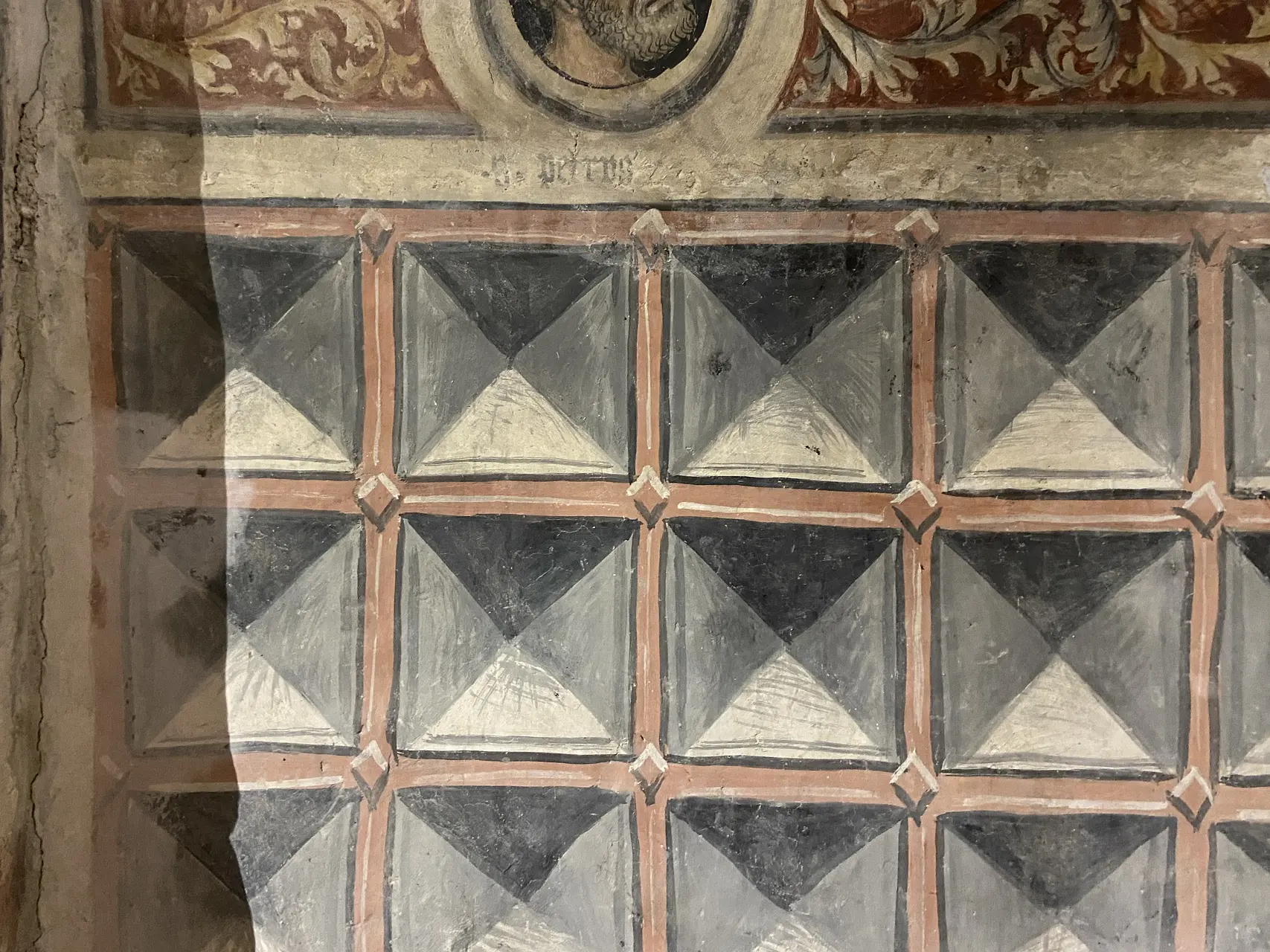
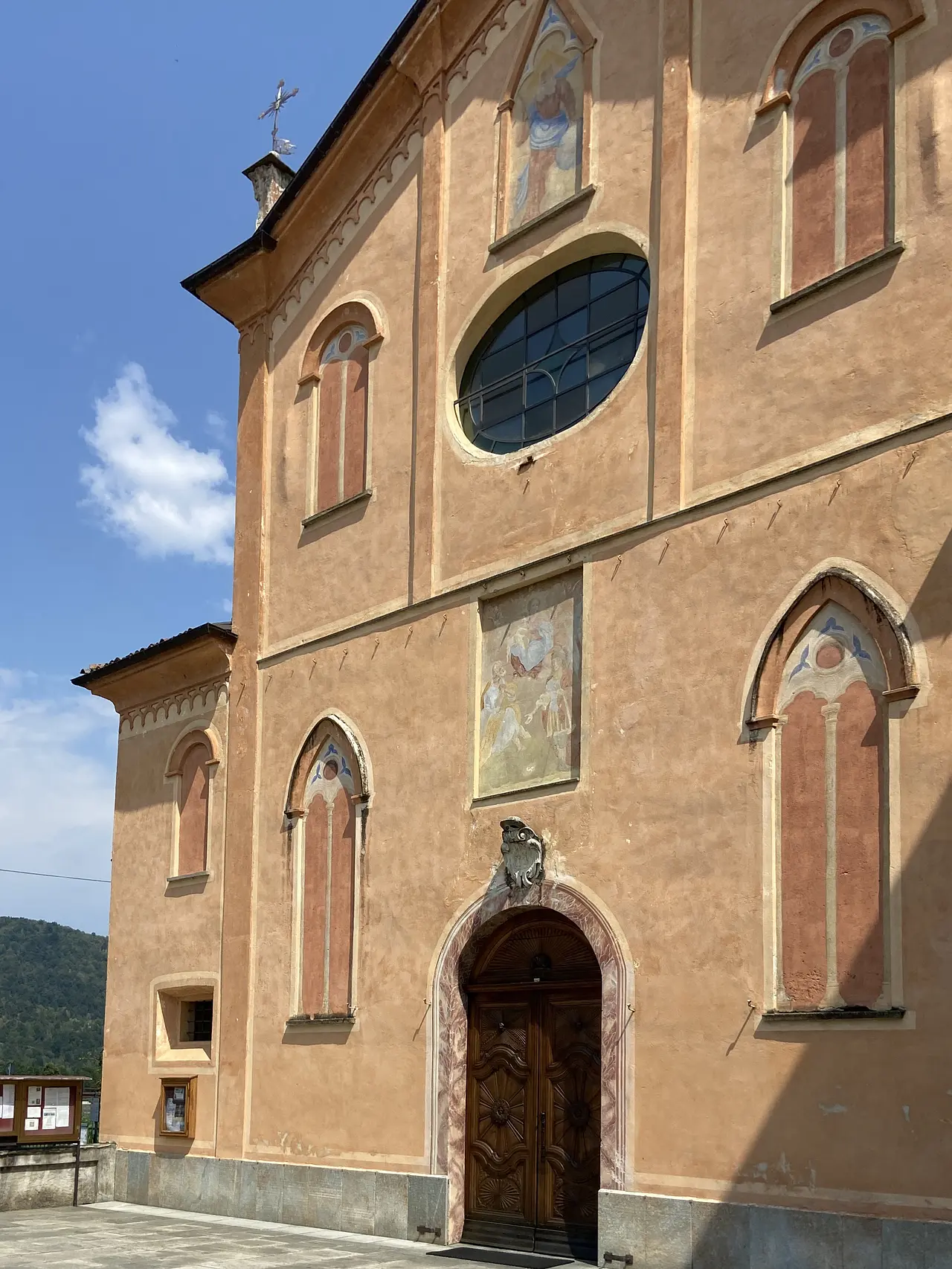
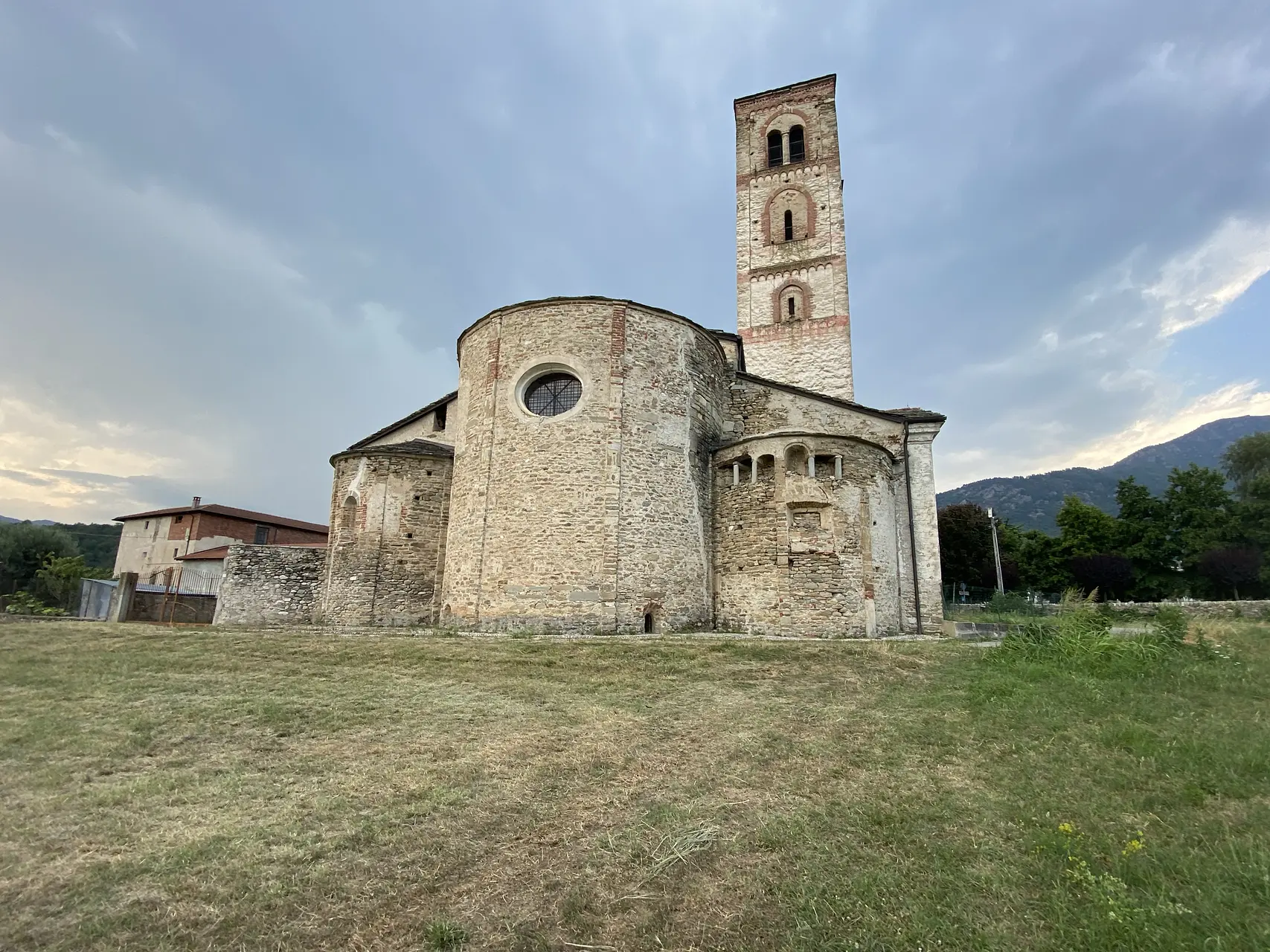
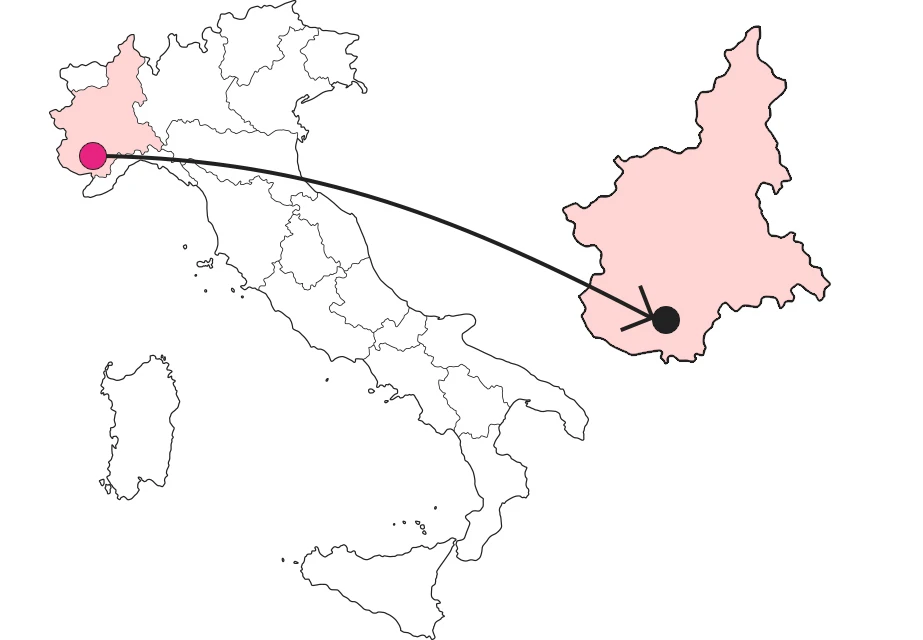
An 18th-century façade conceals a Romanesque heart: this is the church dedicated to St. Peter in the town of Villar San Costanzo, in the province of Cuneo. Moving to the rear, it’s lovely to notice the three apses still visible despite the Baroque alterations and the beautiful late 13th-century bell tower. But what’s truly worth a visit is accessible through an exterior door on the left side of the church. You find yourself in a space that envelops you with the vividness and almost miniature-like precision of the frescoes depicting the life and martyrdom of St. George. So welcome: we are in the Chapel of St. George, one of the finest examples of late Piedmontese Gothic architecture.
Why it’s special: the chapel’s marvelous frescoes
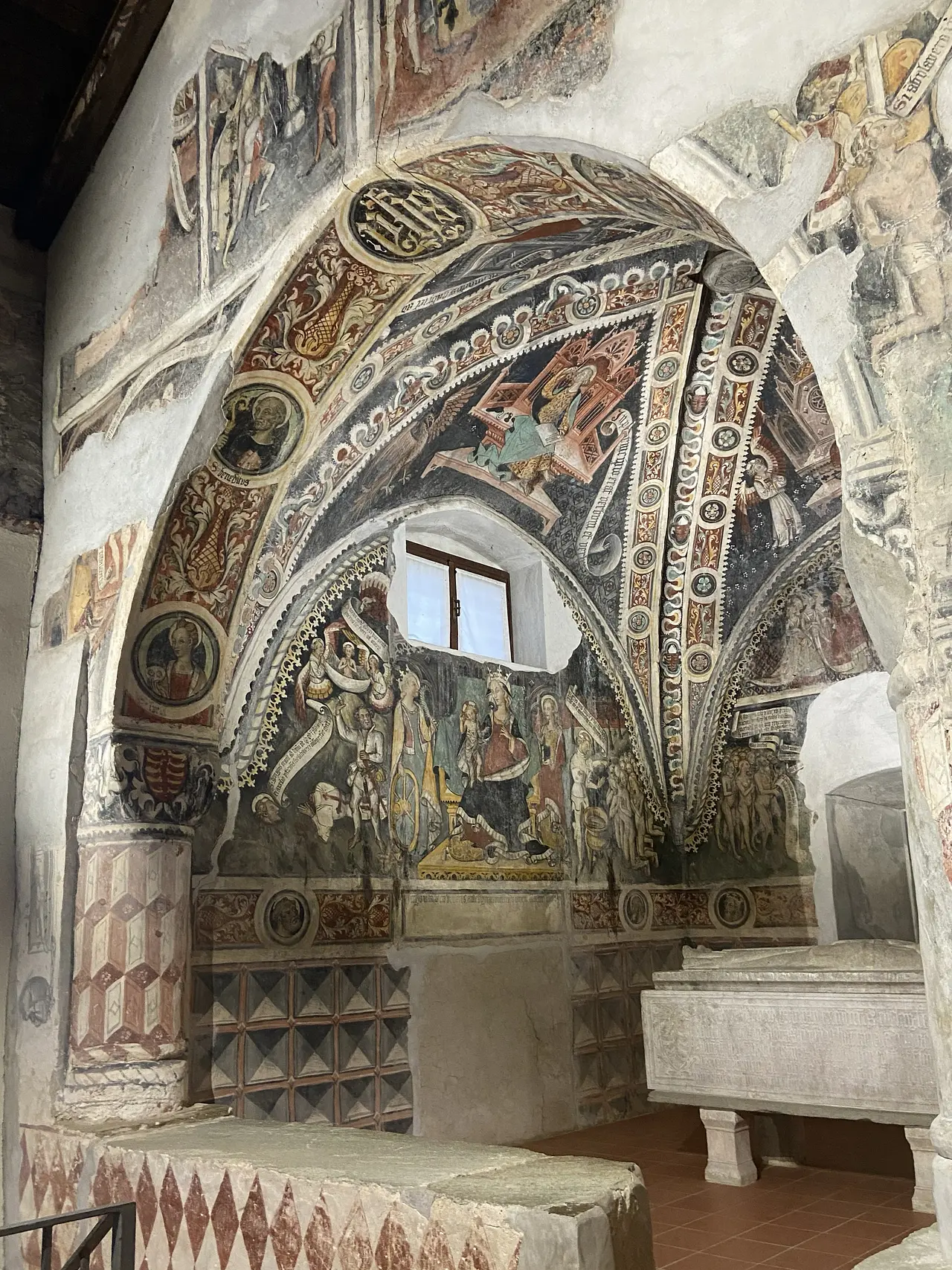
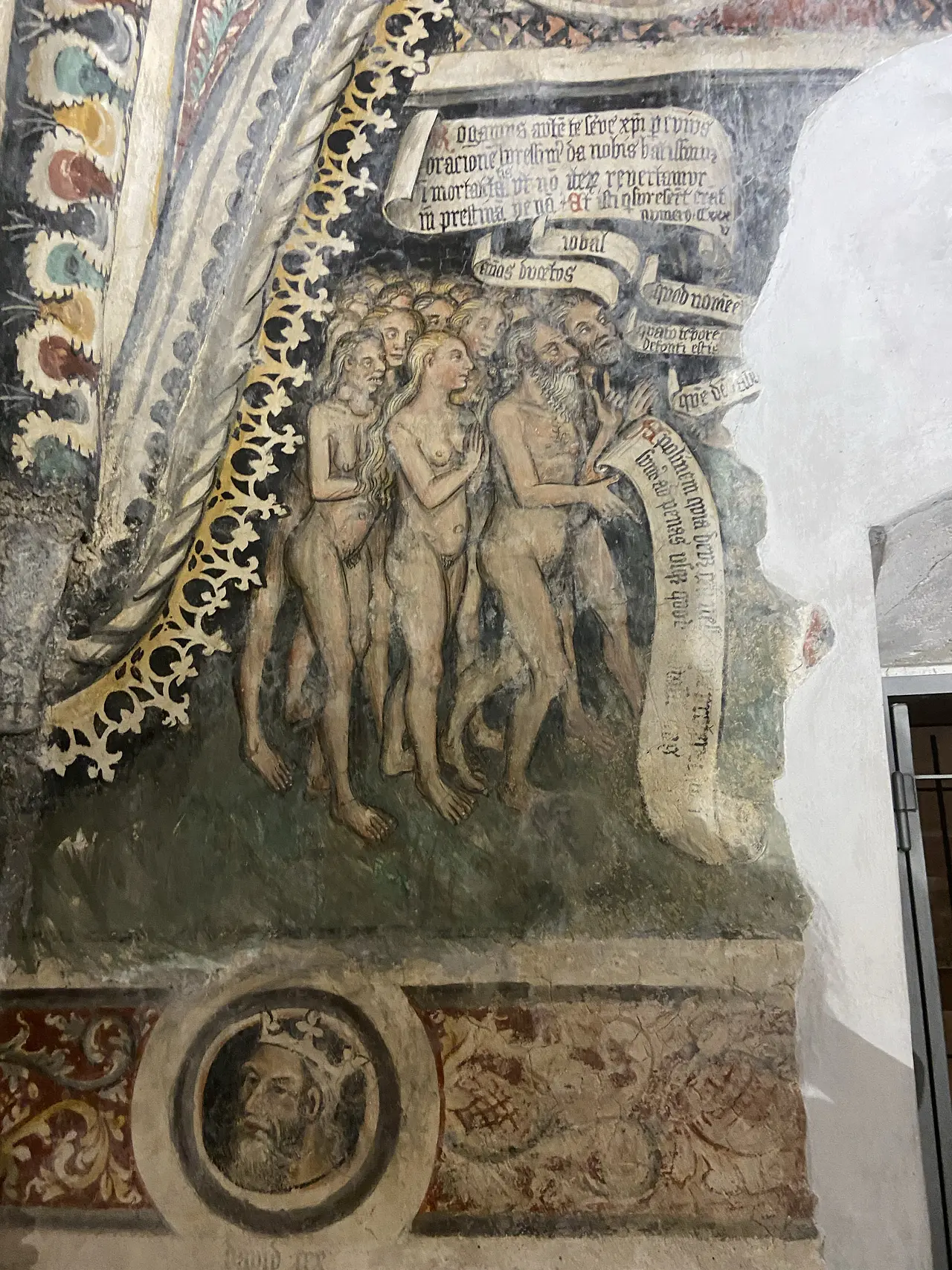
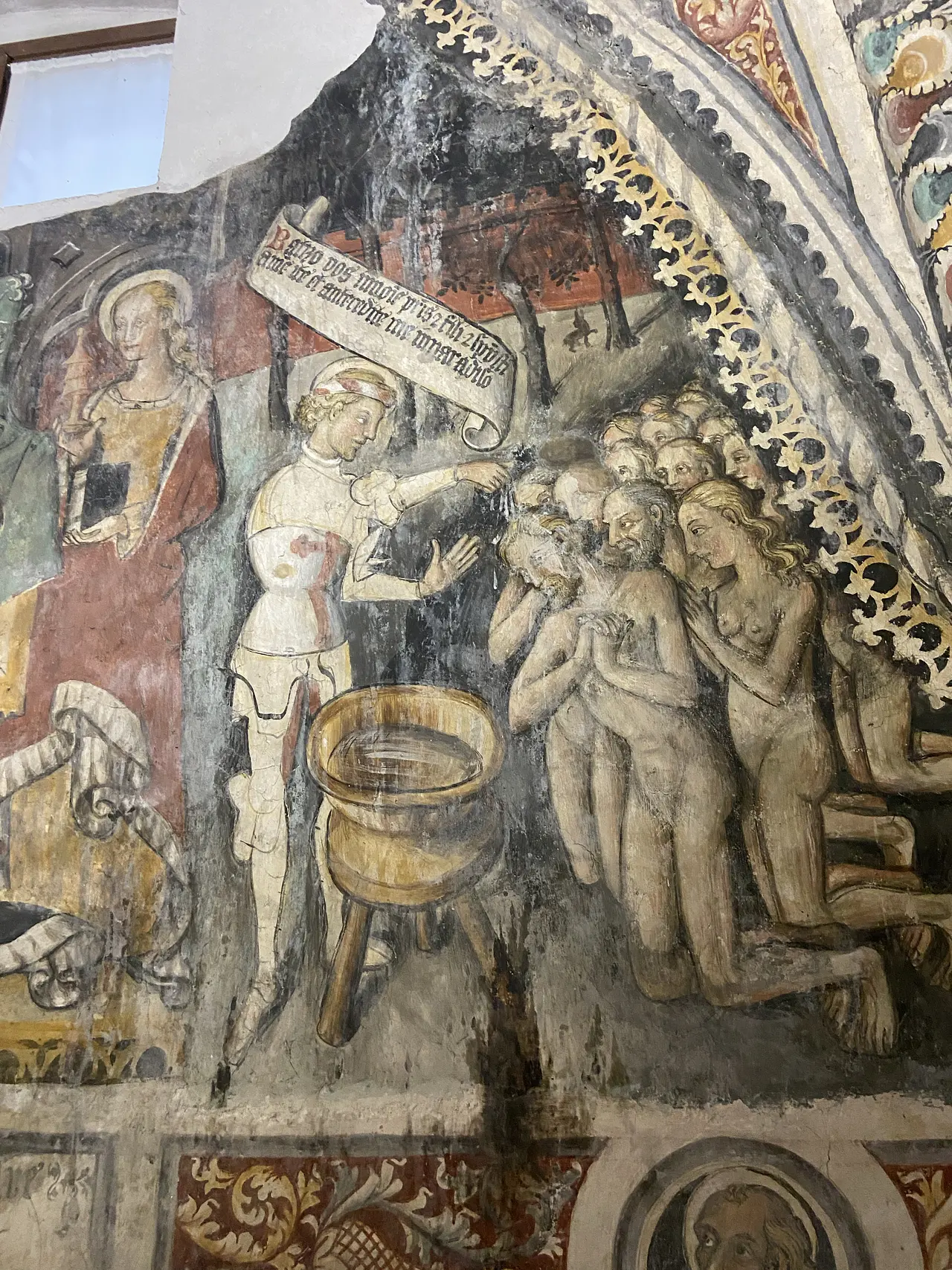
The chapel’s narrative unfolds across two overlapping levels and faithfully follows the medieval text of Jacopo da Varagine’s *Legenda Aurea* : the close-quarters battle between Saint George on horseback and the dragon in the presence of Princess Silene; the baptism of the court and the citizens of the city of Silene; and the series of tortures inflicted on the saint leading up to his final beheading. The outlines of the figures are sharp, as in the international Gothic tradition; the faces are psychologically rendered, at times grotesque; the garments, headdresses, and weapons are elegant and exquisite— a veritable catalog of courtly fashion— and reflect the aristocratic tastes of the patron.
Don’t miss: the crypt
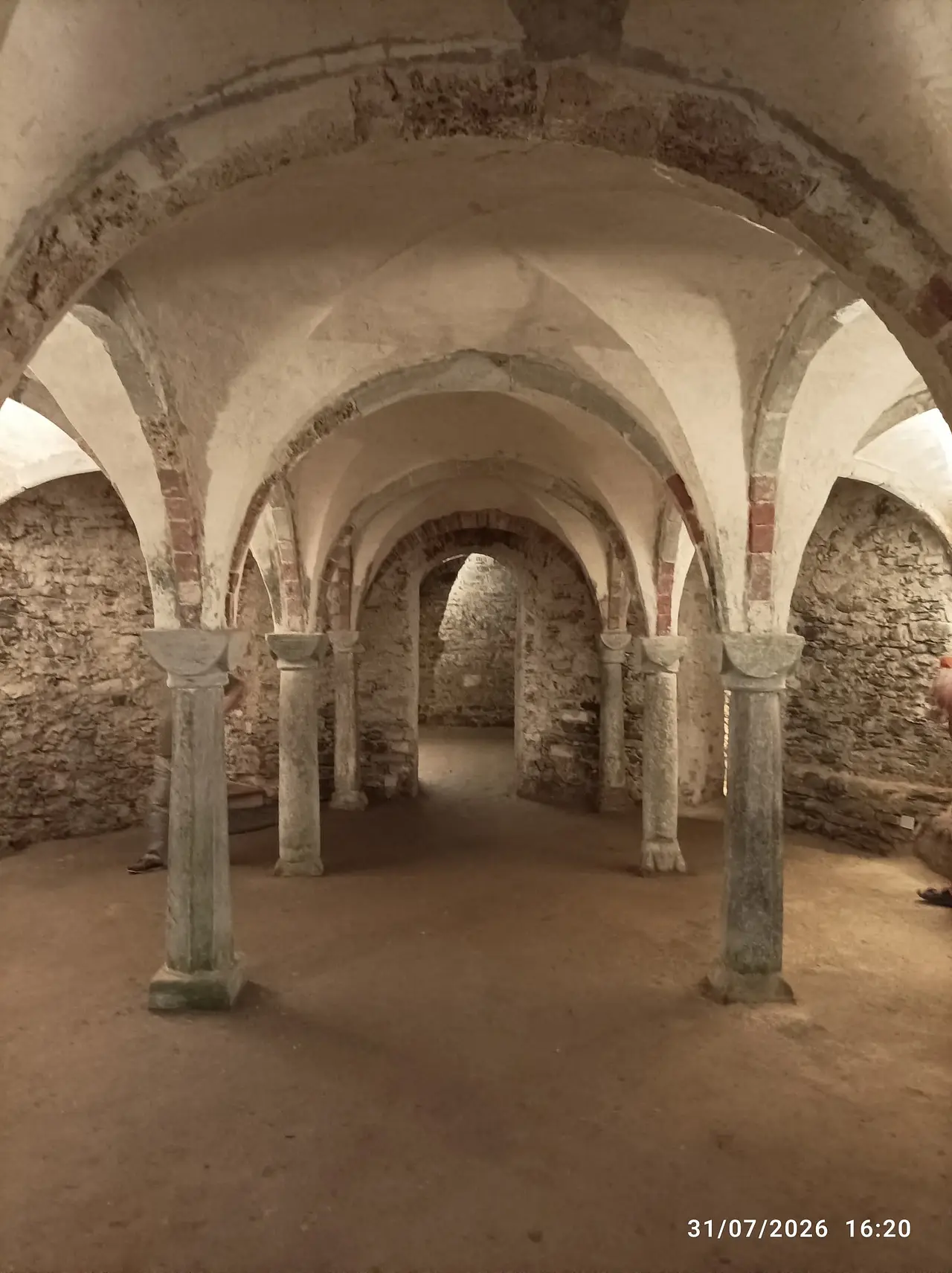
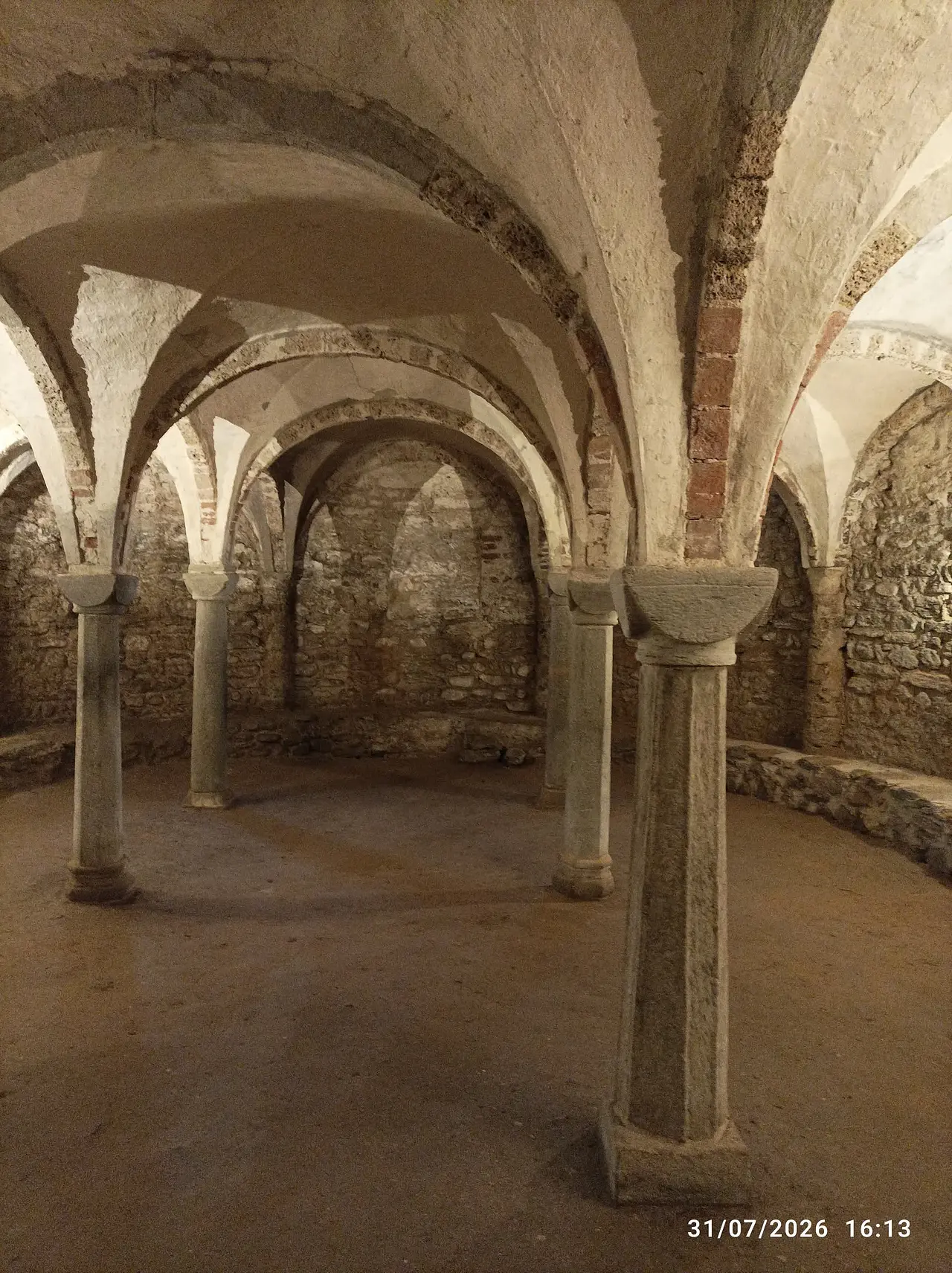
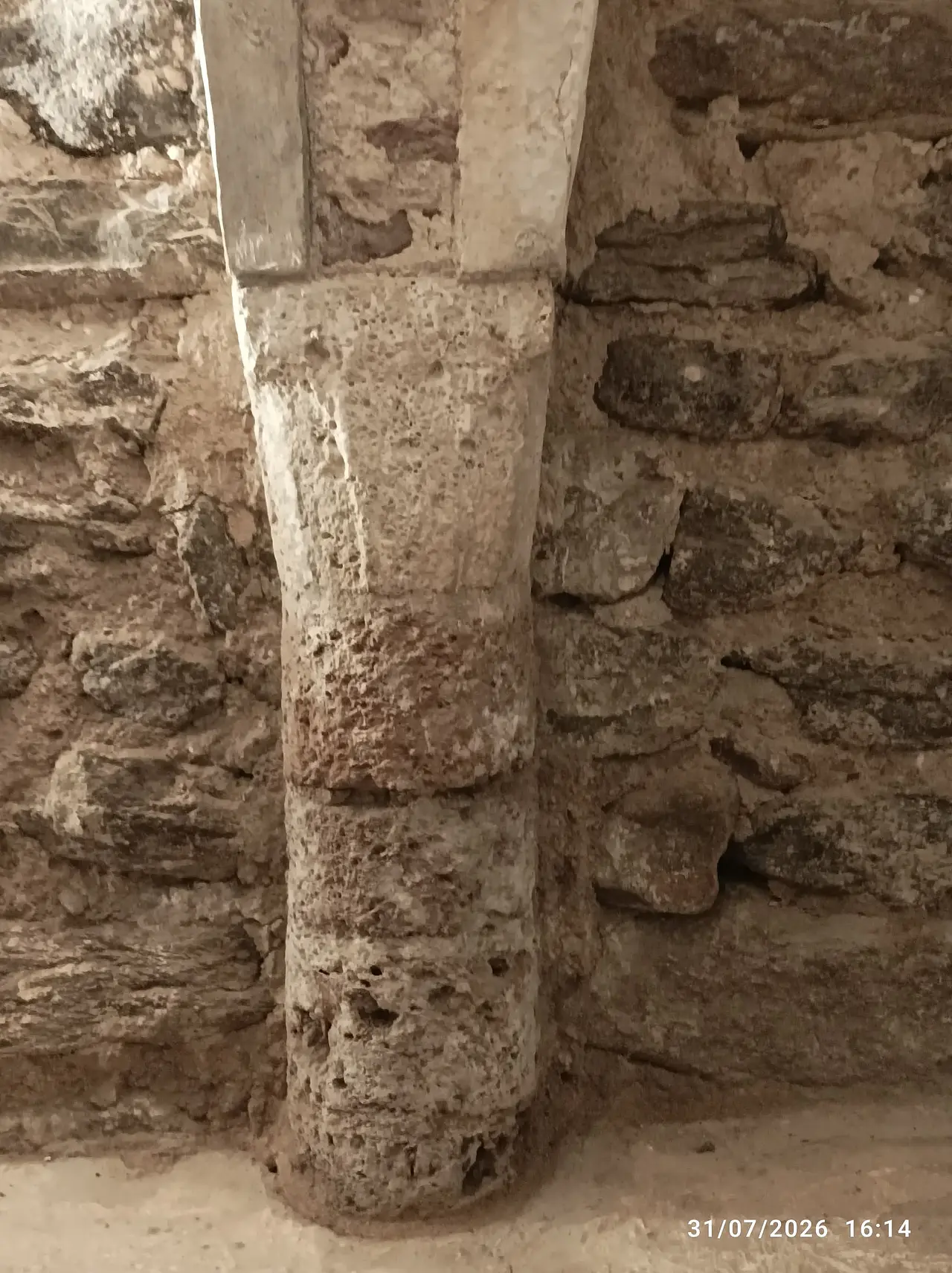
From the chapel , you descend to the crypt, a must-see, as it is the only Romanesque structure that has remained completely intact since the 18th-century reconstruction. You find yourself in a dark space, illuminated only by the splayed slits opening outward, amidst a dense forest of slender columns— often reused—with very simple capitals.
A Bit of History
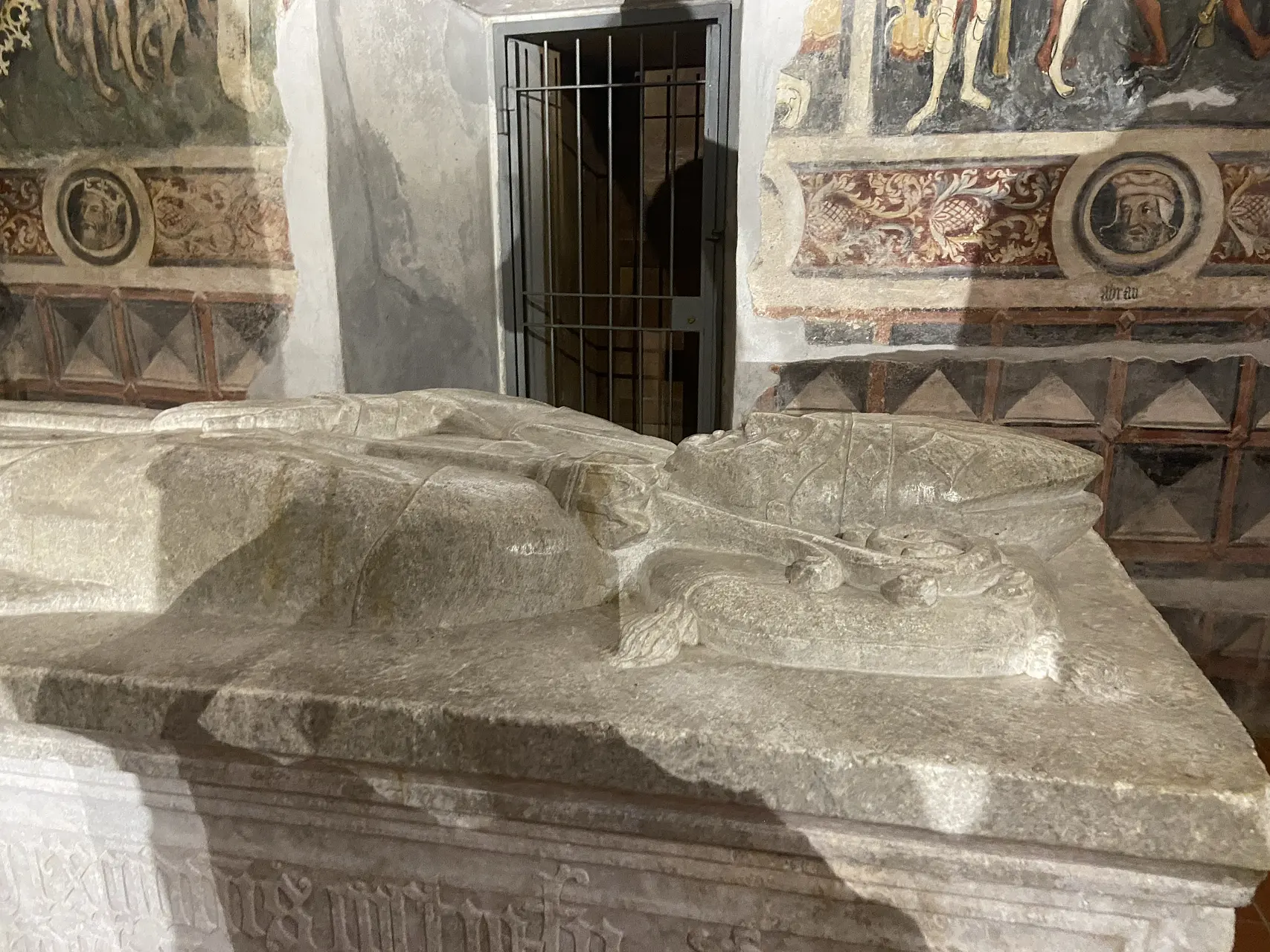
The church originated during the Lombard period as a Benedictine abbey but was destroyed during the Saracen raids and rebuilt in the Romanesque style in the second half of the 12th century; the crypt and apse date back to that period. The bell tower dates from 1294. Around the year 1467, the powerful abbot Giorgio Costanzia di Costigliole decided to commission the construction and decoration of the chapel to serve as his own funerary monument. The abbot spared no expense and hired the finest painter working in the area, Pietro Pocapaglia da Saluzzo. His intent was clear: he wanted to ensure that his name and the honor of his family would remain immortal, and he also commissioned the beautiful central marble sarcophagus that still preserves his memory today.
Trivia: A Mystery Spanning Centuries
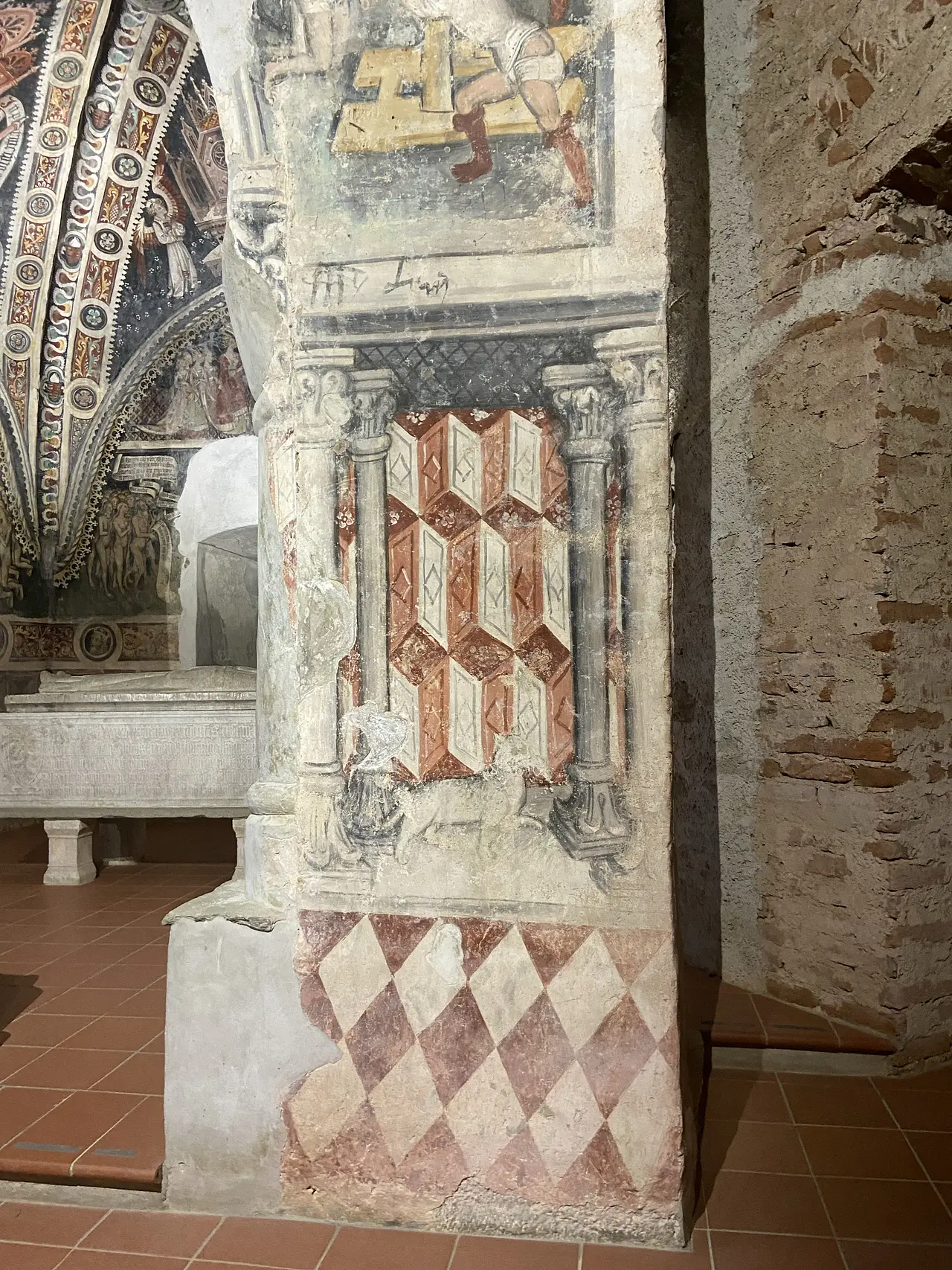
Behind these frescoes lies a fascinating curiosity that has fueled a deep mystery for centuries . For over five hundred years, in fact, the true identity of the painter of these masterpieces remained unknown. Art historians referred to the artist simply by the pseudonym “Maestro del Villar.” This enigma was not solved until 1977 when, during restoration work on the chapel, experts found—hidden beneath layers of dust and soot that had accumulated over the centuries— the original autograph signature of Pietro Pocapaglia da Saluzzo, thus finally uncovering the master’s name.
Enter the Map of Italy's Hidden Wonders and find treasures where you least expect it... Inspire, Recommend, Share...
Collections
The Map thanks:
Enter the Map of Italy's Hidden Wonders and find treasures where you least expect it... Inspire, Recommend, Share...
Where
Collections